The Nepal media houses blockade that left vehicles obstructing three major newsrooms in Kathmandu has drawn condemnation from lawmakers across the political spectrum, with members of both the ruling and opposition parties accusing unnamed actors of trying to intimidate the press and silence criticism of the government.
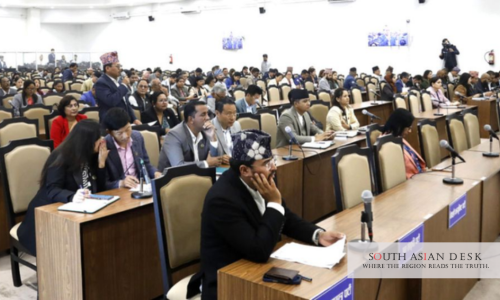
During Tuesday’s session of the House of Representatives, parliamentarians said the blockade appeared politically motivated and was likely orchestrated with the backing of powerful interests to divert public attention from mounting criticism over the death last week of ride-hailing driver Ganesh Nepali and the government’s handling of disputes involving landless squatters.
How the Kathmandu Vehicle Blockade Unfolded
On Monday morning, vehicles were left parked outside the entrances of Kantipur Media Group, Onlinekhabar and Himalaya Television in Kathmandu, preventing staff and visitors from entering or leaving the premises by car. Similar vehicle obstructions were reported outside the residence of Nepali Congress president Gagan Thapa. No group has claimed responsibility, and lawmakers in Tuesday’s session called for a formal investigation into who arranged the blockade and why.
Opposition CPN-UML lawmaker Ganesh Singh Thagunna told the House that the incident was designed to create fear and psychological pressure. “Vehicles were used to block media houses and the homes of political leaders to spread psychological panic,” he said. “It may appear to be a minor symbolic act, but it resembles the intimidation tactics used by ultra-royalist groups during the Panchayat era.” He demanded a formal investigation and action against those responsible.
Prakash Chandra Pariyar, whip of the ruling Rastriya Swatantra Party, also condemned the blockade, arguing that the Nepali press had withstood far graver threats in the past, including the deployment of armed security personnel inside newsrooms during King Gyanendra’s direct rule. “Only those who fear the truth resort to such actions,” Pariyar said. “Nepali journalism did not bow down when armed soldiers entered newsrooms in the past, and it will not be silenced by a few vehicles parked outside media houses.” He added that being part of government did not mean turning a blind eye to intimidation simply because someone’s interests had been challenged, and urged authorities to guarantee the safety of media houses.
Nepal Press Freedom Concerns Tied to Wider Political Unrest
Several lawmakers linked the blockade to a broader pattern of pressure on critics of Prime Minister Balendra Shah’s government. Rastriya Prajatantra Party chief whip Khushbu Oli accused the government of using the incident to divert attention from Ganesh Nepali’s death by self-immolation, which has become a flashpoint in national politics after the 25-year-old ride-hailing driver died at Bir Hospital following a dispute with Kathmandu Metropolitan City’s municipal police over a wheel-locked motorcycle. His death, which followed comparable incidents in past years, has prompted parliamentary debate over the limits of municipal police authority and the treatment of informal workers.
Nepali Communist Party lawmaker Ramesh Malla went further, saying it had “become clear that these activities were carried out by certain individuals under state protection.” He criticised what he called a lenient official response and said authorities should identify and punish those who orchestrated the blockade rather than treat it as a minor offence. “The ruling RSP cannot simply distance itself by issuing a statement,” Malla said. “The government must take this seriously. If those in power believe they can govern by creating fear, they are mistaken.”
The main opposition Nepali Congress also accused state-aligned groups of targeting media organisations and political leaders who had questioned the government. Congress whip Nishcal Rai tied the blockade to what he described as a recurring pattern. “Whether it is the crackdown at the squatters’ holding centre, the response to questions following Ganesh Nepali’s death, or the vehicle blockades, all these incidents point towards the same mindset: punishing those who ask questions,” Rai said.
Calls for Accountability Over the Nepal Media Houses Blockade
Rastriya Prajatantra Party parliamentary leader Gyan Bahadur Shahi accused government supporters of using vehicles to manufacture disruption and shape public perception of events. “Deploying cadres to illegally park vehicles on roads, outside media offices, and in front of opposition leaders’ homes, then portraying it as a public movement to manipulate media coverage, is political abuse,” Shahi said, warning that the episode would be remembered as a dark chapter in Nepal’s press freedom record if authorities failed to act.
As of Tuesday’s session, no arrests had been announced in connection with the blockade, and the government had not issued a formal response beyond the assurances offered by RSP whip Pariyar. With Parliament now on record demanding an inquiry, pressure is likely to build on the Kathmandu Metropolitan City administration and federal authorities to identify those responsible and to clarify what measures will be taken to protect media houses and political leaders from further obstruction.
This report references the recent death of a ride-hailing driver by self-immolation. If you or someone you know is struggling with distress, it is worth reaching out to a trusted professional or local support service
Published in SouthAsianDesk, July 16, 2026
Follow SouthAsianDesk on X, Instagram and Facebook for insights on business and current affairs from across South Asia.