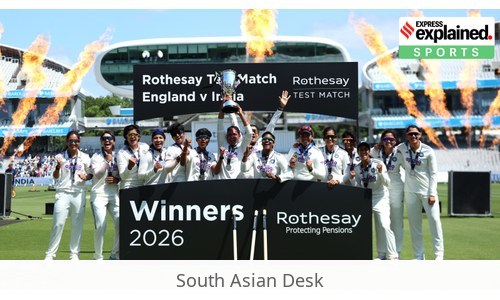
The Indian Express reported that women’s Test cricket continues to face systemic challenges in visibility and institutional support compared to men’s cricket. Despite growing participation and talent, disparities in media coverage, funding, and organizational prioritization persist, raising questions about the sport’s long-term equity. These issues are not isolated to a single country or board but reflect broader structural inequities in sports governance across regions where cricket holds cultural and economic significance.
Women’s Test Cricket: The Role of the ECB in Women’s Cricket
The England and Wales Cricket Board (ECB) has faced criticism for its handling of women’s cricket, with ESPNcricinfo noting that its policies have been described as complicit in overshadowing women’s matches during high-profile men’s Test events. This imbalance has contributed to a disparity in resources, with men’s teams receiving significantly more funding and media attention.
The ECB’s focus on men’s cricket during critical tournaments has been cited as a factor in limiting women’s visibility on the global stage. Such prioritization perpetuates a cycle where women’s teams are relegated to secondary status, even as they demonstrate competitive skill and growing fan engagement. The ECB’s institutional decisions, including scheduling and investment allocation, have long-term implications for the development of women’s cricket, affecting player retention, infrastructure, and international competitiveness.
Media Coverage and Public Perception
Media coverage of women’s cricket has been characterized as “shortchanged,” according to ESPNcricinfo. High-profile matches often receive limited broadcast time, and women’s teams are frequently excluded from major media narratives centered on men’s cricket. This lack of exposure affects public perception, making it harder to build fanbases and secure sponsorships.
The disparity in coverage perpetuates a cycle where women’s cricket struggles to gain the same institutional backing as its male counterpart. For instance, during the 2025 Women’s Ashes series, live broadcasts were restricted to regional networks, while men’s Test matches were globally televised. Such decisions not only limit viewership but also hinder the sport’s ability to attract commercial investment, which is critical for player welfare, training facilities, and long-term growth.
Historical Context of Women’s Cricket
Women’s cricket has historically faced structural barriers, from limited opportunities to exclusion from formal competitions. While progress has been made in recent decades, the sport still grapples with outdated stereotypes and underinvestment. The evolution of women’s cricket has been uneven, with significant gaps in infrastructure, training facilities, and professional pathways compared to men’s cricket.
Addressing these historical inequities is essential for achieving parity. For example, in the 1990s, women’s Test cricket was largely confined to domestic leagues with minimal international recognition, whereas men’s cricket had already established global tournaments and commercial partnerships. This legacy of exclusion continues to influence current challenges, as women’s teams often lack the resources to compete on equal terms with their male counterparts.
Institutional and Cultural Barriers
The systemic inequality in women’s Test cricket is not merely a matter of funding or media attention but is deeply rooted in institutional and cultural norms. Cricket boards, including the ECB, have historically prioritized men’s teams, allocating the majority of budgets to grassroots development, player salaries, and international fixtures for male athletes.
This has left women’s cricket reliant on ad hoc sponsorships and grassroots initiatives, which are often insufficient to sustain professional careers. Cultural perceptions also play a role, with cricket remaining a male-dominated space in many regions, including South Asia, where the sport is a national obsession. Efforts to challenge these norms, such as the inclusion of women’s matches in major tournaments or the appointment of female coaches, have been incremental and often met with resistance.
Pathways to Equity
Achieving equity in women’s Test cricket requires multifaceted solutions, including policy reforms, increased investment, and shifts in public perception. Cricket boards must adopt transparent funding models that allocate resources proportionally to men’s and women’s teams, ensuring equal access to training facilities, medical support, and international exposure.
Media organizations also have a role to play in amplifying women’s cricket through dedicated broadcasting and digital platforms. Additionally, grassroots initiatives that promote gender inclusivity in youth cricket can help cultivate future talent and normalize women’s participation at all levels. These steps, while challenging, are critical for dismantling the systemic barriers that have long hindered the sport’s growth.
Published in SouthAsianDesk, July 15, 2026.
Follow SouthAsianDesk on X, Instagram and Facebook for insights on business and current affairs from across South Asia.
Sources
- Why Test cricket remains an uneven playing field for women – indianexpress.com
- Women’s cricket shortchanged again as men’s Test binfire sucks up the oxygen – cricinfo.com
Image: images.indianexpress.com