India’s domestic manufacturing push is expected to prioritise about 100 imported products across industries including textiles, footwear, electric vehicles and solar energy.
India’s domestic manufacturing push is set to focus on products accounting for approximately $51 billion in annual imports as New Delhi seeks to reduce its exposure to overseas suppliers and strengthen the resilience of strategically important supply chains.
The products form part of a wider pool of imports that Indian officials believe could eventually be replaced through competitive local production. An internal government assessment has reportedly identified about $398 billion in imports with some potential for domestic substitution. From this wider category, around 100 products worth $51 billion have been selected for more immediate attention.
The initiative has not yet been formally announced, and the complete list of products has not been made public. However, people familiar with the confidential exercise said the selection was based on economic importance, vulnerability to supply disruptions and the possibility of developing cost-competitive production within India.
India’s domestic manufacturing push targets strategic products
The priority list is understood to cover products and components used in footwear, textiles, electric vehicles, solar panels and other industrial sectors. Rather than pursuing import substitution across every category, the government appears to be concentrating on goods that are critical to domestic production or particularly vulnerable to geopolitical and logistical disruptions.
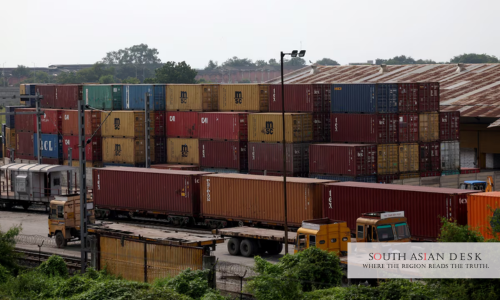
India imported goods worth approximately $775 billion during the financial year ending in March 2026. Official data placed merchandise imports at $774.98 billion, compared with $721.20 billion in the previous financial year. Merchandise exports reached $441.78 billion, leaving the country with a trade deficit of $333.19 billion.
The size of that deficit has increased pressure on policymakers to develop an India import substitution strategy that protects supply chains without undermining competitiveness. A broad attempt to block imports could increase production costs, particularly where domestic suppliers lack the necessary technology, scale or manufacturing speed.
The new approach is therefore expected to rely on targeted incentives, investment support, international partnerships and technology transfers rather than import restrictions alone.
Manufacturing gaps extend beyond production capacity
One of the challenges facing domestic manufacturing in India is that overseas suppliers often compete on delivery time and production efficiency as well as price.
Footwear sole moulds provide one example. India imported around $483 million worth of the moulds during the previous financial year. Producing a mould domestically can reportedly take about two weeks, while suppliers in China may complete the same process within three to five days.
Closing this gap would require more than simply building additional factories. Indian manufacturers may need access to improved machinery, automated production processes, specialised materials, skilled labour and faster product development systems.
The government is consequently considering local manufacturing incentives that could attract investment and facilitate joint ventures with companies from Taiwan, South Korea, Germany and Italy. These countries possess established industrial capabilities in advanced machinery, electronics, automotive components and specialised manufacturing.
State-owned enterprises may also be encouraged to participate in the initiative, particularly in sectors where private investment is constrained by high capital requirements, uncertain initial demand or lengthy development periods.
Solar imports highlight dependence on China
Solar manufacturing is likely to be one of the most important areas covered by the policy. India imported approximately $3 billion worth of solar photovoltaic cells during the previous financial year, with lower-priced Chinese products placing considerable pressure on domestic manufacturers.
India has expanded its capacity to produce solar modules and cells, supported by government subsidies, customs measures and requirements encouraging developers to purchase equipment from approved domestic manufacturers. However, the industry remains dependent on overseas suppliers for several components and raw materials, particularly those linked to China’s highly integrated solar supply chain.
The challenge for policymakers is to increase domestic capacity without slowing the country’s wider transition towards renewable energy. Indian power demand is expected to continue rising as electricity consumption expands across data centres, artificial intelligence infrastructure, electric vehicles and industrial activity.
India’s power minister recently called for faster development of domestic clean-energy supply chains, while acknowledging that locally manufactured equipment could initially be more expensive. The government considers this additional cost a potential trade-off for stronger energy security and reduced exposure to disruptions in international markets.
India’s dependence on China remains substantial
Reducing India’s dependence on China is a central objective of the proposed manufacturing programme. Indian imports from China reached nearly $132 billion in the 2025-26 financial year, making China the country’s largest source of imported goods.
These imports include consumer goods, industrial machinery, electronic components, chemicals, solar equipment and intermediate goods required by Indian factories. This means that reducing imports too rapidly could create shortages or increase costs for domestic manufacturers that rely on Chinese inputs.
The policy is therefore more likely to pursue selective diversification than complete economic separation. Partnerships with manufacturers in other technologically advanced economies could allow India to access machinery and expertise while gradually developing domestic supply networks.
Supply chain resilience has become a more urgent priority as geopolitical tensions, trade restrictions, shipping disruptions and conflicts in major energy-producing regions create uncertainty for import-dependent economies.
Earlier manufacturing programmes produced mixed results
India’s domestic manufacturing push builds on policies such as Make in India and the Production Linked Incentive scheme. These programmes have achieved considerable expansion in sectors including mobile phones and consumer electronics, although they have not produced a corresponding reduction in India’s overall imports.
Official figures show that electronics production increased from ₹1.9 lakh crore in 2014-15 to ₹11.3 lakh crore in 2024-25. Mobile phone production rose from ₹18,000 crore to ₹5.45 lakh crore during the same period, while the number of mobile manufacturing units increased from two to more than 300.
The government has also expanded support for semiconductor manufacturing, electronic components, advanced batteries, automobiles, pharmaceuticals and medical devices. The 2026-27 budget increased funding for the Electronics Components Manufacturing Scheme and announced measures related to semiconductor materials, rare earth corridors, chemical parks, capital goods and lithium-ion cell manufacturing.
However, growth in the final assembly of products does not necessarily eliminate reliance on imported components. India’s next phase of industrial development will therefore need to focus more heavily on domestic value addition, component manufacturing, industrial tooling and access to advanced technology.
Cost competitiveness will determine the outcome
The success of India’s domestic manufacturing push will depend on whether locally produced goods can compete with imports on price, quality and delivery time.
Subsidies may help companies absorb initial investment costs, but sustained production will require dependable electricity, efficient logistics, access to finance, skilled workers and predictable regulations. Domestic manufacturers will also need sufficient demand to achieve the economies of scale already enjoyed by established overseas suppliers.
There is also a risk that poorly designed import substitution policies could protect inefficient producers and raise costs for downstream industries. To avoid this, incentives may need to be linked to measurable improvements in production, technology, exports and domestic value addition.
A strategy based on international joint ventures could help address these concerns by combining foreign expertise with Indian manufacturing capacity. It could also support India’s ambition to participate more deeply in global value chains rather than producing only for its domestic market.
For now, the identification of $51 billion in critical imports represents an initial prioritisation exercise rather than a completed industrial programme. Its eventual impact will depend on the products selected, the structure of the incentives offered and the ability of manufacturers to close the cost and productivity gap with established international suppliers.
Published in SouthAsianDesk, July 17, 2026
Follow SouthAsianDesk on X, Instagram and Facebook for insights on business and current affairs from across South Asia.