Air pollution deaths in Bangladesh have reached an estimated 88,240 annually across six major cities, according to new research that highlights the growing public health and economic consequences of fine particulate matter.
The Jahangirnagar University study found that long-term exposure to PM2.5 pollution is associated with an average of about 242 premature deaths every day in Dhaka, Chittagong, Rajshahi, Khulna, Sylhet and Barisal.
Researchers estimated an annual mortality rate of approximately 260 deaths per 100,000 people across the six cities. Dhaka accounted for more than three-quarters of the total estimated deaths, reflecting the capital’s dense population, traffic congestion, construction activity and sustained exposure to polluted air.
The study also placed the annual economic cost of PM2.5 pollution at nearly $23 billion, equivalent to approximately Tk 2.82 lakh crore or about 5 per cent of Bangladesh’s gross domestic product.
The findings add to mounting evidence that air pollution in Bangladesh is not only an environmental problem but also a major threat to health, productivity and long-term economic development.
Air pollution deaths in Bangladesh concentrated in Dhaka
Dhaka recorded an estimated 68,703 premature deaths annually, the highest figure among the six cities included in the research.
Chittagong followed with 11,202 estimated deaths, while Rajshahi recorded 2,827 and Khulna 2,625. Sylhet and Barisal registered approximately 1,488 and 1,395 deaths respectively.
Together, the estimates produce the study’s total of 88,240 premature deaths a year.
The researchers examined changes between 2013 and 2021 and found that estimated deaths linked to PM2.5 exposure increased steadily in all six cities. Dhaka experienced the sharpest rise, with the number of premature deaths increasing by an average of about 3,484 annually during the period.
The concentration of the burden in Dhaka reflects the scale of the population exposed to pollution as well as the intensity of emission sources. Rapid urbanisation has increased the number of vehicles, construction projects, industrial activities and people living close to heavily polluted roads.
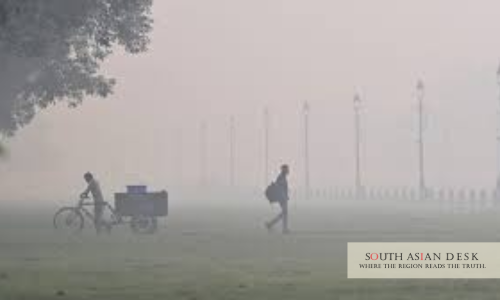
Dhaka air pollution also becomes particularly severe during the dry winter months, when limited rainfall, low wind speeds and atmospheric conditions allow pollutants to remain trapped near ground level.
Although monsoon rainfall can temporarily improve air quality by removing particles from the atmosphere, it does not address the underlying sources of pollution.
PM2.5 pollution linked to cardiovascular and respiratory deaths
PM2.5 refers to airborne particles with a diameter of 2.5 micrometres or smaller. These particles are sufficiently small to travel deep into the lungs and, in some cases, enter the bloodstream.
Long-term exposure has been linked to stroke, heart disease, chronic obstructive pulmonary disease, lung cancer and respiratory infections.
The new study associated Bangladesh PM2.5 pollution with an estimated 37,519 deaths from cardiovascular diseases each year. It also linked exposure to approximately 8,344 deaths from chronic respiratory diseases and 811 deaths from lung cancer.
Children, older people and individuals with existing heart or respiratory conditions face particularly high risks. Continuous exposure can also affect people who do not have previously diagnosed illnesses.
Short-term exposure to high pollution levels can aggravate asthma, reduce lung function and increase respiratory symptoms. Long-term exposure can contribute to the development or progression of cardiovascular and respiratory diseases.
The World Health Organization recommends that annual average PM2.5 concentrations should not exceed 5 micrograms per cubic metre. Bangladesh’s urban pollution levels have regularly remained far above that guideline.
A World Health Organization environmental health assessment previously reported that Bangladesh’s average PM2.5 exposure was about 13 times the recommended level. Separate World Bank analysis found that annual concentrations in Dhaka were considerably higher than international health guidelines.
Construction, traffic and brick kilns drive urban pollution
Urban air pollution in Bangladesh comes from a combination of local and regional sources.
Road traffic is a major contributor, particularly in Dhaka, where congestion allows vehicles to remain on the road for long periods. Older diesel buses, trucks and other poorly maintained vehicles release fine particles, nitrogen oxides and other harmful pollutants.
Dust from roads and construction sites adds to the problem. Building materials are frequently transported or stored without adequate covering, while excavation and demolition work can release large quantities of dust into densely populated areas.
Brick kilns surrounding Dhaka and other cities are another significant source. Kilns that burn coal, wood or other fuels can release particulate matter, black carbon, sulphur dioxide and carbon monoxide.
Industrial facilities, power generation, waste burning and household fuel use also contribute to poor air quality.
Previous research found that areas with persistent traffic and major construction work recorded some of the highest PM2.5 exposure levels in Dhaka. High concentrations were also identified around brick kilns in the greater metropolitan region.
Pollution does not remain confined within administrative or national borders. Air currents can carry particles over long distances, complicating efforts by individual cities to reduce exposure.
World Bank analysis has estimated that transboundary sources may account for up to one-fifth of Dhaka’s total PM2.5 concentration. This means domestic controls must be accompanied by wider regional cooperation on emissions, monitoring and data exchange.
Health cost of air pollution reaches billions
The estimated $23 billion annual loss identified by the Jahangirnagar University study includes the broader economic consequences of illness and premature mortality.
Pollution-related disease increases demand for hospital care, medicines, diagnostic services and long-term treatment. Families may face significant personal expenses, particularly where health costs are paid directly by patients.
Illness also reduces worker productivity through absence, reduced physical capacity and the need to care for affected relatives. Premature deaths remove people from the workforce and impose financial and social costs on their families.
Children exposed to polluted air may experience repeated respiratory infections, school absences and impaired lung development. These effects can create consequences that continue into adulthood.
Different studies have produced varying estimates of the mortality and financial burden associated with air pollution in Bangladesh.
A World Bank assessment previously estimated that air pollution caused between 78,145 and 88,229 deaths nationwide in 2019 and cost approximately 3.9 to 4.4 per cent of GDP.
A later environmental analysis placed the national burden from ambient and household air pollution at more than 159,000 premature deaths, 2.5 billion days lived with illness and health costs equivalent to 8.3 per cent of GDP.
These estimates are not directly comparable with the new study. They use different geographical coverage, pollution sources, health outcomes, population data and economic valuation methods.
The Jahangirnagar University research focuses specifically on PM2.5 exposure in six cities, while some World Bank estimates cover both ambient and household air pollution throughout the country.
Despite the methodological differences, the studies reach the same broad conclusion: polluted air is imposing a severe and continuing burden on Bangladesh.
Bangladesh Clean Air Project targets major emission sources
Bangladesh has begun developing a wider response through the Bangladesh Clean Air Project, which received $290 million in World Bank financing in 2025.
The programme is intended to strengthen the Department of Environment’s air-quality monitoring network by adding new stations and improving existing facilities.
It also aims to establish continuous emissions monitoring for major industrial sources. Real-time monitoring could help regulators identify facilities exceeding legal emissions limits and provide stronger evidence for enforcement action.
Transport measures include the establishment of five vehicle inspection centres, the rehabilitation of two existing centres and the deployment of mobile inspection and emissions-testing units.
The project also provides for the introduction of 400 zero-emission electric buses in Dhaka to replace older diesel vehicles.
Transport interventions under the programme are expected to reduce primary PM2.5 emissions by approximately 2,734 tonnes each year.
Effective implementation will depend on whether regulators have the technical resources, legal authority and political support required to enforce emissions standards consistently.
Monitoring stations must also produce reliable and publicly accessible data. Without timely information, residents cannot make informed decisions during periods of extremely poor air quality.
Stronger pollution controls needed across six cities
The latest study recommended the adoption of World Health Organization air-quality guidelines, stronger control of PM2.5 emissions and integrated urban air-quality management.
Reducing premature deaths from air pollution will require coordinated action across transport, construction, energy, industry, waste management and public health.
Construction sites should be required to control dust, cover building materials and prevent loose particles from spreading onto roads. Regular road cleaning and improved waste collection could reduce the amount of dust and burned waste entering the atmosphere.
Vehicle inspection systems must identify heavily polluting vehicles and ensure that emissions standards are enforced. Investment in reliable public transport could reduce dependence on private vehicles and lower congestion-related emissions.
Brick kilns will require stricter regulation, cleaner production technologies and sustained inspections. Closing non-compliant kilns temporarily will have limited effect if they are allowed to reopen without meaningful changes.
Public health authorities must also prepare for the effects of continuing exposure. Hospitals and community clinics in pollution hotspots need the capacity to identify and treat respiratory and cardiovascular conditions.
Air-quality warnings should be communicated clearly to schools, employers and the general public. During periods of severe pollution, authorities may need to limit outdoor activities for children and other vulnerable groups.
Pollution requires sustained national action
The estimate of 88,240 annual deaths across six cities illustrates how deeply Bangladesh air quality has become connected to the country’s public health and development challenges.
The burden is not distributed equally. Low-income communities are often more likely to live near congested roads, industrial zones, construction sites or brick kilns. They may also have less access to health care, cleaner housing and protective measures.
Reducing exposure will require more than temporary campaigns during winter pollution episodes. Bangladesh needs a long-term system that measures emissions, identifies their sources, enforces standards and assesses whether interventions are improving health outcomes.
National action must be supported by cooperation with neighbouring countries because a portion of particulate pollution moves across borders.
The study’s findings provide another warning that delaying action will carry measurable human and economic costs. Stronger air-quality management could prevent thousands of premature deaths while reducing medical expenses, improving productivity and making Bangladesh’s rapidly expanding cities safer places to live.
Published in SouthAsianDesk, July 17, 2026
Follow SouthAsianDesk on X, Instagram and Facebook for insights on business and current affairs from across South Asia.