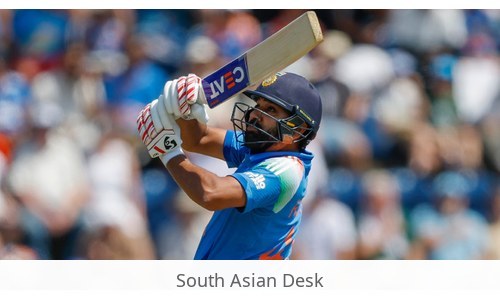
Rohit Sharma performance analysis has become a focal point as the series between India and England remains tied 1-1 after England’s victory in Cardiff on 2026-07-18. Rohit Sharma’s performance in the second ODI has drawn intense scrutiny from analysts, with concerns over potential weaknesses that could affect India’s chances in the series. The ongoing contest, which holds significant weight for both teams, has drawn attention to the leadership and batting responsibilities of India’s captain, whose form and decision-making under pressure are critical to maintaining India’s historical dominance in bilateral ODI series against England.
Rohit Sharma performance analysis: Rohit Sharma’s Batting Technique
Analysts have highlighted specific aspects of Rohit Sharma’s batting technique during the second ODI. His decision-making process during key moments of the innings has drawn attention, with some observers pointing to visible weaknesses in his approach. concerns centered on his shot selection and ability to anchor the innings under pressure. Rohit’s innings lacked the aggressive intent seen in previous high-stakes matches. This shift in approach has raised questions about his adaptability to England’s pace and swing bowling conditions, which have historically challenged Indian batsmen. Rohit’s role as captain further amplifies the scrutiny, as his leadership on the field often influences the team’s tactical direction and morale.
The second ODI’s context is particularly significant given the broader implications for India’s ODI rankings. A loss in this series could disrupt India’s position in the ICC ODI rankings, which are crucial for qualification in global tournaments such as the 2027 Cricket World Cup. India’s current ranking, bolstered by consistent performances against top-tier teams, is under threat if the series is lost. Analysts have pointed to the importance of maintaining a strong record against England, a team that has historically posed challenges in the ODI format. The 2018 series, which marked the beginning of India’s unbeaten streak against England in bilateral ODIs, serves as a benchmark for current expectations.
Implications for India’s ODI Rankings
The ongoing series holds significant weight for both teams, particularly given India’s historical dominance against England in ODIs. Since 2018, India has not lost a bilateral ODI series to England, a streak that could be tested in this encounter. The performance of key players like Rohit Sharma will influence not only the series outcome but also India’s ODI rankings. A strong showing from England in Cardiff has raised questions about India’s ability to maintain its competitive edge in this format. The ICC rankings are determined by a points system that considers the strength of opposition, and a loss to England could see India drop positions, potentially affecting future scheduling and tournament seeding.
Rohit Sharma performance analysis suggests that his current form may necessitate a reevaluation of batting strategies. The implications extend beyond rankings. A weakened performance in this series could signal broader challenges for India’s ODI strategy. The team’s reliance on Rohit’s leadership and batting has been a consistent factor in past successes, but his current form may necessitate a reevaluation of batting strategies. Analysts have suggested that India’s middle-order depth and the effectiveness of their spin attack in English conditions could become pivotal in the upcoming matches. The series also provides an opportunity for emerging players to step up, though the pressure on established stars like Rohit remains high.
Comparative Analysis with Past Performances
Comparing Rohit Sharma’s current performance with his past innings in high-pressure situations reveals notable differences. Historically, Rohit has demonstrated resilience and adaptability, as seen in his 2019 World Cup campaign. However, analysts suggest that his approach in the second ODI lacked the calculated aggression that defined his earlier performances. Reports emphasized that while Rohit’s technical skills remain intact, his mental approach under pressure has been a point of concern. This divergence from his usual demeanor has sparked debates about the psychological toll of prolonged series and the demands of captaincy.
Rohit’s 2019 World Cup innings, particularly his 140* against Australia, exemplified his ability to anchor the innings and guide the team to victory. In contrast, his recent innings in Cardiff appeared more cautious, with fewer risks taken and a greater emphasis on preserving wickets. This shift in approach has been attributed to the need to balance aggression with caution in a high-stakes series, though critics argue it may reflect a lack of confidence or adaptability to England’s conditions. The comparison with his past performances underscores the importance of maintaining consistency in high-pressure scenarios, a trait that has defined his career.
Follow SouthAsianDesk on X, Instagram and Facebook for insights on business and current affairs from across South Asia.
Sources
- What was concerning about Rohit’s innings in 2nd ODI vs ENG? Abhishek Nayar answers – indianexpress.com
- Rohit in the spotlight with series on the line at Lord’s – cricinfo.com
Image: images.indianexpress.com