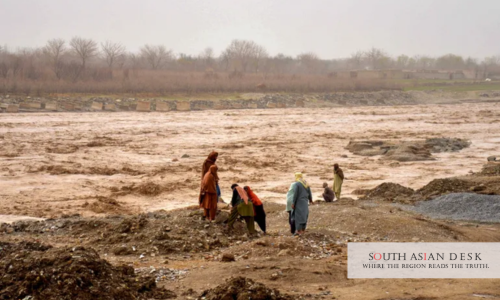
South Asia floods have claimed at least 82 lives this week, as torrential monsoon rains battered northeastern India, Pakistan and Afghanistan in quick succession. Authorities across the three countries reported widespread damage to farmland, infrastructure and public facilities, with rescue operations continuing in several badly affected districts as water levels remained dangerously high.
South Asia Floods Leave Widespread Destruction This Week
The scale of the destruction has been felt unevenly but severely across the region. In India, incessant rain triggered flash flooding in the northeast, while in Afghanistan and Pakistan, fast-moving floodwaters tore through mountainous provinces, sweeping away homes and cutting off entire communities. Taken together, the toll marks one of the more serious regional flooding events of this year’s monsoon season, with authorities in each country still working to establish a complete picture of the damage.
Assam Flooding Drives India’s Rising Death Toll
In India’s northeastern state of Assam, at least 10 people died in floods over a 24-hour period, in what local authorities described as unprecedented devastation. The latest deaths brought the state’s cumulative toll for the week to 36. According to a bulletin issued by Assam’s disaster management authority on Wednesday, more than 650,000 people have been affected by heavy rainfall across 11 districts of the state.
Assam Chief Minister Himanta Biswa Sarma addressed the scale of the crisis in a post on social media, though he offered few additional details on the specific damage caused. State government assessments have since traced the immediate cause of the flooding to exceptionally heavy rainfall in neighbouring Nagaland between 18 and 20 July, which produced unusually high river flows that overwhelmed embankments and low-lying settlements downstream in Assam.
Nuristan and Khyber Pakhtunkhwa Floods Devastate Communities
Further west, the toll has been steeper still. At least 46 people have been killed and around 100 injured in floods across Afghanistan’s northeastern Nuristan province and Pakistan’s Khyber Pakhtunkhwa province over a 72-hour period, according to disaster management authorities in both countries. The floods struck with little warning, destroying homes, hotels and other structures in several towns.
Mujib ur Rahman, a resident of Nuristan’s provincial capital, described the aftermath as complete devastation, saying, “The floods swept away houses and hotels. Everything is gone.” Heavy machinery has since been deployed to assist rescue teams working to reach residents still believed to be trapped beneath debris.
Climate Vulnerability Deepens the Region’s Exposure
Experts studying the region’s exposure to extreme weather note that Afghanistan and Pakistan contribute relatively little to global greenhouse gas emissions, yet remain among the countries most vulnerable to the effects of climate change. Intensifying floods, prolonged droughts, glacier melt and worsening water shortages have combined to place millions of people across both countries at heightened risk during each monsoon season.
That vulnerability has been compounded by limited infrastructure in many of the mountainous and low-lying areas hit hardest this week, leaving communities with little capacity to absorb the impact of sudden, heavy rainfall.
Regional Response and Outlook
With rivers across northeastern India, Pakistan and Afghanistan still running high, authorities in all three countries are expected to maintain emergency operations for the coming days. Relief efforts are focused on delivering food, shelter and medical assistance to displaced families, while officials continue to monitor rainfall patterns for signs of further deterioration.
The scale of this week’s South Asia floods, and the speed with which the death toll climbed, is likely to renew scrutiny of regional flood preparedness and early warning systems, particularly in border areas where rainfall in one country can quickly translate into flooding downstream in another.
Published in SouthAsianDesk, July 23, 2026
Follow SouthAsianDesk on X, Instagram and Facebook for insights on business and current affairs from across South Asia.