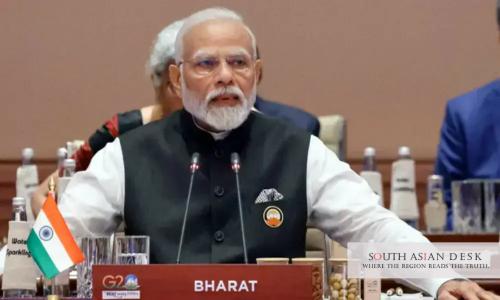
The India exam system overhaul is officially underway. Prime Minister Narendra Modi announced on Sunday, July 26, that a high-powered task force chaired by Infosys co-founder Nandan Nilekani will be responsible for redesigning the country’s public examination framework. The move comes after weeks of youth-led demonstrations over exam paper leaks in India, a crisis that had already cost the country its education minister.
In a 30-second video statement posted to Instagram, Modi said the government’s aim is straightforward. “Our examination system should be trustworthy, should be transparent and the system should make maximum use of technology,” he said. He added that fresh legislation targeting paper leaks would be introduced in parliament on Monday, with tighter rules and tougher penalties for those found responsible for compromising exam integrity.
Why the India Exam System Overhaul Was Triggered
The push for reform traces back to May, when a paper leak connected to the NEET-UG paper leak scandal set off widespread anger among students and their families. The National Testing Agency, which conducts several of India’s largest competitive exams, faced sustained criticism over lapses in security and transparency. Public frustration built over several weeks, culminating in sustained street protests led by a youth movement calling itself the Cockroach Janta Party, or CJP.
The pressure eventually reached the top of the government. Education Minister Dharmendra Pradhan resigned on Saturday, a day before Modi’s announcement, after activists spent weeks demanding he step down over his handling of the leaks. Notably, Modi’s video message made no mention of Pradhan by name, focusing instead on the road ahead for reform.
Following Pradhan’s resignation, the CJP called off its protests on Saturday, saying its core demands had been met. Those demands reportedly went beyond a change in leadership. The government has also agreed to withdraw police cases filed against protesters and to compensate the families of students who died by suicide in the aftermath of the paper leaks, according to reporting on the government’s response.
Who Is Leading the Nandan Nilekani Task Force
The Nandan Nilekani task force is a six-member body that also includes former ISRO chairman S. Somanath and former Intelligence Bureau director Tapan Deka, according to reports on the panel’s composition. The group brings together expertise from technology, education, and national security, reflecting the government’s stated intent to build a leak-proof, technology-driven examination system.
Nilekani is widely regarded as one of India’s most consequential technology figures. He co-founded Infosys in 1981 and served as its chief executive from 2002 to 2007 before returning as the company’s non-executive chairman in 2017. In 2009, he was appointed founding chairman of the Unique Identification Authority of India, where he oversaw the creation and rollout of Aadhaar, the country’s biometric identity system that now covers more than a billion residents. That track record in building large-scale digital infrastructure is the primary reason he has been entrusted with reshaping how India conducts its public exams.
What Comes Next
With the task force now formed and new legislation set to be tabled in parliament, the coming weeks will show how quickly the government can translate its promises into concrete changes. Students and families affected by this year’s disruptions will be watching closely to see whether the panel’s recommendations restore confidence in a system that many felt had failed them. For now, the announcement marks the clearest signal yet that the government intends to treat exam security as a structural problem rather than a series of isolated incidents.
The success of this reform effort will likely be measured not just by the strength of the new law, but by how effectively the Nilekani-led panel can rebuild trust among the millions of students who sit for national exams each year.
Published in SouthAsianDesk, July 27th, 2026
Follow SouthAsianDesk on X, Instagram and Facebook for insights on business and current affairs from across South Asia.