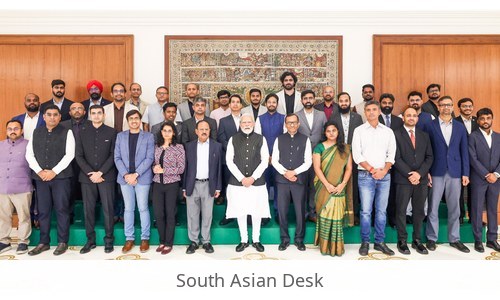
India private space sector: On August 23, 2026, Prime Minister Narendra Modi stated that India’s private space ecosystem can become a major force for both India and the world. Speaking during an event, Modi emphasized the need for startups to collaborate across sectors and innovate to enhance India’s global standing in the space industry.
His remarks underscored a strategic shift in India’s approach to space innovation, moving beyond traditional applications to integrate space technology with agriculture, environmental management, and other critical sectors. This aligns with the Indian government’s broader economic strategy to diversify export markets and attract global investment in high-tech industries.
India private space sector: Collaboration Across Sectors
Modi urged space startups to integrate space technology with agriculture, livestock, and dairy sectors. He highlighted the potential benefits of collaboration with environmental organizations to address challenges such as climate change and resource management.
This cross-sector approach, he argued, could unlock new applications for satellite technology and remote sensing. For instance, satellite imagery and data analytics could be used to monitor crop health, optimize irrigation, and predict yield outcomes, directly benefiting farmers and agribusinesses. Similarly, remote sensing could aid in tracking livestock movements, managing dairy supply chains, and mitigating the impact of extreme weather events on rural economies.
These applications are part of a larger effort to leverage space technology for sustainable development, a priority outlined in India’s national policies on climate resilience and agricultural modernization. The integration of space technology agriculture is a key component of this vision, ensuring that advancements in the space sector directly contribute to food security and rural development.
Government Support and Innovation
The Indian government has been actively promoting the private space sector through initiatives like tax incentives, streamlined regulatory frameworks, and public-private partnerships. Modi reiterated the importance of sustained government support to foster innovation, attract foreign investment, and create a competitive ecosystem for Indian space startups. He also called for increased funding for research and development in emerging technologies like reusable launch systems and small satellite manufacturing.
These efforts are part of a broader policy framework aimed at reducing reliance on foreign technology and building indigenous capabilities in aerospace engineering. The government’s push for private sector participation follows a decade of growth in India’s space industry, marked by the establishment of regulatory bodies such as the Indian Space Research Organisation (ISRO) and the Department of Space, which have laid the groundwork for private sector involvement.
By simplifying licensing processes and offering financial incentives, the government aims to reduce barriers to entry for startups and encourage innovation in areas such as satellite-based navigation, Earth observation, and space tourism. This collaboration in space industry is essential to ensure that India’s private space sector remains at the forefront of global technological advancements.
Implications for the Future
Modi’s vision positions India as a leading destination for global talent and investment in the space sector. With the private sector expected to drive growth in satellite-based services, Earth observation, and space tourism, the government aims to leverage this momentum to strengthen India’s position in the global space economy. The initiative aligns with broader economic strategies to diversify export markets and create high-skilled employment opportunities.
As the private space sector expands, India could emerge as a key player in international collaborations, potentially partnering with global space agencies and private firms to develop cutting-edge technologies. This growth could also spur ancillary industries, such as aerospace manufacturing, data analytics, and cybersecurity, further boosting India’s technological and economic landscape.
Additionally, the emphasis on innovation and cross-sector applications may lead to the development of new business models that integrate space technology with everyday applications, from smart agriculture to disaster response systems. Indian space innovation is not only about technological advancement but also about creating sustainable solutions that address global challenges.
Follow SouthAsianDesk on X, Instagram and Facebook for insights on business and current affairs from across South Asia.
Sources
- Our private space ecosystem can become major force for India and the world, PM tells start-ups – indianexpress.com
- PM Modi calls upon space startups to make India a go-to destination for global talent, investors – thehindu.com
Image: images.indianexpress.com