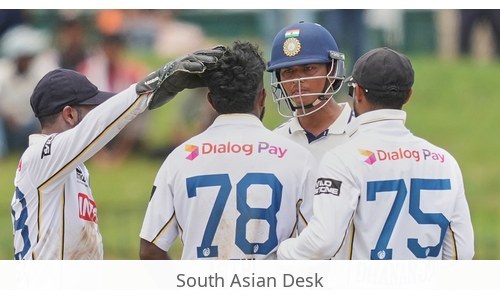
Jaiswal ICC BCCI criticism has sparked a heated debate in cricket circles following Sanjay Manjrekar’s public critique of the ICC and BCCI for their handling of disciplinary action against Indian cricketer Yashasvi Jaiswal. The incident, which occurred during a Test match confrontation with Sri Lankan batsman Asitha Fernando, has raised questions about the consistency of cricket disciplinary actions and the enforcement of sportsmanship in cricket. Manjrekar’s Sanjay Manjrekar critique highlights what he perceives as a double standard in how players are penalized for on-field misconduct.
Jaiswal ICC BCCI criticism: Implications of Lenient Punishments
Manjrekar’s Jaiswal ICC BCCI criticism centers on the disparity in penalties for Jaiswal and Fernando. While Jaiswal received only a demerit point for his altercation with Fernando, the Sri Lankan player was penalized for hitting boundary wedges with his bat after being dismissed. This inconsistency has reignited discussions about the fairness of cricket disciplinary actions and whether the ICC and BCCI are sending the right message to players about acceptable behavior.
The Yashasvi Jaiswal confrontation with Fernando occurred on the first day of the Test match, drawing immediate attention from fans and analysts. Manjrekar pointed out that similar incidents in the past, such as the 2022 altercation between Australian and Pakistani players, resulted in more balanced penalties. This contrast has led to speculation that regional biases or procedural gaps may be influencing disciplinary decisions. The Asitha Fernando punishment for his boundary wedge incident, while justified under the ICC’s rules, appears to have overshadowed the severity of Jaiswal’s actions, which involved physical confrontation.
Role of Governing Bodies
The ICC and BCCI are tasked with upholding the integrity of cricket through strict enforcement of rules. However, Manjrekar’s Sanjay Manjrekar critique underscores concerns about the lack of uniformity in disciplinary measures. For instance, while the ICC’s Code of Conduct outlines penalties for unsportsmanlike conduct, its application has been inconsistent. In football, FIFA’s disciplinary code mandates specific sanctions for verbal abuse and physical contact, with penalties ranging from fines to suspensions. Similarly, the NBA enforces strict protocols for on-court misconduct, including ejections and fines. These frameworks provide a benchmark for cricket’s disciplinary policies, which currently appear to lack the same level of specificity and enforceability.
The Jaiswal ICC BCCI criticism also highlights the need for clearer guidelines on how to handle player confrontations. While the ICC has protocols for addressing on-field misconduct, the case of Jaiswal and Fernando reveals potential gaps in their enforcement. For example, the 2019 ICC Code of Conduct emphasized sportsmanship in cricket, but critics argue that its effectiveness has been undermined by perceived leniency in recent cases. Manjrekar’s comments suggest that the ICC and BCCI must revisit their disciplinary frameworks to ensure they align with the values of fair play and accountability.
Broader Context of Player Conduct in Cricket
The Yashasvi Jaiswal confrontation is part of a larger trend of on-field misconduct in cricket. Over the past decade, incidents such as sledging, verbal abuse, and physical altercations have prompted calls for stricter enforcement of rules. The Asitha Fernando punishment for his boundary wedge incident, while minor, contrasts sharply with the leniency shown to Jaiswal, raising questions about the ICC’s priorities. Manjrekar’s Sanjay Manjrekar critique argues that the current disciplinary approach risks normalizing aggressive behavior, which could erode the spirit of the game.
In 2019, the ICC introduced a revised Code of Conduct aimed at addressing these issues, but its impact has been limited. Critics, including Manjrekar, argue that the the result reflects a systemic failure to enforce these rules consistently. The incident also underscores the importance of sportsmanship in cricket, as players are expected to model respectful behavior for fans and younger athletes.
Conclusion
The the result has reignited debates about the need for equitable disciplinary standards in cricket. Sanjay Manjrekar’s Sanjay Manjrekar critique highlights the importance of consistency in enforcing rules, particularly when it comes to cricket disciplinary actions and the treatment of players from different teams. As the cricketing community grapples with these issues, the ICC and BCCI must address concerns about fairness and transparency to uphold the integrity of the sport.
Follow SouthAsianDesk on X, Instagram and Facebook for insights on business and current affairs from across South Asia.
Sources
- Manjrekar slams ICC, BCCI after Jaiswal gets only demerit point for confrontation with Fernando – indianexpress.com
- Jayasuriya reprimanded for hitting boundary wedges with bat after dismissal – cricinfo.com
Image: images.indianexpress.com