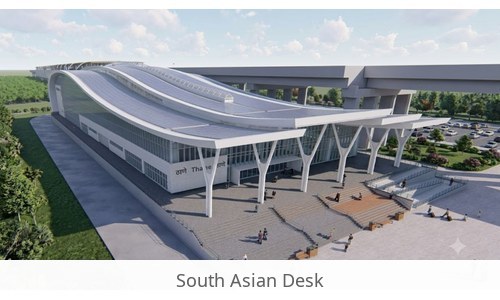
India bullet train project: On 2026-08-26, India’s Mumbai-Ahmedabad bullet train project advanced with construction of a 135.45-km elevated stretch from Shilphata in Thane to Zaroli village near the Maharashtra-Gujarat border. This high-speed rail corridor, connecting India’s financial capital to its western industrial hub, represents a landmark infrastructure initiative aimed at enhancing regional connectivity India. The project, part of India’s broader vision to modernize its rail network, is being developed under a public-private partnership model with Japanese financial and technical support. Its completion is expected to set a precedent for future high-speed rail corridors across the country.
India bullet train project: Key Developments
The project’s elevated section spans 135.45 km, with Thane station construction being a critical component. Thane station is being constructed 12 metres above ground to accommodate the high-speed rail system. This engineering approach minimizes land acquisition challenges while ensuring seamless integration with existing rail networks. The elevated design also reduces environmental disruption along the route, a critical consideration for the project’s environmental impact assessments. The decision to elevate the track was influenced by the need to avoid densely populated areas and sensitive ecosystems, particularly in the Thane region, which is a major agricultural and residential hub. This approach aligns with India’s growing emphasis on infrastructure development India, balancing rapid urbanization with ecological preservation.
The construction phase has involved significant coordination between state and federal authorities, with Maharashtra and Gujarat playing pivotal roles in facilitating land acquisition and regulatory approvals. The elevated structure includes viaducts, bridges, and retaining walls designed to withstand seismic activity and extreme weather conditions, reflecting the project’s commitment to long-term resilience. Engineers have also incorporated modular construction techniques to expedite progress, ensuring that the first section of the corridor could be operational by 2027 as initially planned.
Economic Implications
The India bullet train project is expected to reduce travel time between Mumbai and Ahmedabad from 7 hours to 2 hours, significantly enhancing freight and passenger movement. This efficiency gain could boost trade volumes between India’s western and central regions by 25-30%, according to preliminary economic models. The corridor is anticipated to serve as a critical link for industries in Gujarat, including petrochemicals, textiles, and automotive manufacturing, which rely on efficient logistics to access markets in Maharashtra and beyond. The project also aims to catalyze real estate development along the corridor, with projected increases in commercial property values in key stations. Urban planners have identified potential zones for mixed-use development, including retail hubs, business parks, and residential complexes, which could generate employment opportunities and stimulate local economies.
The reduced travel time is expected to attract multinational corporations to establish regional headquarters or manufacturing units near the corridor, leveraging the improved connectivity. Additionally, the project’s emphasis on passenger convenience—such as high-frequency services, seamless ticketing systems, and integrated transport hubs—could make the route a preferred choice for business travelers and tourists, further boosting ancillary industries like hospitality and retail. The bullet train economic impact is anticipated to be substantial, with long-term benefits for regional economies and trade corridors.
Technological Advancements
The Mumbai-Ahmedabad corridor incorporates advanced signaling systems and energy-efficient rolling stock, setting a benchmark for future high-speed rail projects in India. The project’s technological framework includes automated train control systems, which enhance safety by reducing human error, and noise-reduction technologies, which mitigate the impact on surrounding communities. These innovations are part of India’s broader strategy to adopt cutting-edge rail technologies, including the use of regenerative braking systems that convert kinetic energy into electricity for reuse, thereby reducing energy consumption.
The project also features a state-of-the-art maintenance and monitoring system, utilizing IoT-enabled sensors to track the condition of tracks, signaling equipment, and rolling stock in real time. This proactive approach to maintenance is expected to minimize service disruptions and extend the lifespan of infrastructure. The technological standards established here may influence subsequent rail infrastructure developments across the country, particularly in regions planning high-speed corridors such as Delhi-Mumbai and Bengaluru-Chennai.
The adoption of Japanese Shinkansen technology, which has a proven track record of safety and efficiency, underscores the project’s alignment with global best practices. This collaboration has also facilitated knowledge transfer, with Indian engineers and technicians receiving training in advanced rail operations and maintenance techniques. Such capacity-building efforts are critical for ensuring the long-term sustainability of India’s high-speed rail network.
Follow SouthAsianDesk on X, Instagram and Facebook for insights on business and current affairs from across South Asia.
Sources
- Video: For India’s 1st Bullet Train, Work In Progress Across Scenic Terrains – ndtv.com
- Mumbai-Ahmedabad bullet train: Why Thane station is being built 12 metres above ground – indianexpress.com
Image: images.indianexpress.com