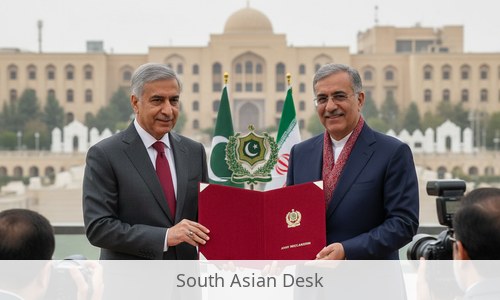
Pakistan Iran talks have marked a significant turning point in bilateral relations between Pakistan and Iran, with Interior Minister Mohsin Naqvi announcing progress in reducing regional tensions. On August 27, 2026, the discussions, which followed Naqvi’s recent visit to Tehran alongside Pakistan’s army chief, Field Marshal Asim Munir, involved key Iranian officials including Foreign Minister Abbas Araqchi. These developments underscore the importance of regional stability and conflict resolution in a region affected by the U.S.-Israeli conflict.
Pakistan Iran talks: Key Developments
Interior Minister Mohsin Naqvi confirmed that the Pakistan Iran talks achieved notable outcomes, emphasizing the importance of bilateral cooperation to address shared security concerns. The discussions were held in the context of ongoing regional instability, with both nations seeking to de-escalate tensions and foster mutual trust. Iranian Foreign Minister Abbas Araqchi participated actively, signaling a commitment to resolving outstanding issues through diplomatic channels. The talks followed Naqvi’s visit to Tehran, where high-level exchanges underscored the need for sustained dialogue.
The engagement between Pakistan and Iran comes amid heightened regional volatility, particularly in light of the U.S.-Israeli conflict’s indirect impact on South Asian security dynamics. Pakistan’s military leadership, represented by Field Marshal Asim Munir, has historically played a critical role in shaping the country’s foreign policy, particularly in matters involving regional stability. Munir’s participation in the Pakistan Iran talks highlights the strategic importance of military-to-military coordination in addressing cross-border security challenges. Meanwhile, Iran’s Foreign Minister Abbas Araqchi, a veteran diplomat known for his pragmatic approach to international relations, has long advocated for multilateral solutions to regional disputes. His active involvement in these talks suggests a renewed Iranian interest in strengthening ties with Pakistan, a neighbor that shares a 909-kilometer border and has historically navigated complex geopolitical relationships with both Iran and the U.S.
The discussions reportedly focused on several key areas, including counterterrorism cooperation, trade facilitation, and the management of shared border security concerns. Analysts note that these issues have long been central to Pakistan-Iran relations, particularly given the presence of militant groups in the region and the need for coordinated efforts to combat extremism. The talks also addressed the broader implications of the U.S.-Iran relations, with both nations expressing concerns over the potential for regional spillover effects that could destabilize South Asia. This alignment of interests underscores the growing recognition among regional actors of the need for collaborative approaches to security challenges.
Implications for Regional Dynamics
The progress in Pakistan-Iran relations could have broader implications for U.S.-Iran relations, as Pakistan’s role as a mediator gains prominence. Historically, Pakistan and Iran have maintained complex ties, shaped by shared border interests and regional security challenges. This latest development suggests a renewed focus on collaborative efforts to counter external pressures, particularly from the U.S.-Iran relations. Analysts note that sustained engagement between the two nations could contribute to long-term stability in South Asia.
The evolving dialogue between Pakistan and Iran is likely to influence the broader geopolitical landscape of the region, particularly in relation to Afghanistan and India. Pakistan’s strategic alignment with Iran could serve as a counterbalance to India’s growing influence in the region, particularly in the context of Afghanistan’s political instability. Additionally, the normalization of bilateral relations may pave the way for enhanced economic cooperation, including the revival of stalled infrastructure projects and energy trade agreements. These developments could also have implications for regional organizations such as the South Asian Association for Regional Cooperation (SAARC), which has struggled to foster meaningful collaboration among member states due to historical tensions.
From a security perspective, the renewed dialogue between Pakistan and Iran may reduce the risk of cross-border incidents, particularly in areas where militant groups have historically operated. This could have a positive impact on regional stability, allowing both nations to focus on domestic priorities while mitigating external threats. Furthermore, the renewed engagement may encourage other regional actors to pursue similar diplomatic initiatives, fostering a more cooperative environment in South Asia.
Follow SouthAsianDesk on X, Instagram and Facebook for insights on business and current affairs from across South Asia.