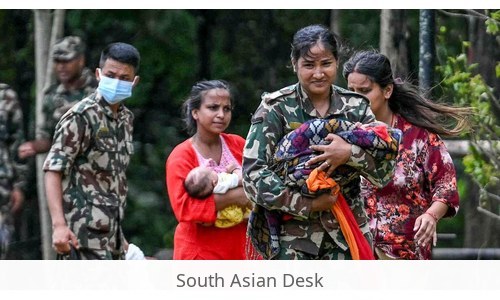
Nepal floods: On August 26, 2026, catastrophic flooding along the Nepal-Tibet border reignited concerns about glacial lake outburst floods (GLOFs) in Bhutan. The Indian Express reports that 287 Indians remain missing following the disaster, while the Prime Minister of Nepal, Balen Shah, announced over Rs 5 billion has been deposited into the Prime Minister’s Relief Fund for flood response efforts. The Asian Development Bank has approved a $5 million emergency grant to support rescue and relief operations in Nepal. These developments have rekindled regional discussions about Bhutan disaster preparedness and the growing risks posed by Himalayan climate change.
Nepal floods: Bhutan’s Current Disaster Preparedness Measures
Bhutan has long maintained a robust disaster management framework, including early warning systems for glacial lake outburst floods (GLOFs). The country’s National Emergency Earthquake Preparedness Programme (NEEPP) includes protocols for monitoring glacial lakes and coordinating with neighboring nations. However, the recent Nepal floods have highlighted the need for enhanced resource allocation and inter-agency coordination. According to Business Bhutan, the disaster has rekindled concerns about the vulnerability of Bhutan’s mountainous regions to GLOFs, which are increasingly linked to accelerated glacial melt. The country’s reliance on these systems is critical given its geographical proximity to Nepal’s glacial regions, where similar risks are now being observed. Bhutan’s existing infrastructure, while effective in many scenarios, faces challenges in scaling up during large-scale events, as seen in the recent Nepal floods. This has prompted calls for increased investment in flood-resistant infrastructure and community-based early warning systems, particularly in high-risk zones like the Phobjikha Valley and Paro River basin.
Regional Cooperation in Disaster Response
Regional cooperation in disaster response has been critical in addressing Himalayan disaster risks. The South Asian Association for Regional Cooperation (SAARC) has initiated cross-border disaster response drills, including joint flood simulations between Nepal and Bhutan. These exercises aim to improve coordination in emergency scenarios, such as the rapid deployment of resources and information sharing. The Asian Development Bank’s $5 million grant underscores the importance of international support for regional resilience. Additionally, the United Nations has emphasized the role of transboundary water management in mitigating flood risks, urging South Asian nations to share glacial monitoring data. This call for data transparency is particularly relevant as the melting of Himalayan glaciers affects multiple countries, necessitating a unified approach to risk assessment and mitigation. The South Asia natural disasters context underscores the urgency of collaborative frameworks to address shared vulnerabilities. For instance, Bhutan and Nepal have recently established a joint task force to monitor glacial lakes in the Kanchenjunga region, a critical area prone to GLOFs. This initiative reflects the growing recognition that Himalayan climate change demands cross-border solutions.
The Impact of Climate Change on Glacial Lakes
The Hindu reported that army rescue teams are actively clearing debris in Dhading, Nepal, following the floods. UN News highlights that melting Himalayan glaciers are contributing to an increase in deadly floods across the region. Scientific studies indicate that rising temperatures have led to the destabilization of glacial lakes, with some in Bhutan now classified as “high risk.” If current climate trends continue, the frequency and intensity of GLOFs could increase, necessitating urgent upgrades to Bhutan’s disaster infrastructure and early warning systems. The situation is compounded by the fact that Bhutan’s mountainous terrain and dense population in river valleys make it particularly susceptible to such events. The recent Nepal floods serve as a stark reminder of the interconnectedness of regional ecosystems and the need for proactive measures to address climate-induced hazards. For example, the 2023 GLOF in the Tsho Rolpa region of Nepal triggered landslides that affected downstream communities in Bhutan, illustrating the cascading effects of climate-driven disasters. Such events underscore the importance of integrating Bhutan disaster preparedness with broader regional cooperation in disaster response strategies.
Follow SouthAsianDesk on X, Instagram and Facebook for insights on business and current affairs from across South Asia.
Sources
- Nepal flash flood: Army rescue team clears debris, slush from houses in Dhading – thehindu.com
- 287 Indians still missing after Nepal flash floods, 120 others crossed over to Nepal from China: MEA – indianexpress.com
- A Disaster Next Door, A Warning for Bhutan – businessbhutan.bt
- Over Rs 5 billion deposited in PM’s relief fund for Bhotekoshi flood response – english.onlinekhabar.com
- ADB Responds Immediately to Nepal Floods with $5 Million Grant – adb.org
Image: th-i.thgim.com