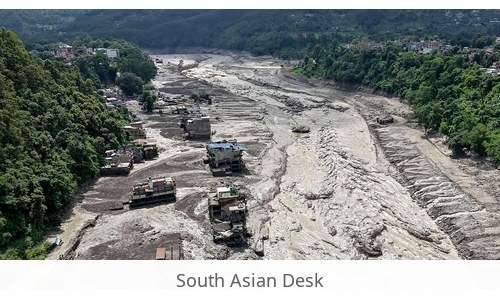
Nepal flash floods have left a devastating mark on the country, with at least 676 lives lost and nearly 3,000 people still unaccounted for, including more than 300 Indian nationals. On August 30, 2026, Nepal’s Prime Minister Balen Shah reported that over Rs 5 billion has been deposited into the Prime Minister’s Relief Fund for flood response efforts. The Asian Development Bank has approved a $5 million emergency grant to fund urgent rescue and relief operations following the floods, which were triggered by a high-altitude rock-and-ice avalanche, as reported by The Hindu. The flood damage costs are projected to reach $5 billion, highlighting the scale of the disaster and the urgent need for international support.
Nepal flash floods: Economic Impact
The Prime Minister’s Relief Fund allocation underscores the scale of the disaster, with rebuilding costs projected to reach $5 billion. The Indian Express reported that 275 Indians are still missing due to the floods. The Asian Development Bank’s emergency grant aims to support immediate rescue and relief efforts, though the long-term economic burden on Nepal remains significant. The floods have exposed vulnerabilities in infrastructure and disaster preparedness across the Himalayan region, emphasizing the need for Himalayan disaster recovery initiatives.
Nepal’s economy, already grappling with post-pandemic recovery and limited fiscal flexibility, faces a severe challenge in mobilizing resources for reconstruction. The $5 billion estimate includes not only physical infrastructure but also the cost of restoring livelihoods, healthcare systems, and agricultural productivity in affected regions. The government has emphasized the need for international support, particularly from regional partners, to bridge the funding gap. However, the scale of the disaster has also raised questions about the adequacy of existing disaster risk management frameworks in the Himalayan region, where rapid glacial melt and extreme weather events are becoming more frequent.
Regional Response
The floods have raised urgent concerns about climate change’s impact on Himalayan ecosystems, with similar risks identified in neighboring Bhutan, as noted in a report by Business Bhutan. The disaster highlights the need for regional cooperation on climate resilience, particularly as melting glaciers and extreme weather events become more frequent. Nepal’s response has drawn attention from South Asian neighbors, who are increasingly recognizing the interconnected nature of environmental challenges in the region.
Bhutan, which shares a border with Nepal and is also vulnerable to glacial lake outburst floods (GLOFs), has already initiated cross-border collaboration with Nepal on early warning systems and infrastructure reinforcement. The Himalayan region’s fragile geology and the accelerating pace of glacial retreat due to rising temperatures have created a ticking clock for nations like Nepal and Bhutan to strengthen their adaptive capacities. Regional bodies such as the South Asian Association for Regional Cooperation (SAARC) have been urged to prioritize climate resilience in their policy agendas, though political fragmentation and resource constraints have historically hindered such efforts.
International Aid and Relief Efforts
The Asian Development Bank’s $5 million grant is part of a broader international response to the crisis. UN News — Asia Pacific reported that the Himalayas are experiencing increased glacial melt, contributing to more frequent and severe flooding events. While international aid has been mobilized, the effectiveness of relief operations remains under scrutiny, with calls for improved coordination between local authorities and global organizations to ensure resources reach affected communities efficiently.
The floods have also prompted a reevaluation of disaster response protocols in South Asia. The United Nations Office for Disaster Risk Reduction (UNDRR) has highlighted the need for integrated regional strategies to address transboundary climate risks, including shared data platforms and joint training programs for emergency responders. However, the complexity of coordinating efforts across multiple jurisdictions and the logistical challenges of reaching remote Himalayan communities remain significant hurdles.
Context and Long-Term Implications
The catastrophic flooding in Nepal highlights the increasing risks associated with climate change in the Himalayan region, prompting concerns about similar disasters in neighboring Bhutan and beyond. The high-altitude rock-and-ice avalanche that triggered the floods underscores the growing instability of glacial systems in the region, a phenomenon linked to global warming. Scientists warn that without urgent mitigation efforts, the frequency and intensity of such events are likely to escalate, posing existential threats to downstream populations and ecosystems.
For Nepal, the disaster serves as a stark reminder of the need to balance economic development with environmental sustainability. The government has pledged to accelerate investments in climate-resilient infrastructure, including flood barriers, improved drainage systems, and reforestation projects. However, the success of these initiatives will depend on sustained funding, technical expertise, and regional collaboration to address the root causes of climate vulnerability.
Follow SouthAsianDesk on X, Instagram and Facebook for insights on business and current affairs from across South Asia.
The wider context of this developing story also includes climate change impact.
This report focuses on Nepal flash floods and the verified developments surrounding it.
This report focuses on Nepal flash floods and the verified developments surrounding it.
Sources
- Nepal Flash Flood LIVE Updates: Damage May Cost Up To $5 Billion To Rebuild, Says Minister – ndtv.com
- The Bhotekoshi flood | A Himalayan tragedy – thehindu.com
- A Disaster Next Door, A Warning for Bhutan – businessbhutan.bt
- Over Rs 5 billion deposited in PM’s relief fund for Bhotekoshi flood response – english.onlinekhabar.com
- 275 Indians still missing in Nepal, toll climbs to 675 – indianexpress.com
- As the Himalayas melt, deadly floods become the new normal – news.un.org
- ADB Responds Immediately to Nepal Floods with $5 Million Grant – adb.org
Image: th-i.thgim.com