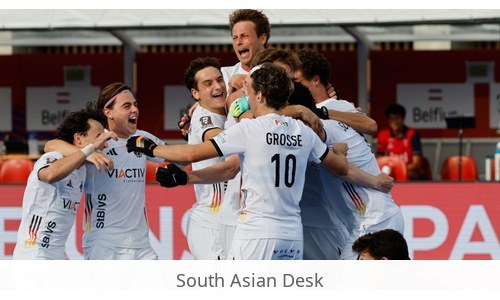
Germany Hockey World Cup victory: On August 30, 2026, Germany’s men’s hockey team secured their fourth World Cup title by defeating Spain 1-0, a result reported by The Hindu and The Indian Express. This victory marks Germany’s equalization of Pakistan’s historic record of four World Cup titles, raising questions about the evolving competitive landscape in international hockey.
Germany Hockey World Cup victory: Implications for Indian Hockey
Germany’s triumph underscores a shift in global hockey dynamics, challenging India’s long-standing dominance in the sport. The solitary goal that sealed Germany’s victory highlights the increasing competitiveness of teams outside traditional powerhouses. For India, this development signals the need for renewed focus on youth hockey programs in India and tactical innovation to maintain its position in international tournaments.
Historically, India has been a dominant force in Men’s Hockey World Cup, with a record of seven World Cup titles, including victories in 1975, 1980, 1994, and 2010. However, the sport has seen a gradual decline in India’s performance over the past two decades, with the last World Cup win dating back to 2010. The emergence of Germany and other nations as consistent contenders reflects a broader trend of global hockey becoming more competitive, with investment in infrastructure, coaching, and player development playing a critical role in shaping outcomes.
The Indian hockey board, the Hockey India Limited (HIL), has faced criticism for its lack of long-term strategic planning. While initiatives such as the Khelo India program aim to identify and nurture young talent, critics argue that the focus remains fragmented, with insufficient investment in grassroots coaching and facilities. Germany’s success, in contrast, is attributed to a structured national program that emphasizes technical training, physical conditioning, and mental resilience from an early age. This systematic approach has enabled Germany to consistently produce world-class players capable of competing at the highest level.
The equalization of World Cup titles between Germany and Pakistan underscores a shift in the competitive dynamics of international hockey. Pakistan, which previously held the record for four Pakistan World Cup titles, has seen its own decline in recent years due to a lack of sustained investment in the sport. Germany’s rise, however, signals a new era where traditional powerhouses must contend with emerging teams that are better resourced and strategically aligned.
For India, the challenge lies in adapting to this evolving landscape. The country’s hockey infrastructure, while historically strong, has struggled to keep pace with the modern demands of the sport. The absence of a centralized, long-term strategy has left Indian teams vulnerable to the growing strength of nations like Germany, which have invested heavily in sports science, nutrition, and recovery protocols. Additionally, the lack of a robust domestic league to provide competitive platforms for players has hindered the development of a cohesive national team.
The Indian hockey board must address these gaps by prioritizing infrastructure upgrades, expanding coaching academies, and fostering partnerships with international sports organizations. A renewed emphasis on tactical innovation, such as adopting advanced analytics and video-based training, could also help Indian teams stay competitive. Furthermore, ensuring that young athletes receive consistent exposure to high-level competition through international tournaments and friendly matches is essential for building resilience and adaptability.
Conclusion
Germany’s Germany Hockey World Cup victory serves as a wake-up call for Indian hockey, emphasizing the importance of adapting to a rapidly changing competitive environment. As the sport evolves, India must prioritize strategic reforms to ensure sustained success on the global stage. The equalization of World Cup titles between Germany and Pakistan underscores the need for continuous evaluation and enhancement of Indian hockey strategy.
The broader implications of this shift extend beyond national pride. With the 2028 World Cup in Los Angeles and the 2030 World Cup in Paris on the horizon, the global hockey community is poised for further transformation. India’s ability to respond to these challenges will determine its future relevance in the sport. The lessons from Germany’s structured approach and Pakistan’s decline highlight the necessity of sustained investment and strategic foresight in maintaining a competitive edge.
Follow SouthAsianDesk on X, Instagram and Facebook for insights on business and current affairs from across South Asia.
Sources
- Why Germany equalling Pakistan’s World Cup record should worry Indian hockey – indianexpress.com
- Germany win record-equalling fourth World Cup, defeat Spain by solitary goal – thehindu.com
Image: images.indianexpress.com