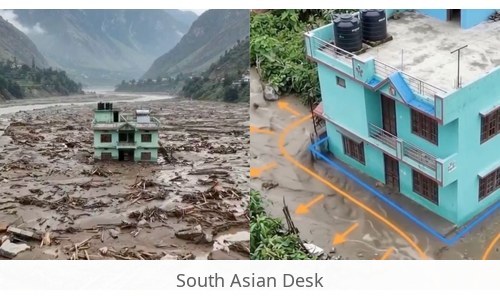
Nepal floods rescue operations have intensified as NEA employees submitted an anonymous letter to Prime Minister Balen Shah, urgently requesting expedited rescue efforts for colleagues trapped in hydropower project tunnels following devastating flash floods. The plea highlights a humanitarian crisis in Nepal, with the death toll surpassing 900 and thousands still missing. The situation has drawn attention to the risks faced by trapped workers in Nepal, particularly those involved in hydropower projects Nepal, which are now under threat from the disaster.
Nepal floods rescue operations: Government Response
The PM’s office confirmed coordination with international relief agencies, though no official timeline for rescue operations has been disclosed. The government’s focus on hydropower workers reflects the critical role these projects play in Nepal’s energy infrastructure and economic development. However, the complexity of the terrain and the scale of the disaster have created significant logistical challenges for rescue teams, who must navigate unstable ground and blocked access routes to reach those in need.
The NEA plea for rescue has underscored the urgency of the situation, with employees fearing that delays could cost lives. Balen Shah NEA employees, who submitted the letter, highlighted the precarious conditions in the tunnels, where water levels continue to rise and structural integrity is compromised. Rescue efforts are being hampered by the sheer scale of the disaster, which has left entire communities isolated and infrastructure in disarray. The humanitarian crisis in Nepal has also prompted calls for international aid, as local resources are stretched thin.
Impact on Hydropower Projects
The floods have severely damaged critical infrastructure, including three major hydropower projects under NEA management. Engineers report structural instability in tunnels and power stations, raising concerns about long-term energy production. Economic analysts warn of potential delays in Nepal’s renewable energy goals, which were central to its 2025 climate policy framework. These projects were intended to bolster the country’s energy security and reduce reliance on imported fossil fuels, but the damage threatens to set back progress toward these objectives.
The crisis has also exposed vulnerabilities in flood preparedness along the Kali Gandaki River basin, a region historically prone to seasonal flooding but lacking in comprehensive disaster mitigation strategies. This raises questions about the adequacy of existing infrastructure and the need for revised planning to account for increasingly severe weather patterns linked to climate change.
The Kali Gandaki River, a major waterway in western Nepal, has long been a focal point for hydropower development due to its high flow rates and potential for energy generation. However, the region’s topography—characterized by steep valleys and loose soil—makes it particularly susceptible to flash floods during monsoon seasons. Recent studies have highlighted the growing frequency of extreme weather events in the Himalayan region, driven by rising temperatures and shifting precipitation patterns. This underscores the need for more robust infrastructure and early warning systems to mitigate future risks, though the current crisis has revealed gaps in preparedness that require urgent attention.
Expanded Analysis
The ongoing Nepal floods rescue operations have placed immense pressure on both local and international rescue teams. With trapped workers in Nepal facing life-threatening conditions, the urgency for coordinated efforts has never been higher. The NEA plea for rescue has not only highlighted the immediate dangers but also exposed systemic issues in disaster preparedness and infrastructure resilience. As the humanitarian crisis in Nepal deepens, the focus on hydropower projects Nepal remains critical, given their role in the nation’s energy security and economic stability.
The damage to these projects could have long-term repercussions, affecting not only energy production but also the livelihoods of thousands of workers and communities dependent on these facilities. The situation underscores the need for a comprehensive review of flood mitigation strategies, particularly in regions like the Kali Gandaki River basin, where the convergence of natural geography and human development has created a precarious balance. As rescue operations continue, the emphasis on both immediate relief and long-term planning will be essential in addressing the multifaceted challenges posed by this unprecedented disaster.
Follow SouthAsianDesk on X, Instagram and Facebook for insights on business and current affairs from across South Asia.
Sources
- NEA employees urge PM Shah to speed up rescue of workers trapped in tunnels – english.onlinekhabar.com
- Everything around it collapsed. This small green house survived Nepal’s flash flood – indianexpress.com
- Nepal flash floods LIVE: Death toll goes past 900; over 4,000 still missing – thehindu.com
- Nepal races to rescue trapped workers, as flood death toll surpasses 900 – aljazeera.com
- The Himalayas Are Warning Us – businessbhutan.bt
- Before Floods, Nepal Asked China For Early Warnings As Risks Mounted – ndtv.com
Image: images.indianexpress.com