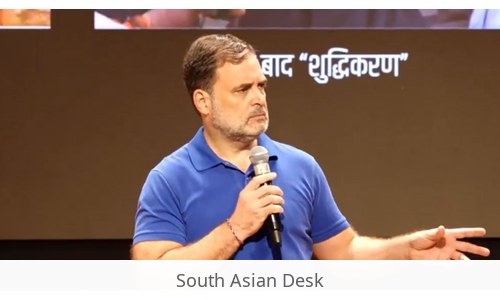
On August 31, 2026, the Indian Express reported that the Congress party is set to protest a First Information Report (FIR) filed against Rahul Gandhi following remarks he made during a public meeting in Haldwani on August 8, 2026. The FIR, registered by local authorities, has been labeled by Congress President Mallikarjun Kharge as “abhorrently casteist,” sparking debate over the political implications of caste-related discourse in India. This incident has reignited discussions on caste politics in India, with analysts highlighting the growing sensitivity around caste-based rhetoric in contemporary political campaigns.
FIR Against Rahul Gandhi: Political Reactions
Congress leaders have condemned the FIR as an attempt to stoke communal tensions. The Hindu noted that several lawmakers from the opposition have called for a review of the FIR, citing concerns over its potential to polarize voters ahead of upcoming elections. The controversy has also drawn attention to the broader use of legal mechanisms in Indian politics to suppress dissent, a practice that has been scrutinized in past electoral cycles.
Analysts suggest that the FIR could be part of a pattern where legal actions are used to marginalize opposition figures, particularly in regions with complex social hierarchies. The political implications of caste in this case are particularly pronounced, as the FIR is seen as an effort to leverage caste dynamics to undermine the Congress party’s social justice agenda.
Historical Context of Caste in Politics
Caste has long been a sensitive issue in Indian politics, with historical instances where public figures’ remarks on caste have triggered legal or social backlash. The Indian Express highlighted that purification rituals, such as the yajna reportedly performed by some individuals in Haldwani on August 11, 2026, have often been linked to caste-based tensions.
These rituals, while rooted in cultural traditions, have occasionally been used to legitimize exclusionary practices, drawing criticism from secular and progressive groups. The practice of yajna, traditionally associated with Hindu religious ceremonies, has been historically tied to caste purification, a concept that has evolved over centuries. In modern times, such rituals have sometimes been invoked to reinforce social hierarchies, particularly in regions where caste dynamics remain deeply entrenched.
The connection between Gandhi’s remarks and the subsequent yajna has raised questions about the interplay between political rhetoric and cultural practices, with some observers suggesting that the FIR may have been influenced by such symbolic acts. This historical context underscores the enduring relevance of caste politics in India, even as the nation strives for social equity.
Upcoming Elections
The FIR has raised questions about the Congress party’s strategy in the upcoming elections. Analysts suggest that the controversy could influence voter sentiment, particularly in regions where caste dynamics play a significant role. The party has emphasized its commitment to addressing caste-based inequalities, framing the FIR as an attack on its social justice agenda.
However, critics argue that the incident may inadvertently benefit the ruling party by diverting attention from broader economic issues. In states like Uttar Pradesh and Bihar, where caste considerations have historically shaped electoral outcomes, the FIR could amplify existing divisions. The Congress’s response to the FIR, including its decision to protest the legal action, may also be seen as an effort to rally support from marginalized communities who perceive the ruling party as favoring upper-caste interests.
This dynamic underscores the complex relationship between legal actions, political messaging, and voter behavior in India’s electoral landscape. The Haldwani remarks controversy has thus become a focal point in the Congress party protest, with implications that extend beyond the immediate legal dispute.
The Broader Implications
The FIR against Rahul Gandhi has sparked a broader debate on the role of caste in Indian politics. With the upcoming elections India approaching, the controversy has the potential to reshape political strategies and voter perceptions. The Congress party’s decision to protest the FIR is not only a legal stance but also a political maneuver aimed at highlighting the challenges posed by caste politics in India.
By framing the issue as an attack on their social justice agenda, the party seeks to galvanize support from communities that feel marginalized by the current political climate. This incident also raises questions about the political implications of caste in shaping electoral outcomes, as the FIR may be seen as an attempt to manipulate public opinion through legal means. The interplay between the FIR against Rahul Gandhi and the broader context of caste politics in India is likely to remain a contentious issue in the lead-up to the upcoming elections.
Follow SouthAsianDesk on X, Instagram and Facebook for insights on business and current affairs from across South Asia.
Sources
- ‘Abhorrently casteist’: Congress to protest FIR against Rahul over Haldwani remarks – indianexpress.com
- FIR registered against Rahul Gandhi over Haldwani ‘purification’ remarks – thehindu.com
Image: images.indianexpress.com