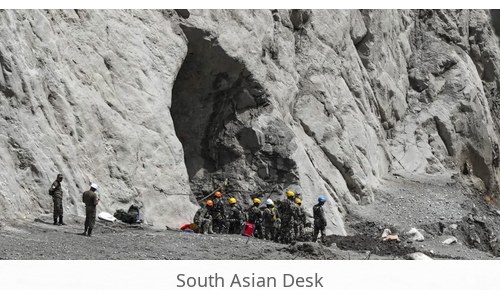
The Indian tunnel rescue team has established a foothold at the tunnel and set up safety ropes inside, as confirmed by the Indian Ambassador to Nepal. On August 26, 2026, Nepal experienced catastrophic Nepal floods that have claimed over 900 lives and left more than 4,200 individuals missing, according to UN Spokesperson Stéphane Dujarric. These efforts by the Indian tunnel rescue team are critical as the region grapples with the aftermath of the floods, which have exposed vulnerabilities in infrastructure and disaster response systems. The hydropower sites at Chilime hydropower and Langtang hydropower, key components of Nepal’s energy grid, have become focal points for both rescue operations and assessments of the country’s preparedness for climate-related disasters.
Indian tunnel rescue team: Rescue Operations Update
The Indian tunnel rescue team has made progress at the Chilime hydropower and Langtang hydropower sites, despite ongoing challenges posed by adverse weather conditions and persistent flooding. Safety measures, including the installation of ropes and stabilization of access points, have been prioritized to facilitate the retrieval of stranded individuals. However, the dynamic nature of the floodwaters continues to complicate operations, requiring constant reassessment of strategies. The hydropower tunnels, designed for water regulation and energy generation, have become precarious zones where rescuers must navigate submerged passageways and unstable terrain. The Indian Ambassador to Nepal emphasized that the team’s focus remains on securing safe access routes while coordinating with local authorities to identify priority areas for search-and-rescue missions.
The Chilime hydropower and Langtang hydropower projects, part of Nepal’s broader push to expand renewable energy infrastructure, were constructed with international collaboration. Their disruption underscores the fragility of such developments in regions prone to extreme weather events. Engineers and rescue personnel are now evaluating whether the flood damage will necessitate long-term repairs or redesigns to future infrastructure projects in the Himalayan region. This assessment is particularly urgent as climate models predict increased frequency of such events in disaster response South Asia.
Impact of the Floods
The Nepal floods have devastated communities across Nepal, with entire villages submerged and critical infrastructure, including roads and power lines, damaged or destroyed. Nepalese authorities have been working to manage the crisis, including the temporary burial of unidentified victims in mass graves while families await definitive answers. The scale of the disaster has underscored the need for improved flood mitigation measures and emergency preparedness. In the Kavre and Nuwakot districts, where the hydropower sites are located, local governments report that over 80% of homes have been rendered uninhabitable, displacing thousands of residents. The loss of agricultural land and irrigation systems has further exacerbated food insecurity in the region.
The floods have also disrupted Nepal’s energy sector, with the Chilime hydropower and Langtang hydropower plants contributing to approximately 15% of the country’s electricity supply. Their shutdown has forced reliance on imported diesel generators, increasing energy costs and highlighting the risks of over-reliance on single infrastructure points. The government has initiated emergency repairs, but the extent of the damage remains unclear, with assessments ongoing.
International Aid and Cooperation
International aid in Nepal has played a pivotal role in the response to the floods. Bollywood actor Sonu Sood arrived in Kathmandu on September 1, 2026, bringing relief materials for flood victims. This contribution highlights the significance of cross-border cooperation in disaster management, with India and Nepal working closely to address the humanitarian crisis. The involvement of global actors underscores the importance of regional solidarity in times of crisis. India has deployed additional rescue teams and medical personnel, while the Nepalese government has requested assistance from the United Nations and neighboring countries to scale up relief efforts.
The collaboration between India and Nepal reflects broader regional trends in disaster response South Asia, where transnational partnerships have become increasingly vital. In recent years, South Asian nations have formalized agreements to share early warning systems and coordinate rescue operations during natural disasters. The current crisis has tested these frameworks, revealing both strengths and gaps in implementation. For instance, while India’s rapid deployment of resources has been praised, critics note that more systematic coordination between national agencies and local communities is needed to ensure equitable distribution of aid.
Follow SouthAsianDesk on X, Instagram and Facebook for insights on business and current affairs from across South Asia.
Sources
- Indian tunnel rescue team makes progress at Chilime, Langtang hydropower sites – thehindu.com
- Nepal floods: Death toll crosses 1,000 as rescue teams search for thousands | 10 updates – indianexpress.com
- Bollywood actor Sonu Sood arrives Nepal, bringing relief for flood victims – english.onlinekhabar.com
- Nepal buries unidentified flood victims as families await answers – aljazeera.com
- Nepal flooding deaths surpass 900 as needs climb – news.un.org
Image: images.indianexpress.com