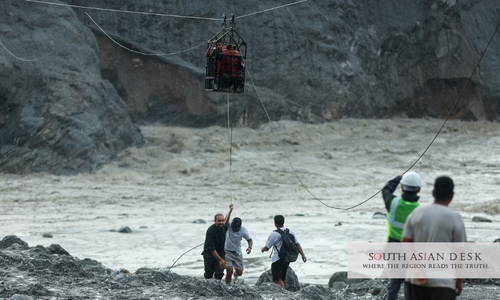
The Nepal flood disaster has left officials increasingly doubtful that more survivors will be found, a week after a glacier collapse in the Himalayas triggered flash floods that devastated large parts of the mountainous nation. Authorities said on Wednesday that hopes of finding more survivors among the thousands still missing were fading, seven days after the disaster struck.
At least 1,114 people have been killed and nearly 4,000 remain unaccounted for, with officials fearing that many victims of the Nepal flood disaster are buried under debris in towns and valleys near the Chinese border. Across the border in Tibet, China’s official death toll has held steady since Sunday at 16 dead, with 546 people still listed as missing.
A senior official at Nepal’s National Emergency Operation Center offered a sober assessment of the search effort. “The hope of finding survivors is decreasing,” Phanindra Paudel said, adding that officials continued to pray and hold on to hope. His comments capture the mood surrounding the wider Nepal flood disaster, where the window for locating anyone alive is narrowing by the day.
Himalayan Glacier Collapse Flood Triggered Widespread Destruction
The disaster began when a Himalayan glacier collapse flood sent a wall of water and debris crashing down through Nepal’s mountain valleys, sweeping away homes, roads and infrastructure with little warning. The scale of destruction has made this one of the deadliest natural disasters to strike Nepal in recent years, drawing comparisons to the 2015 earthquake that killed roughly 9,000 people.
A retired senior army general who had overseen search and rescue efforts during the 2015 earthquake said that, given the nature of the disaster and the terrain affected, the chances of finding human survivors diminish with each passing day. That grim calculus has shaped the response to the Nepal flood disaster, even as search teams continue working around the clock in the hardest hit districts.
Hydropower Tunnel Rescue Operations Continue
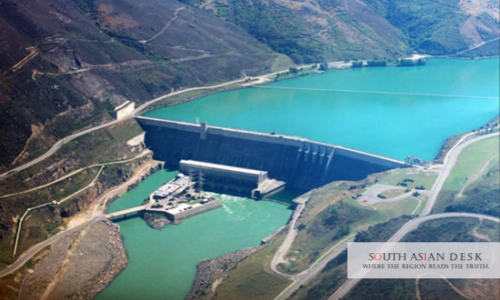
Much of the remaining hope for survivors now rests on hydropower tunnel rescue operations at several power plants damaged by the floodwaters. Rescuers believe dozens of workers trapped inside the tunnels of hydropower projects hit by the disaster could still be alive, since the powerhouses contain spaces and rooms where people could have taken shelter.
A board member of the Nepal Electricity Authority told reporters that officials remained confident survivors could still be found a week on, given the presence of food and water inside the structures. Major operations were underway or planned at tunnels across four separate projects, with two sites accounting for nearly 100 missing workers offering the strongest chance of survival due to pockets of trapped air.
So far, 279 people have been rescued from the ruins of hydropower projects, while at least 639 more remain missing, some of whom are believed to be trapped underground. International assistance has also joined the effort. A member of a United States crisis response team currently in Nepal said plans were in place to reach the hydro tunnels by helicopter, using high technology listening equipment to detect signs of life before safety teams moved in to check.
Attention Turns Toward Recovery and Rehabilitation
As the Nepal flood disaster enters its second week, officials are beginning to acknowledge that the operation may soon shift in character. Nepal’s prime minister indicated that focus would gradually move from active search toward broader recovery and rehabilitation work for affected communities, even as rescue teams maintain their presence at the hydropower sites where hope still lingers.
The disaster has drawn attention well beyond Nepal’s borders, with foreign nationals, including a number of Canadians, among those still unaccounted for. As search crews continue to comb the mountainside along the Nepal-China border, the coming days are expected to prove decisive in determining how many more lives can be saved from the wreckage left behind by the floods.
Published in SouthAsianDesk, September 3rd, 2026
Follow SouthAsianDesk on X, Instagram and Facebook for insights on business and current affairs from across South Asia.