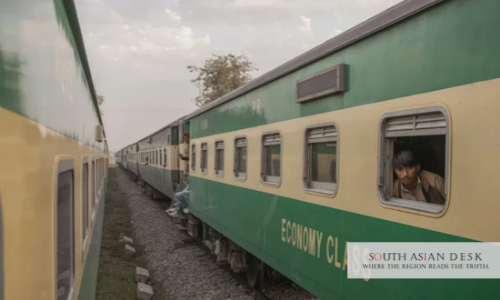
A Pakistan Railways emergency came into effect on Saturday, Oct 24, as the department cancelled holidays for its officers and ordered urgent action on operational deficiencies following a series of accidents. The measure, which remains in force until Dec 31, was announced after repeated train derailments, including a recent incident near Multan that left passengers dead and injured.
What the Emergency Involves
Federal Minister for Railways Hanif Abbasi shared details of the Pakistan Railways emergency, saying that neither he nor the officers concerned would rest until the deficiencies had been removed. They cover passenger coaches, goods wagons, locomotives, signalling and other infrastructure. Mr Abbasi said no one in the operations department, including himself, would be permitted to take Saturdays and Sundays off, and he warned that anyone who flouted the orders would be taken to task.
Under the emergency, all kinds of leave, other than medical leave, have been cancelled for officers and officials. Public holidays, including weekends, are also suspended. Officers have been directed to monitor train operations in the field.
Reporting requirements have also been tightened. Chief engineers of the civil and mechanical departments must submit daily reports to the ministry on their respective areas, and the head of the safety department is required to do the same.
Officers Ordered to Travel by Rail
A further directive requires all Pakistan Railways officers to travel by train for official tours. According to a letter titled “Mandatory Use of Rail Transport for Official Tours,” issued to senior and junior officers on Saturday, air travel will not be permitted or reimbursed for such journeys. The use of official vehicles for official tours is also prohibited.
Mr Abbasi said he would travel by train (railcar) from Rawalpindi to Lahore until Dec 31. He added that air travel would be allowed for himself and the officers only in cases of extreme emergency.
Why Train Derailments Prompted the Response
The emergency follows a worrying run of incidents. Dawn reported that several accidents and derailments have occurred in recent months, including seven in July alone. The most recent major incident took place near Multan on Oct 13, when the passenger train Rehman Baba Express derailed on the city’s outskirts. Dawn’s earlier coverage reported that five people were killed and dozens were injured.
According to the report, the main causes identified for the accidents include deteriorating railway tracks, the use of dummy coaches and wagons, the manual point system known as the kanta system, human error, inadequate maintenance, and a lack of sufficient resources. Dummy coaches and wagons are those that are faulty or brakeless.
Targets for Rolling Stock and Spare Parts
The minister said all dummy passenger coaches and goods wagons would be removed from service by Dec 31, with the remaining rolling stock made fully fit for operations. He said parts for coaches, wagons and locomotives, including 36,000 brake cylinders, had started arriving, and that officers had been asked to begin work on an emergency basis.
Mr Abbasi said he was clearing a maintenance backlog that had accumulated over the past 10 years. From January next year, he said, all faulty coaches, wagons and locomotives would be fit for operations.
The health analysis of 1,546 coaches and wagons has been completed, according to the minister. The inspection of the remaining 3,000 or so is due to be completed by Nov 10. He also said he had directed officers to manufacture locally any parts that could be produced in the department’s own workshops, and to meet the demand for concrete and wooden sleepers by Nov 30.
A Test of Delivery
The scale of the commitments is considerable, and the timelines are short. Removing every faulty vehicle from service, completing inspections of thousands of coaches and wagons, and securing sleepers and spare parts within weeks will require sustained coordination across departments. The report did not specify how the department would fund these measures or whether additional resources had been approved, a point that is significant given that a lack of resources was named among the causes of the accidents.
The Pakistan Railways emergency also relies heavily on supervision and accountability, through daily reports, cancelled leave and the minister’s own travel by rail. Whether these steps translate into a durable improvement in safety will become clearer after Dec 31, when officials have promised that the identified faults will have been addressed. For passengers and freight customers, the immediate expectation is simple: fewer accidents and safer journeys across the network.
Follow SouthAsianDesk on X, Instagram, and Facebook for insights on business and current affairs from across South Asia.