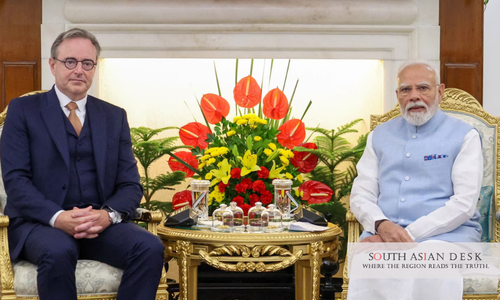
India Belgium trade defence ties advanced significantly on September 3, after Indian Prime Minister Narendra Modi and his Belgian counterpart Bart De Wever held wide-ranging talks in New Delhi, agreeing to deepen cooperation across trade, defence, clean energy, critical minerals, semiconductors, research and talent mobility. The meeting, held at Hyderabad House, marked the first visit by a Belgian prime minister to India in two decades and produced ten distinct outcomes spanning economic, security and technological cooperation.
Writing on X following the talks, Modi said the two leaders had agreed to deepen cooperation across trade, defence, clean energy, critical minerals, semiconductors, research and talent mobility, adding that both sides had established an Investment Fast-Track Mechanism for Belgian companies and would work toward doubling bilateral trade over the next five years. De Wever described India as an economic and technological powerhouse, noting that its growing global influence made it an increasingly important partner for Belgium.
Bilateral Trade India Belgium Set to Double Within Five Years
The target for bilateral trade between India and Belgium reflects an ambition to substantially diversify a relationship that has historically centred on the diamond trade linking Antwerp with India’s cutting and polishing centres in Mumbai and Surat. Bilateral trade currently stands at approximately $13.01 billion for the 2026 financial year, and both governments have set a formal goal of doubling that figure within five years.
To support this expansion, India and Belgium agreed to establish a business forum, an investment forum and a consular dialogue. The Investment Fast-Track Mechanism is intended to help companies navigate regulatory bottlenecks and encourage greater two-way investment between the two economies. Both leaders also acknowledged the enduring importance of the diamond trade in a joint statement, agreeing to further strengthen those historic commercial ties. De Wever was scheduled to visit Mumbai on Friday, including a stop at the Bharat Diamond Bourse and a meeting with its board members.
Cooperation is also set to expand into green hydrogen, renewable energy, semiconductors, pharmaceuticals, critical minerals, advanced manufacturing, logistics and financial technology. Officials from both sides also pointed to greater maritime and port cooperation, including between the Port of Antwerp-Bruges, described as India’s primary cargo gateway to Europe, and the Jawaharlal Nehru Port Authority, alongside training and capacity-building programmes for personnel across India’s port sector.
Defence Cooperation India Belgium Expands With New Agreements
Defence cooperation between India and Belgium formed one of the most significant components of Thursday’s talks, with the two countries signing a Letter of Intent on Defence Cooperation. According to India’s Ministry of External Affairs, the framework is designed to facilitate access to advanced technologies, expertise and European defence supply chains, while simultaneously promoting indigenous defence manufacturing, technology development, co-design, co-development and co-production within India.
A separate agreement was signed between the Belgian Security and Defence Industry Association and the Society of Indian Defence Manufacturers, complementing the government-level pact. Modi specifically highlighted cooperation involving advanced defence equipment, including the Zorawar tank, as an example of the kind of joint development the two countries intend to pursue. To reinforce these ties on an institutional level, India announced it would appoint a resident Defence Attache at its embassy in Brussels, following Belgium’s earlier decision to post its own defence attache in New Delhi.
Security cooperation extended beyond conventional defence matters as well. India’s Central Bureau of Investigation and the Belgian Federal Police signed a memorandum of understanding covering transnational organised crime and cybercrime, aimed at enhancing cooperation in areas such as tracing fugitives. Both leaders also stated that terrorism could not be justified under any circumstances and called for stronger international action against terrorist organisations, their networks, financing structures and safe havens, with the two sides agreeing to explore establishing a joint working group on counter-terrorism.
India-EU Free Trade Agreement Provides Wider Context
The strengthening of ties between the two countries comes against the backdrop of the long-delayed India-EU free trade agreement, the conclusion of which was announced on January 27, 2026. The agreement is expected to cut tariffs on the majority of goods traded between India and the European Union, and European Commission President Ursula von der Leyen said in June that it is expected to be formally signed by the end of 2026. Both leaders described the agreement as a historic milestone and called for its timely implementation to expand trade and investment, diversify critical value chains and open new markets.
Modi and De Wever also welcomed progress under the India-EU Trade and Technology Council and endorsed the Joint India-EU Comprehensive Strategic Agenda for 2030, while calling for early completion of separate negotiations on an EU-India Investment Protection Agreement and an Agreement on Geographical Indications. The broader push toward closer India-Europe ties comes as both sides seek to reduce reliance on the United States amid rising global trade tensions.
Broader Strategic Alignment
Beyond trade and defence, the two leaders addressed a range of wider diplomatic issues. India and Belgium agreed to support each other’s bids for non-permanent membership of the United Nations Security Council, with India seeking the 2028-29 term and Belgium the 2037-38 term. Modi and De Wever also discussed the conflicts in Ukraine and West Asia, reiterating support for dialogue and diplomacy, and stressed the importance of protecting maritime routes to ensure safe and unhindered shipping.
The talks concluded with both governments reaffirming a partnership grounded in democracy, the rule of law, human rights, gender equality and a rules-based international order. De Wever extended an invitation to Modi to undertake a bilateral visit to Belgium at a mutually convenient time, suggesting the momentum generated by Thursday’s discussions is intended to carry forward into further high-level engagement between the two countries.
Modi’s remarks following the talks also referenced India’s broader economic trajectory, noting the country’s 7.8 percent year-on-year growth in the April-June quarter, data that was published on August 31 and exceeded forecasts. He framed India’s economic rise as a source of confidence and new opportunity for international partners at a time of what he described as considerable global upheaval, positioning the newly strengthened relationship with Belgium within that wider narrative of India’s expanding global economic role.
Published in SouthAsianDesk, September 5th, 2026
Follow SouthAsianDesk on X, Instagram and Facebook for insights on business and current affairs from across South Asia.