The Nepal tunnel rescue operation is now concentrated on three hydropower project tunnels where authorities believe dozens of workers could still be trapped, two weeks after a devastating flood killed hundreds of people and left thousands missing across the Himalayan country and neighbouring China’s Tibet region. Rescue teams have spent the intervening weeks battling blocked tunnel entrances, unstable ground and difficult mountain terrain in an effort that officials describe as one of the most complex search operations Nepal has faced in decades.
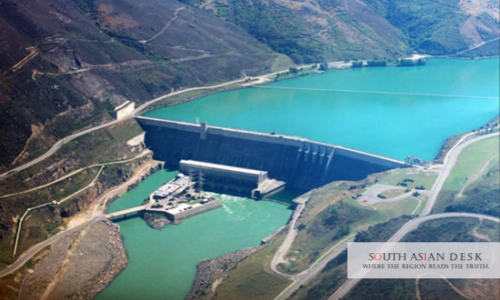
The disaster began on August 26, when a glacier collapsed into a river on the Nepal-China border, unleashing a wall of water and debris that engulfed at least 11 hydropower projects downstream. The floodwaters buried the entrances to several project tunnels under thick layers of mud and rubble, cutting off workers who were inside at the time and complicating access for rescuers ever since. Both the Nepali and Chinese governments have said climate change was responsible for the glacier collapse that triggered the flooding.
Why the Nepal Tunnel Rescue Has Taken Weeks
The scale of the disaster has made this an unusually prolonged and difficult recovery effort. In the days following the flood, more than 900 workers were reported missing from around a dozen hydropower projects, with roughly 500 believed to be trapped inside tunnels, according to local officials. Rescuers have had to work through mud-filled passages, damaged access roads and periods of heavy rain that repeatedly interrupted operations, all while trying to preserve air quality and locate sources of drinking water for anyone who might still be alive underground.
Despite the challenges, the effort has yielded moments of hope. Earlier this month, two workers, a mechanical foreman and a mechanical supervisor, were pulled out alive from a tunnel at the Trishuli 3A hydropower project nine days after the flood struck, and one of the survivors told rescuers that other workers remained alive further inside. Nepal’s disaster agency has separately estimated that the flooding caused at least 387.5 billion Nepalese rupees, or roughly 2.5 billion dollars, in damage to infrastructure and property.
The Chilime Hydroelectric Project Remains the Priority
Dharma Raj Upreti, chief of Nepal’s disaster authority, said the search operation remains focused on finding survivors, including those still believed to be inside tunnels. He identified the Chilime hydroelectric project as the single biggest priority for rescuers, explaining that workers there are believed to have had access to a canteen, residential quarters and food supplies that could have sustained them since the flood struck. That combination of factors has kept hope alive for finding survivors at the site even as the search has stretched well beyond a week.
Progress at Upper Trishuli 3A and 3B
Alongside Chilime, rescue teams have also concentrated their efforts on the tunnels of the Upper Trishuli 3A and 3B projects, which Upreti said are linked by an interconnected tunnel system. Crews have supplied oxygen to these tunnels through pipes and have sent additional equipment to help open a passage into the blocked sections, part of a broader push to reach any workers who may still be alive inside. The interconnected nature of the two tunnels has given rescuers an alternative route to attempt access where direct entry points remain blocked by debris.
The Scale of the Disaster
The flooding has left a lasting mark on Nepal’s hydropower sector, which forms a significant part of the country’s electricity generation capacity. Several power stations, together accounting for a meaningful share of installed generation, were forced offline by the disaster, while additional projects still under construction sustained damage of their own. As search teams continue working through the Chilime and Upper Trishuli tunnel systems, the coming days are likely to prove decisive in determining how many more of the workers still unaccounted for can be found alive, nearly two weeks after the glacier collapse that set the disaster in motion.
Published in SouthAsianDesk, September 9th, 2026
Follow SouthAsianDesk on X, Instagram and Facebook for insights on business and current affairs from across South Asia.