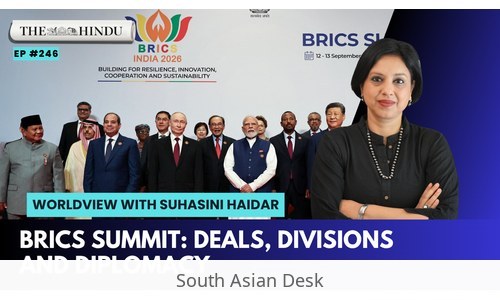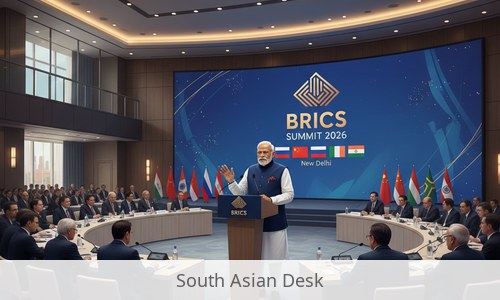
Indian Prime Minister Narendra Modi opened the 18th annual BRICS Summit in New Delhi, a gathering of leaders from Brazil, Russia, India, China, and South Africa. The summit, held from September 12 to 13, 2026, underscored India’s growing influence on global trade, technology, and energy security, reinforcing the Bharatiya Janata Party (BJP)’s strategic positioning as it faces domestic political challenges.
BRICS Summit New Delhi: BJP’s Strategy Post-Summit
The successful hosting of the BRICS Summit has provided the BJP with a platform to highlight India’s diplomatic and economic leadership. Party leaders have emphasized the summit’s outcomes as evidence of India’s global stature, aiming to counter opposition critiques of domestic governance. Modi’s address to the summit reiterated India’s commitment to multilateralism and its role in shaping international economic frameworks. This aligns with the broader strategic goals of the BJP, which has increasingly focused on projecting India as a global leader in multilateral forums. The summit’s agenda, which included discussions on trade, technology, and energy security, provided an opportunity for India to showcase its economic policies and technological advancements, such as its growing renewable energy sector and digital infrastructure initiatives. These discussions are part of India’s broader efforts to position itself as a key player in global economic governance, a narrative that the BJP has sought to leverage domestically.
Opposition Reactions
Opposition parties have expressed skepticism about the summit’s immediate impact on domestic policy. Critics argue that while the summit highlights India’s international standing, it does not directly address pressing issues such as inflation, unemployment, and infrastructure gaps. The Congress Party, among others, has called for greater focus on internal reforms rather than external diplomatic achievements. This divergence in priorities reflects a broader debate within Indian politics about the balance between international engagement and domestic development. While the BJP emphasizes the strategic benefits of global leadership, opposition parties argue that the government’s attention should be directed toward resolving economic challenges that affect the daily lives of Indian citizens. The summit’s success, therefore, is seen by some as a political tool to bolster the ruling party’s image, even as economic indicators remain a point of contention.
Context and Implications
The BRICS Summit is a significant event in South Asian geopolitics, reflecting India’s efforts to enhance its diplomatic ties and economic partnerships within the bloc. BRICS, comprising Brazil, Russia, India, China, and South Africa, has emerged as a counterweight to Western-dominated global institutions, advocating for a more inclusive international economic order. India’s role within BRICS has grown substantially in recent years, with the country leveraging its demographic dividend and technological capabilities to strengthen its position. The 2026 summit in New Delhi further solidified this role, with discussions on trade agreements, technological collaboration, and energy security. These initiatives are part of India’s broader strategy to diversify its economic partnerships and reduce dependency on traditional allies. The summit also provided a platform for India to engage with other BRICS members on issues of mutual interest, such as climate change and global trade imbalances, reinforcing its position as a leader in multilateral diplomacy.
The BRICS Summit New Delhi also highlighted India’s growing influence in global trade, technology, and energy security. Discussions on trade agreements emphasized India’s push for greater economic integration with other BRICS nations, while technological collaboration focused on digital infrastructure and innovation. Energy security discussions underscored India’s commitment to renewable energy and its role in shaping global energy policies. These topics are central to India’s global influence, which the BJP has sought to highlight as a means of bolstering its confidence boost in domestic politics.
The Narendra Modi summit in New Delhi was marked by a strong emphasis on India’s role in global affairs. Modi’s leadership during the summit reinforced the BJP’s narrative of India as a global leader, countering opposition reactions BRICS that question the domestic impact of such international engagements. The summit’s success is seen as a confidence boost for the BJP, providing a platform to showcase India’s diplomatic and economic achievements.
Follow SouthAsianDesk on X, Instagram and Facebook for insights on business and current affairs from across South Asia.