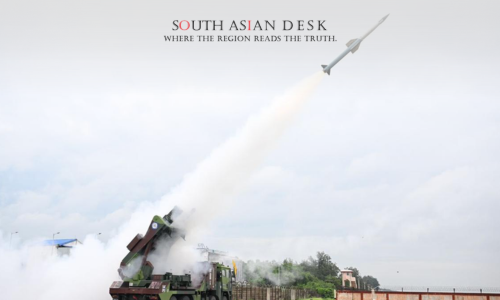
DRDO successfully conducts maiden flight tests of the Integrated Air Defence Weapon System off Odisha’s coast. The Defence Research and Development Organisation (DRDO) successfully conducted maiden flight tests of the Integrated Air Defence Weapon System (IADWS) off Odisha’s coast on Saturday, August 23, 2025, at 12:30 PM, enhancing India’s capability to counter aerial threats with indigenous technology.
Why It Matters for South Asia
The DRDO’s breakthrough strengthens India’s defence capabilities, a critical factor for South Asia’s security amid rising regional tensions. By developing a multi-layered air defence system, India bolsters its strategic autonomy, potentially influencing neighbouring countries to pursue similar advancements in defence technology, fostering regional stability.
Successful Maiden Flight Tests
The IADWS, tested at the Integrated Test Range in Chandipur, Odisha, comprises three indigenous components: Quick Reaction Surface-to-Air Missiles (QRSAM), Advanced Very Short Range Air Defence System (VSHORADS) missiles, and a high-power laser-based Directed Energy Weapon (DEW). During the tests, three targets—two high-speed fixed-wing Unmanned Aerial Vehicles (UAVs) and a multi-copter drone—were simultaneously engaged and destroyed at varying ranges and altitudes. According to the DRDO, all components, including radars and communication systems, performed flawlessly, as confirmed by range instruments.
Defence Minister Rajnath Singh announced the achievement on X, stating, “The DRDO has successfully conducted the maiden flight Tests of the Integrated Air Defence Weapon System (IADWS), on 23 Aug 2025 at around 1230 Hrs off the coast of Odisha.” He added, “This unique flight test has established the multi-layered air-defence capability of our country and is going to strengthen area defence for important facilities against enemy aerial threats.”
Multi-Layered Defence System
The IADWS integrates QRSAM, VSHORADS, and DEW, controlled by a Centralised Command and Control Centre developed by the Defence Research & Development Laboratory (DRDL), the nodal laboratory for the programme. VSHORADS was developed by the Research Centre Imarat (RCI), while the DEW was designed by the Centre for High Energy Systems and Sciences (CHESS). This system is designed to counter a wide spectrum of aerial threats, from low-flying drones to high-speed aircraft and missiles, enhancing India’s defence preparedness.
Strategic Significance
The tests mark a significant milestone in India’s pursuit of self-reliance in defence technology under the Aatmanirbhar Bharat initiative. The inclusion of a high-power laser-based DEW positions India among a select group of nations advancing futuristic air defence solutions. The system forms part of the ‘Sudarshan Chakra’ integrated air defence shield, announced by Prime Minister Narendra Modi on Independence Day, August 15, 2025, aimed at protecting critical infrastructure from enemy strikes.
Background
The DRDO’s development of the IADWS follows India’s response to regional security challenges, notably Operation Sindoor, conducted three-and-a-half months prior, which countered Pakistani drone and missile attacks following the Pahalgam terror attack.
After noting down the Pakistan Air Force’s Capabilities, India is seriously taking charge to further improve its air capabilities with new missile contracts and air defence systems. Here are the details for the new S-400 defense system from Russia as well:
Russia Confirms Timely Delivery of S400 Air Defence Systems to India
The Akash missile system, developed by DRDO, played a key role in that operation, highlighting India’s growing reliance on indigenous defence systems. The IADWS builds on this legacy, integrating advanced surveillance and missile technologies to create a robust defence framework. The successful tests were witnessed by senior DRDO scientists and Indian Armed Forces representatives, underscoring their operational significance.
What’s Next
The DRDO is expected to conduct further tests to refine the IADWS, aiming for operational deployment to protect critical infrastructure. Continued advancements by the Defence Research and Development Organisation will solidify India’s position as a leader in indigenous defence technology, enhancing national and regional security.
Published in SouthAsianDesk, August 24th, 2025
Follow SouthAsianDesk on X, Instagram, and Facebook for insights on business and current affairs from across South Asia.