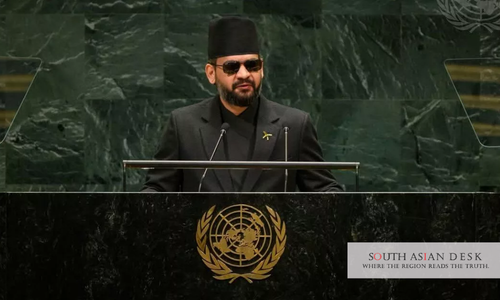
On September 24, 2026, Nepal’s Prime Minister Balendra Shah addressed the 81st session of the United Nations General Assembly in New York, emphasizing the urgent need for Nepal climate change action. Shah highlighted Nepal’s disproportionate vulnerability to the crisis, despite its minimal contribution to global emissions.
The Urgency of Climate Action in Nepal
Prime Minister Shah stated that Nepal is paying a “colossal price” for climate change, a crisis it did little to create. The speech underscored the country’s severe environmental challenges, including glacial retreat, erratic monsoons, and increased flooding risks. These impacts threaten Nepal’s agriculture, water security, and infrastructure, with cascading effects on regional stability. As part of Nepal climate change action, Shah called for international support for climate change to address these mounting challenges.
Broader Implications for South Asia
Nepal’s plight reflects broader challenges across South Asia, where climate change is exacerbating economic and social pressures. Rising temperatures, shifting weather patterns, and extreme weather events are straining resources and displacing communities. The South Asia climate crisis demands a collective regional approach, with Shah urging neighboring countries to strengthen cooperation on climate resilience and sustainable development. This aligns with global climate action efforts to mitigate the region’s growing vulnerabilities.
The Role of the Nepal UN Assembly 2026 Speech
Shah’s address at the Nepal UN Assembly 2026 was a pivotal moment in the Balen Shah UN speech series, where he emphasized the need for global solidarity. His remarks highlighted how Nepal climate change action must be integrated into international frameworks to ensure equitable support for nations like Nepal, which face disproportionate consequences despite minimal emissions.
Expanding on the Call for Global Solidarity
Shah’s speech at the UN Assembly underscored the critical need for international support for climate change initiatives, particularly for developing nations like Nepal. He emphasized that while Nepal contributes minimally to global carbon emissions, its population bears the brunt of climate-induced disasters. This includes the rapid melting of Himalayan glaciers, which not only threatens water security but also impacts downstream countries in South Asia. Shah urged the international community to recognize these interdependencies and invest in climate resilience projects that benefit the entire region.
The South Asia climate crisis is not confined to Nepal alone. Countries like India, Pakistan, and Bangladesh are also grappling with similar challenges, including more frequent heatwaves, erratic rainfall patterns, and rising sea levels. Shah’s call for regional cooperation highlights the importance of shared strategies to combat these issues. By pooling resources and knowledge, South Asian nations can develop more effective adaptation and mitigation measures.
The Path Forward for Nepal climate change action
Shah outlined several key priorities for results in the coming years. These include enhancing early warning systems for natural disasters, investing in renewable energy infrastructure, and promoting sustainable agricultural practices. He also emphasized the need for international funding mechanisms to support these initiatives, particularly through the Green Climate Fund and other multilateral agreements.
The Balen Shah UN speech served as a clarion call for the global community to recognize the urgency of climate action. By linking Nepal’s struggles to the broader South Asia climate crisis, Shah reinforced the idea that climate change is a regional and global issue that requires collective solutions. His remarks were met with applause from delegates and underscored the importance of global climate action in the lead-up to the 2026 UN Climate Summit.
Conclusion
As the world grapples with the escalating impacts of climate change, Nepal’s Prime Minister Balendra Shah’s address at the Nepal UN Assembly 2026 serves as a powerful reminder of the need for action. His speech not only highlighted the country’s vulnerabilities but also called for a unified global response to the South Asia climate crisis. With the support of the international community, Nepal can continue to lead by example in the fight against climate change.
Follow SouthAsianDesk on X, Instagram and Facebook for insights on business and current affairs from across South Asia.
Sources
- PM Balen Shah urges world to act on warnings from the ‘rooftop of the world’ – english.onlinekhabar.com
- PM takes GMC investment pitch to UN – bbs.bt