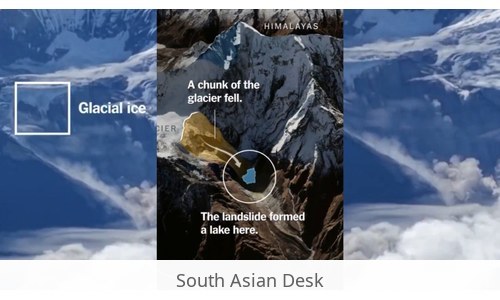
Nepal floods have triggered a humanitarian and environmental crisis, with the death toll reaching 734 and nearly 2,500 individuals still missing, including 275 Indian nationals. A glacier collapse along the Nepal-Tibet border triggered the disaster, causing widespread destruction across mountainous regions. Nepal Prime Minister Balendra Shah confirmed the government’s priority is to save lives and address the long-term impacts of this climate-induced catastrophe. The UN has issued urgent warnings about accelerated Himalayan glacier melting due to climate change, raising concerns over regional water security for nearly 2 billion people.
Nepal floods: Regional Climate Policy Implications
The United Nations has warned that Himalayan glaciers are melting at an unprecedented rate, increasing the frequency of catastrophic floods and landslides in South Asia. This phenomenon poses existential risks to water security in South Asia, affecting populations across India, Pakistan, Bangladesh, and Nepal. The UN climate report highlights that without immediate action, similar disasters could become the new normal in the region. Regional cooperation in disaster management South Asia has become critical to mitigate these risks. The report underscores the need for integrated water resource management frameworks, cross-border early warning systems, and shared research initiatives to monitor glacial retreat. These measures are essential to prevent future crises and ensure sustainable development in the region.
International Aid and Support
International responses to the Nepal floods have included emergency relief efforts and climate resilience funding. The UN and several South Asian nations have pledged support for disaster recovery and long-term climate adaptation programs. Cross-border collaboration in disaster preparedness and infrastructure development is essential to address the growing threat of climate-induced disasters. Aid initiatives must prioritize both immediate relief and sustainable solutions to prevent future crises. Neighboring countries such as India and Bhutan have already deployed search and rescue teams, while international organizations like the World Bank and Asian Development Bank are evaluating funding proposals for infrastructure upgrades in vulnerable regions. The disaster has also prompted renewed discussions on regional treaties to standardize disaster response protocols and share hydrological data.
Long-term Effects on Water Security
Himalayan glaciers supply freshwater to nearly 2 billion people in South Asia, making their stability crucial for regional agriculture, energy production, and drinking water. Climate models predict significant reductions in glacial mass by mid-century, which could disrupt water availability for millions. Strategies to ensure water security in South Asia include investing in climate-resilient infrastructure, promoting regional water-sharing agreements, and accelerating the transition to renewable energy sources. The loss of glacial meltwater could exacerbate existing water stress in the region, particularly during dry seasons, affecting irrigation systems and hydropower generation. Experts emphasize that adaptive measures must be implemented urgently to safeguard critical water resources and prevent socio-economic instability.
Contextualizing the Crisis
The recent Nepal floods highlight the urgent need for regional cooperation in addressing climate change and disaster preparedness, as the impacts are felt across borders in South Asia. The disaster has exposed vulnerabilities in existing infrastructure and emergency response mechanisms, particularly in remote mountainous areas. Local governments and international partners are now working to strengthen early warning systems, improve drainage infrastructure, and enhance community-based disaster risk reduction programs. The crisis also underscores the importance of integrating climate change mitigation into national development plans, ensuring that future projects account for rising temperatures and extreme weather events.
Climate Change Warning and Future Preparedness
The Nepal floods serve as a climate change warning, emphasizing the need for immediate action to address the accelerating impacts of global warming. The UN climate report has repeatedly highlighted the role of Himalayan glaciers in maintaining regional water security, yet their rapid melting continues to pose existential threats. Disaster management South Asia must evolve to include proactive measures such as climate-resilient urban planning, improved glacial monitoring systems, and cross-border data sharing to predict and mitigate future disasters. The crisis has also sparked debates on the role of international climate finance in supporting vulnerable nations to adapt to these challenges.
Follow SouthAsianDesk on X, Instagram and Facebook for insights on business and current affairs from across South Asia.
Sources
- UN, Nepal warn of climate threat after deadly floods – dailymirror.lk
- Nepal flash floods LIVE: Nepal flood death toll rises to 734, disaster authority says – thehindu.com
- Man arrested for faking donation to Prime Minister’s Disaster Relief Fund – english.onlinekhabar.com
- As the Himalayas melt, deadly floods become the new normal – news.un.org
- Nepal Flash Flood LIVE Updates: 734 Bodies Recovered, 275 Indians Among Nearly 2,500 Still Missing – ndtv.com
Image: images.indianexpress.com