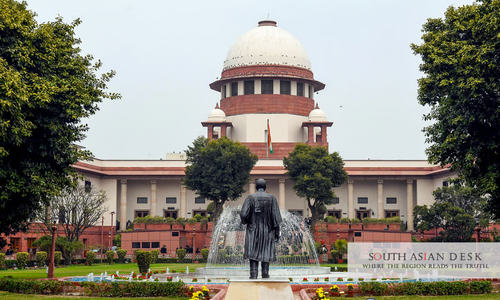
The OBC creamy layer judgment delivered by the Supreme Court earlier this year has entered a fresh legal phase, with the Court reserving its order on Thursday on an application filed by the Union Government seeking clarification on how the ruling should be implemented. A bench of Justice Pamidighantam Sri Narasimha and Justice R. Mahadevan heard the matter, which centres on whether the Court’s earlier findings should apply only from the date of the judgment onward, rather than unsettling appointments and admissions completed in prior years. livelaw
Background to the OBC Creamy Layer Judgment
On March 11, the Supreme Court held that the creamy layer status of an Other Backward Class candidate cannot be determined solely on the basis of the parents’ salary income, and that the category of posts held by them must also be considered. The ruling addressed a long-standing dispute over how eligibility for OBC reservation benefits should be assessed when a parent’s employer is not the government itself. livelaw
The dispute concerned the interpretation of an Office Memorandum dated August 8, 1993, and a clarificatory letter dated October 14, 2004. The 1993 Office Memorandum does not make a parent’s salary the basis for determining creamy layer status, with the parent’s post instead treated as the relevant factor depending on the applicable category, while salary and agricultural income are excluded from the calculation where the Income or Wealth Test applies. The 2004 clarification, by contrast, allowed salary income of parents to be considered in cases where equivalence between posts in organisations such as public sector undertakings, banks, universities and private entities with government posts had not been established.
The Supreme Court found that the 2004 clarification could not introduce a substantive condition that was absent from the original 1993 policy, and that treating children of public sector or private sector employees differently from those of government employees by relying on salary income as a basis for exclusion could amount to hostile discrimination in violation of Articles 14 and 16 of the Constitution. livelaw
What the Centre’s Clarification Plea Seeks
The Union Government has clarified that it is not seeking a review of the March 11 ruling, but rather clarification on the temporal operation of the judgment and how its directions are to be implemented. The Centre’s position is that applying the OBC creamy layer judgment retrospectively would create significant administrative and legal disruption across appointments and admissions already finalised under the earlier framework. livelaw
The Centre has also asked the Court for two years to establish equivalence of posts in other organisations with government posts, following consultation with relevant stakeholders, and to formulate a uniform mechanism for determining OBC creamy layer status in cases where such equivalence has not yet been established. livelaw
Why the Government Wants Prospective Application
The scale of the government’s concern is reflected in the figures placed before the Court. Between 2016 and 2025, more than 5.69 lakh reserved vacancies, including 3.70 lakh OBC vacancies, were filled across Ministries and Departments of the Central Government and their attached and subordinate offices, based on the 1993 Office Memorandum and subsequent instructions. The Centre has said that retrospective implementation could require reconsideration of service allocations made in Civil Services Examinations since 2012, potentially leading to reallocation of services and cadres for candidates already appointed, and affecting the seniority and promotions of serving officers. livelawlivelaw
Beyond central recruitment, the Government has pointed to similar risks in recruitments conducted by 18 States and Union Territories that follow the same 1993 Office Memorandum, as well as in examination bodies such as the Railways, banks, the Department of Posts and paramilitary organisations. It has further argued that retrospective application could disrupt admissions made in lakhs of cases at higher educational institutions since 2012, particularly where such institutions lack provisions for supernumerary seats to accommodate reassessed candidates. livelawlivelaw
The Centre has additionally raised concerns that retrospective change could affect candidates who become eligible for technical services years after their original examination, some of whom may struggle to meet prescribed physical and medical standards due to the passage of time, and could expose the government to increased litigation from candidates previously denied OBC non-creamy layer benefits or additional examination attempts. livelaw
The Interim Plea Over 958 UPSC Candidates
Alongside the broader clarification application, the Centre has filed a separate interim application seeking permission to finalise service allocation for 958 candidates recommended by the Union Public Service Commission in the Civil Services Examination 2025, in accordance with the existing 1993 Office Memorandum, pending a decision on the main clarification plea. The Government has submitted that further delay would postpone the Foundation Course and the annual training and induction cycle for these candidates, and that such prejudice could not be reversed even if the clarification application is later decided in the Centre’s favour. livelawlivelaw
What Happens Next
The matter is being heard under Diary Numbers 51879 and 51897 of 2026, in the case titled Union of India versus Rohith Nathan and another. With judgment now reserved, the Supreme Court’s eventual ruling on the OBC creamy layer judgment’s temporal scope will determine whether millions of past recruitments and admissions remain undisturbed or face renewed scrutiny under the revised eligibility standard laid down in March. Until the Court delivers its order, the status of the 958 UPSC candidates and the broader implementation timeline for states and central departments remains pending. livelaw
Follow SouthAsianDesk on X, Instagram and Facebook for insights on business and current affairs from across South Asia.