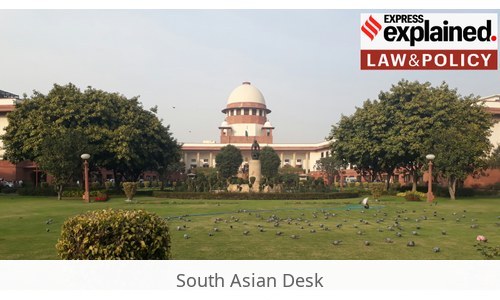
OBC creamy layer: The Indian government is seeking clarification from the Supreme Court regarding the creamy layer criteria for Other Backward Classes (OBC) in the context of the Civil Services Examination (CSE) 2025. This follows a landmark Supreme Court ruling on August 26, 2026, which addressed the income test for determining eligibility under the OBC creamy layer provisions. The Centre’s request aims to clarify how this ruling will affect decisions made over several years regarding OBC representation in civil services.
OBC creamy layer: Implications of the Supreme Court’s Ruling
The Supreme Court’s ruling seeks to address historical disparities in the application of the OBC creamy layer criteria for OBC communities. The decision aims to correct perceived discrimination against certain OBC groups in civil service recruitment by re-evaluating the income thresholds used to determine eligibility for reservations. This has significant implications for the eligibility of candidates from OBC backgrounds, particularly those whose families fall within the income limits defined by the court’s ruling.
The ruling is expected to influence the selection process for the CSE 2025, as it may require a reassessment of existing criteria. While the government has not yet provided specific details on how this will be implemented, the clarification sought from the Supreme Court is seen as a critical step in ensuring equitable OBC representation in civil services. The decision also raises questions about the long-term sustainability of the OBC creamy layer policy, which was introduced in the 1990s to exclude economically advanced sections of OBC communities from reservation benefits. Critics have long argued that the policy’s rigid income thresholds failed to account for regional economic disparities, leading to unintended exclusions of OBC candidates who are economically vulnerable but not classified as part of the result.
Government’s Rationale for Seeking Clarification
The Indian government’s request for clarification is part of its broader efforts to ensure fair and transparent representation of OBC candidates under the result policy. This move comes amid ongoing discussions about the effectiveness of the creamy layer policy, which was introduced to exclude economically advanced sections of OBC communities from reservation benefits. The government has emphasized that the clarification will help align the implementation of the policy with the Supreme Court’s ruling and prevent potential legal challenges.
Historically, the result criteria have been a contentious issue, with critics arguing that the income thresholds were too rigid and failed to account for regional economic disparities. The current request for clarification reflects the government’s commitment to addressing these concerns and ensuring that the policy remains relevant to the evolving socio-economic landscape. The Supreme Court’s ruling also underscores the need for periodic reassessment of eligibility criteria, as socio-economic conditions in India continue to shift, particularly in urban areas where income levels have risen significantly over the past decade.
Context and Ongoing Debate
This development is part of a larger debate about equitable OBC representation under the result policy. The Supreme Court’s ruling has reignited discussions about the role of reservations in promoting social justice in India and the need for periodic reassessment of eligibility criteria. Civil service recruitment has long been a focal point for these debates, as it directly impacts the representation of marginalized communities in leadership roles.
The government’s approach to this issue underscores the importance of balancing affirmative action policies with the need for merit-based selection. As the CSE 2025 approaches, the outcome of the Supreme Court’s clarification will likely shape the future of OBC representation in civil services and influence broader policy discussions on social justice in India. The ruling also highlights the tension between ensuring access for historically disadvantaged groups and maintaining the integrity of merit-based selection processes, a balance that has been a recurring challenge in India’s affirmative action framework.
The debate over the result policy is not new. In 2018, the Supreme Court had upheld the creamy layer provisions, but subsequent legal challenges and evolving socio-economic conditions have prompted renewed scrutiny. The current ruling may lead to a more nuanced approach, incorporating factors beyond income, such as educational qualifications or regional development indices, to determine eligibility. This could have far-reaching implications for the OBC community, as it may either expand or contract the pool of eligible candidates, depending on how the criteria are interpreted.
Follow SouthAsianDesk on X, Instagram and Facebook for insights on business and current affairs from across South Asia.
Sources
- OBC creamy layer: Why Centre is seeking clarity for CSE 2025 from Supreme Court – indianexpress.com
- OBC creamy-layer income test: What did the Supreme Court rule, and why is the Centre seeking clarification? | Explained – thehindu.com
Image: images.indianexpress.com