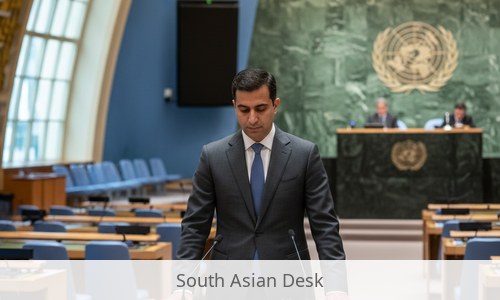
Afghanistan UN General Assembly absence: Afghanistan’s permanent representative to the United Nations, Nasir Ahmad Faiq, did not address the UN General Assembly this year due to a ‘technical’ reason. This marks the sixth consecutive year Afghanistan has not participated in the UNGA’s annual high-level debate, despite retaining its UN seat. The absence has raised concerns about Afghanistan representation UN and its diplomatic challenges Afghanistan, highlighting the country’s isolation from global discourse.
Implications of Afghanistan UN General Assembly Absence
The absence of Afghanistan at the UNGA has significant implications for international relations Afghanistan. The lack of participation may weaken its ability to engage in global discourse on critical issues, including security, development, and regional stability. Khaama Press notes that this absence could further isolate Afghanistan from international partners, limiting its influence in shaping global policies that affect the region. The absence also underscores the broader diplomatic challenges Afghanistan faces in maintaining consistent engagement with the international community.
Reasons Behind the Absence
Khaama Press reports that Nasir Ahmad Faiq cited a ‘technical’ reason for not addressing the assembly. While the exact nature of the technical issue remains unspecified, Ariana News suggests that this may reflect broader governance challenges within Afghanistan. The absence of a clear explanation has fueled speculation about the country’s internal dynamics and its capacity to maintain consistent diplomatic engagement. This situation raises questions about Afghanistan’s ability to address regional and global challenges, particularly in the context of UNGA 2023.
Historical Context of Afghanistan’s Participation
Afghanistan’s participation in the UNGA has undergone significant changes since the Taliban’s return to power in 2021. Prior to this, Afghanistan maintained a more active presence in the assembly, with regular participation in high-level debates. However, the absence of its envoy for six consecutive years underscores a marked decline in its international visibility. This trend raises questions about the long-term implications for Afghanistan’s role in global governance and its ability to address regional and global challenges, particularly in the context of UNGA 2023.
Afghanistan UN General Assembly absence has become a recurring issue, with the envoy’s non-participation in UNGA 2023 further highlighting the country’s diplomatic isolation. The lack of engagement at the UNGA may also impact Afghanistan’s ability to secure international support for its domestic priorities, such as humanitarian aid and economic development. This absence not only affects Afghanistan’s standing in global forums but also complicates its efforts to rebuild trust with international stakeholders.
The situation reflects a broader pattern of disengagement from multilateral diplomacy, which has been exacerbated by the Taliban’s governance and the international community’s response. While Afghanistan retains its UN seat, its absence from key discussions has created a vacuum in its representation, leaving critical issues unaddressed. This has implications for regional security, as Afghanistan’s stability is closely tied to its neighbors and global actors.
Broader Geopolitical Context
The absence of Afghanistan at the UNGA is not merely a procedural issue but a symptom of deeper geopolitical challenges. The Taliban’s return to power has led to a reevaluation of Afghanistan’s role in international relations Afghanistan, with many countries adopting a cautious approach. This has resulted in a lack of formal diplomatic recognition and limited engagement, further isolating the country from global institutions.
The situation also highlights the importance of Afghanistan representation UN in shaping its international narrative. Without a consistent voice in the UNGA, Afghanistan risks being sidelined in discussions that directly impact its sovereignty and development. This absence may also hinder efforts to secure international aid and investment, which are crucial for the country’s recovery.
Conclusion
the result remains a critical issue that underscores the country’s diplomatic challenges Afghanistan. As the world continues to grapple with global security and development priorities, Afghanistan’s absence from the UNGA highlights the need for renewed engagement and dialogue. The international community must find ways to include Afghanistan in global discussions, even as it navigates the complexities of its political landscape.
Follow SouthAsianDesk on X, Instagram and Facebook for insights on business and current affairs from across South Asia.