Tariff weaponisation was at the center of remarks by Finance Minister Nirmala Sitharaman on Monday, 5 October 2026, when she said that negotiations between India and the United States over a bilateral trade agreement have reached a plateau. She cautioned that further concessions from either side could now prove difficult, in the latest sign of strain in long-running efforts to finalize a deal.
What the Finance Minister Said
Ms Sitharaman said both sides had arrived at a point beyond which giving or taking would be very hard, while adding that if room to maneuver existed, both governments would use it. Her statement does not mean the India-US trade talks have been called off. Reports on her remarks stressed that discussions are continuing, and the main sticking points remain tariffs, market access, and the American goods deficit with India.
On the question of the trade imbalance, the Finance Minister said the trade balance is in India’s favor and that the deficit lies with Washington. She acknowledged that the United States would want to reduce that gap. She also criticized the growing practice of using tariffs to correct such gaps, arguing that levies had moved beyond their role as a negotiating instrument. By way of comparison, she pointed to India’s own large trade deficit with China, saying New Delhi would prefer to address that imbalance through dialogue.
Why Tariff Weaponisation Complicates the Negotiations
Sitharaman’s concern is not new. In December 2025, she told a Times Network conclave that trade was being weaponised through tariffs and other measures, and that India would have to negotiate its way carefully while relying on the strength of its economy. She also said at the time that India had never weaponised tariffs itself.
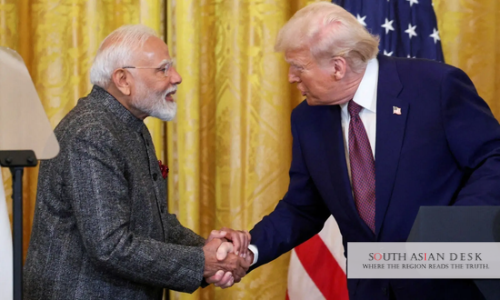
The latest remarks come against a difficult backdrop. Last week, United States Trade Representative Jamieson Greer said an agreement was in its final stages but was not imminent, following a meeting with Indian Commerce and Industry Minister Piyush Goyal in the United States. The two countries had agreed an interim arrangement earlier this year and have since been negotiating a broader pact. Both sides have reportedly sought assurances that India would not face additional penalties once a deal is signed.
Russian Oil Tariffs Narrow the Room for Compromise
Reuters reported that the scope for a final compromise has narrowed after President Donald Trump signed into law a congressional bill giving him authority to impose tariffs of up to 100 percent on countries that buy significant quantities of Russian oil, a category that includes India and China. India has warned that the new measures could harm bilateral ties. In this regard, the prospect of fresh Russian oil tariffs adds an external pressure that is separate from the bilateral disputes over market access and the trade imbalance, and it complicates any assurance of stability after a signing.
Domestic Reaction
The remarks drew a pointed response from trade analysts. Ajay Srivastava, founder of the Global Trade Research Initiative and a former trade official, argued that India should stop offering concessions while the agreement with Washington remains unfinished. His view reflects a wider debate in New Delhi over how much India should concede to secure a deal when tariff threats continue to hang over the talks.
Outlook
Several points remain unresolved. Neither government has announced a new negotiating round, and no timeline for concluding the agreement has been confirmed. The central question is whether the two sides can find scope for compromise within a narrowing space, particularly if Russian oil tariffs take effect. Hence, the coming weeks are likely to test whether India’s insistence on resolving disputes through negotiation can survive an environment in which tariff weaponisation, as Ms Sitharaman describes it, has become a routine feature of trade policy. For Indian exporters and businesses, the immediate message is one of continued uncertainty, although the Finance Minister’s statement indicates that the door to a negotiated outcome has not been closed.
Follow SouthAsianDesk on X, Instagram and Facebook for insights on business and current affairs from across South Asia.
Sources
- India-U.S. deal has reached plateau where further demands, concessions will be very difficult: Sitharaman – thehindu.com
- ‘India-US Trade Talks May Have Reached Plateau’: Nirmala Sitharaman – ndtv.com
Image: th-i.thgim.com