US-India trade deal negotiations are virtually complete, with the long-awaited agreement potentially ready for signature within the next three to four months, according to a senior United States official.
The official said Washington and New Delhi had prepared the substance of the agreement, but its formal conclusion remained dependent on the completion of several US trade investigations.
Speaking on the sidelines of the Association of Southeast Asian Nations foreign ministers’ meeting in Manila on July 22, the official said the two governments had reached an advanced stage in the negotiations.
The remaining delay was attributed to investigations being conducted under Section 301 of US trade law rather than unresolved disagreements between India and the United States. The legislation allows Washington to investigate trade practices considered unfair and impose tariffs or other retaliatory measures.
US-India trade deal awaits completion of investigations
The US-India trade deal could move towards signature after Washington concludes its ongoing Section 301 investigations.
One investigation covering approximately 60 countries was expected to be completed by the end of July or the beginning of August, the US official said. Progress on the agreement with India and other countries could follow once those proceedings are concluded.
The official estimated that the US-India trade deal could be formally completed within another three or four months. That timeline would place a possible signing between October and November 2026, although neither government has announced a fixed date.
Washington has proposed tariffs of up to 12.5 per cent on dozens of countries, including India, over allegations that they have not done enough to prevent trade in goods produced through forced labour.
The proposed measures remain separate from the bilateral trade negotiations, but their completion is necessary before Washington can proceed with the agreement.
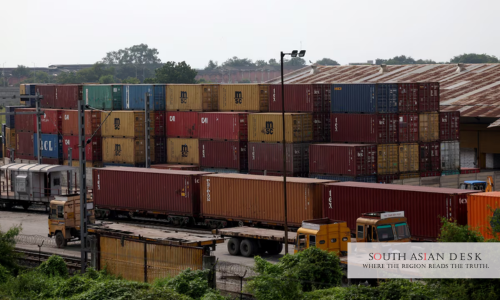
The US-India trade deal is intended to expand market access, reduce tariff and non-tariff barriers and deepen economic ties between the two countries. It follows a framework announced by the two governments in February for an interim reciprocal trade agreement.
US Trade Representative Jamieson Greer travelled to New Delhi in June to meet Indian Commerce and Industry Minister Piyush Goyal and other senior officials. The discussions covered the interim agreement and the broader India-US bilateral trade agreement launched by President Donald Trump and Prime Minister Narendra Modi in February 2025.
What the US-India trade deal would include
The US-India trade deal builds on a framework under which Washington agreed to reduce its reciprocal tariff on qualifying Indian goods from 25 per cent to 18 per cent.
The reduced rate would apply to products including textiles, clothing, leather goods, footwear, plastics, rubber, organic chemicals, home décor items and some machinery.
Subject to the successful conclusion of the interim agreement, the United States would remove reciprocal tariffs from a range of Indian exports, including generic pharmaceuticals, gems, diamonds and aircraft parts.
India, in return, agreed to eliminate or reduce tariffs on US industrial goods and several agricultural products. These include tree nuts, fruit, soybean oil, wine, spirits, dried distillers’ grains and red sorghum used for animal feed.
The US-India trade deal also contains commitments to address non-tariff barriers affecting medical devices, information technology products and agricultural trade.
The two countries are expected to establish rules of origin to ensure that preferential treatment under the agreement primarily benefits goods produced in India and the United States.
They have also committed to negotiating rules covering digital trade, technical standards, regulatory practices, supply chain security, investment reviews and export controls.
India has indicated that it intends to purchase $500 billion worth of US products over five years. The proposed purchases would include energy products, aircraft, aircraft components, precious metals, technology products and coking coal.
The agreement also envisages increased trade in graphics processing units and other equipment used in data centres, reflecting the growing importance of technology cooperation within India-US economic ties.
Pharmaceutical tariffs pose risk to India
Despite progress on the US-India trade deal, proposed American tariffs on imported generic medicines could create uncertainty for India’s pharmaceutical industry.
Trump said generic drugs imported into the United States would remain tariff-free for two years from August 1, 2026. A tariff of 100 per cent would then apply for one year, followed by a 200 per cent tariff.
India is particularly exposed to any significant change in US pharmaceutical tariffs. The country exported approximately $25.8 billion worth of pharmaceutical products in 2025, with shipments to the United States valued at $9.7 billion.
The US market therefore accounted for nearly 38 per cent of India pharmaceutical exports during the year.
Generic drugs are among India’s most important exports to the United States. The industry’s role in supplying lower-cost medicines also means that steep tariffs could affect American importers, healthcare providers and consumers alongside Indian manufacturers.
The February trade framework identified generic pharmaceuticals as products that could receive tariff relief after the successful conclusion of the interim agreement. However, treatment of pharmaceutical products also remains dependent on the outcome of a separate US Section 232 investigation into medicines and pharmaceutical ingredients.
The Section 232 pharmaceutical investigation and the Section 301 trade investigations delaying the agreement are separate legal processes. Their respective findings could nevertheless influence the commercial benefits ultimately available to Indian exporters.
US-India trade deal faces domestic scrutiny
The US-India trade deal has also attracted criticism from opposition parties and farming groups in India.
Critics have questioned whether greater access for American agricultural goods could place Indian farmers under pressure. Agriculture and dairy remain politically sensitive sectors because of the number of people dependent on them for employment and income.
The Indian government has maintained that sensitive agricultural and dairy products will remain protected. Goyal previously identified wheat, rice, maize, ethanol, tobacco and certain vegetables among the products shielded from greater competition.
The minister has argued that the US-India trade deal would improve access to the American market for Indian exporters and create additional employment opportunities.
The February framework stated that India would address barriers affecting US agricultural exports. However, the precise tariff schedules, exemptions and implementation periods will become clearer only when the final agreement is signed and its complete legal text is released.
Agreement could deepen India-US economic ties
The US-India trade deal would form part of a wider effort to strengthen economic and strategic cooperation between Washington and New Delhi.
The two governments have sought closer relations in technology, energy, defence, investment and supply chain security. A completed trade agreement could provide businesses with greater certainty regarding tariffs, market access and regulatory requirements.
The immediate framework is described as an interim agreement. Negotiations are expected to continue on the broader India-US bilateral trade agreement, which would address additional tariffs, services, investment, intellectual property, government procurement, labour standards and environmental provisions.
Although the commercial terms of the US-India trade deal appear largely settled, formal signature remains dependent on the completion of the US investigations.
The three-to-four-month estimate signals that the negotiations have entered their final stage. However, the eventual impact of the US-India trade deal will depend on its detailed tariff schedules, implementation rules and the outcome of separate investigations affecting Indian pharmaceutical and other exports.
Published in SouthAsianDesk, July 23, 2026
Follow SouthAsianDesk on X, Instagram and Facebook for insights on business and current affairs from across South Asia.