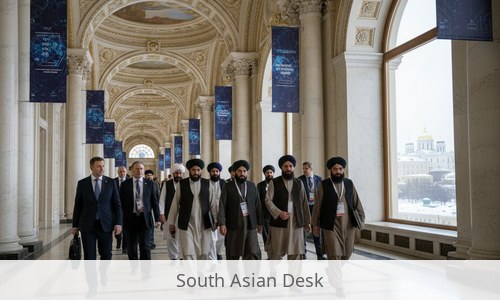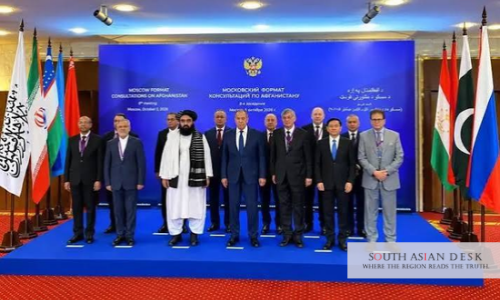
On October 5, 2026, the eighth meeting of the Moscow Format consultations on Afghanistan concluded without a joint statement, as reported by Khaama Press and Ariana News. Zamir Kabulov, Russia’s special representative for Afghanistan, expressed regret over the lack of agreement among participants, citing disagreements between the Taliban and Pakistan on key issues including regional stability and counter-narcotics efforts. The failure to issue a formal document underscores the persistent tensions between Kabul and Islamabad, which have long complicated bilateral relations and regional security dynamics.
Moscow Format consultations: Implications for Afghanistan-Pakistan Relations
The absence of a joint statement from the Moscow talks highlights the deepening rift between the Taliban and Pakistan over unresolved disputes. Central to the disagreement are allegations of cross-border terrorism, with Pakistan accusing Afghan authorities of allowing Afghan soil to be used for attacks against its territory. The Taliban, meanwhile, has repeatedly denied these claims, asserting that it is committed to maintaining security along the border. These tensions have been exacerbated by divergent priorities: Pakistan emphasizes its need for a stable Afghanistan to prevent spillover threats, while the Taliban seeks to assert its sovereignty and resist external pressure on issues like counter-narcotics efforts.
The discussions at the talks also revealed a lack of consensus on counter-narcotics strategies, a critical issue given Afghanistan’s role as a global hub for illicit drug production. Pakistan has long pushed for stricter enforcement of anti-drug measures, including the disruption of trafficking routes and the prosecution of Afghan officials linked to the trade. However, the Taliban has been reluctant to cooperate fully, citing concerns over sovereignty and the potential for foreign interference in its domestic policies. This divergence has hindered progress on joint initiatives aimed at curbing the flow of narcotics into regional markets.
The failure to reach an agreement at the Moscow talks signals a lack of diplomatic progress in resolving these disputes, which have long complicated bilateral relations and regional security dynamics. Analysts note that the absence of a unified front between Kabul and Islamabad risks further destabilizing the region, particularly as both nations grapple with internal challenges and external pressures from other regional actors.
Russia’s Role in South Asian Diplomacy
Russia’s involvement in mediating Afghanistan-related disputes reflects its strategic interest in maintaining stability in the region. As a key player in the Moscow Format, Russia has sought to balance its relationships with both the Taliban and Pakistan, while also advancing its own geopolitical interests. However, the current impasse raises questions about the effectiveness of Moscow’s diplomatic efforts in addressing complex regional challenges.
Russia’s ability to act as a neutral mediator is constrained by its own security concerns and the competing priorities of regional actors. While Moscow has historically maintained a pragmatic approach to Afghanistan, its recent diplomatic engagements have been marked by a desire to reinforce its influence in South Asia. This includes efforts to expand economic and security ties with the Taliban, as seen in recent discussions between Afghan President Mohammad Mohaqiq and Russian Foreign Minister Sergey Lavrov, which focused on deepening bilateral cooperation.
Despite these efforts, the failure to secure a joint statement from the Moscow talks suggests that Russia’s role as a mediator is facing significant challenges. The divergent priorities of the Taliban and Pakistan, combined with the broader geopolitical landscape, have made it difficult for Moscow to broker a consensus. Analysts suggest that Russia’s influence in the region may be waning, as other powers, including China and the United States, continue to play a growing role in Afghanistan’s affairs.
The current impasse also highlights the limitations of multilateral diplomacy in addressing complex regional issues. While the Moscow Format has provided a platform for dialogue, the lack of a unified approach among participants has hindered progress on key issues. This underscores the need for a more coordinated and sustained effort to address the underlying causes of regional instability.
Follow SouthAsianDesk on X, Instagram and Facebook for insights on business and current affairs from across South Asia.
This report focuses on Moscow Format consultations and the verified developments surrounding it.
This report focuses on Moscow Format consultations and the verified developments surrounding it.