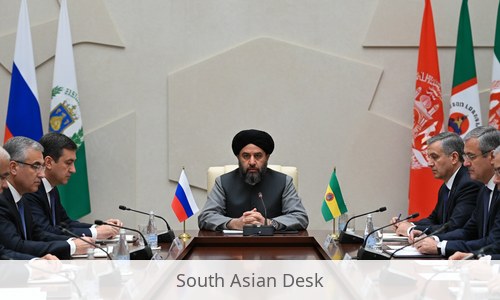
Moscow Format meeting: Amir Khan Muttaqi, the Taliban Foreign Minister, has traveled to Moscow for the eighth round of the Moscow Format consultations on Afghanistan. This meeting, a recurring platform for regional dialogue, aims to address critical political, economic, and security issues concerning Afghanistan, with participation from various regional representatives. The event underscores the importance of regional cooperation in Afghanistan and reflects the geopolitical dynamics in South Asia. The eighth iteration of the Moscow Format consultations comes at a pivotal moment for Afghanistan, as the country grapples with economic instability, security challenges, and the need for international recognition. The meeting is expected to reinforce multilateral engagement as a cornerstone of Afghanistan’s future trajectory.
Moscow Format meeting: Overview of the Consultations
The Moscow Format meetings are a structured series of consultations involving Afghanistan’s neighbors and other stakeholders to discuss the country’s future. These discussions focus on fostering regional cooperation to address Afghanistan’s multifaceted challenges, including governance, economic stability, and security concerns. The eighth iteration of these talks underscores the continued relevance of multilateral engagement in shaping Afghanistan’s trajectory. The Moscow Format, initiated in 2022, has evolved into a key diplomatic mechanism for regional actors to coordinate their approaches to Afghanistan’s complex situation. The platform brings together representatives from Russia, Pakistan, Iran, China, and other regional players, reflecting the interconnected nature of South Asian geopolitics. These consultations have historically aimed to balance the interests of regional powers while addressing Afghanistan’s domestic and international challenges.
Moscow Format meeting: Key Participants
Amir Khan Muttaqi, as the Taliban Foreign Minister, plays a central role in representing Afghanistan’s interests in these discussions. His participation highlights the Taliban’s ongoing efforts to engage with regional powers. Hafiz Zia Ahmad Takal, head of the Taliban Foreign Ministry’s information and public relations department, is also present, ensuring communication and transparency in the dialogue. The presence of the Taliban Foreign Minister signals the group’s commitment to diplomatic engagement in the region. Regional representatives from Russia, Pakistan, and Iran are expected to attend, reflecting the diverse interests and priorities of these countries. Russia, as the host, has long been a key player in Afghanistan’s political landscape, while Pakistan and Iran have historically maintained close ties with the Taliban. The meeting is also likely to involve observers from international organizations, though the exact composition of participants remains to be confirmed.
Discussion Topics
The meeting is expected to cover a range of pressing issues:
- Political Issues: Governance structures, constitutional developments, and the role of regional actors in Afghanistan’s political landscape. These Afghan political discussions will likely focus on the Taliban’s domestic policies and international relations. The Taliban’s approach to governance, including its stance on human rights and the inclusion of women and minorities in political processes, is expected to be a key point of discussion. Regional stakeholders may also seek clarity on the Taliban’s commitment to non-interference in regional affairs.
- Economic Challenges: Strategies to stabilize Afghanistan’s economy, including foreign investment, trade corridors, and international aid. The meeting is expected to explore ways to enhance economic cooperation, such as the development of trade routes and infrastructure projects. The role of international aid, particularly from countries like China and the United Arab Emirates, may also be discussed. Regional powers are likely to emphasize the need for sustainable economic policies that reduce Afghanistan’s dependence on foreign assistance.
- Security Concerns: Regional stability, counterterrorism cooperation, and the impact of Afghanistan’s security dynamics on neighboring countries. The meeting is expected to address the threat of terrorism, including the activities of groups like the Islamic State-Khorasan Province (IS-K). Regional cooperation in counterterrorism efforts, such as intelligence sharing and joint operations, may be a key focus. The security situation along Afghanistan’s borders, particularly with Pakistan and Iran, is also likely to be discussed, given the potential for cross-border instability.
These topics reflect the broader geopolitical dynamics in South Asia, with regional stakeholders like Russia, Pakistan, and Iran seeking collaborative solutions to Afghanistan’s challenges. The discussions are expected to delve into how regional cooperation in Afghanistan can mitigate cross-border threats and foster economic integration, which is crucial for long-term stability.
Implications for Afghanistan
The outcomes of the Moscow Format meeting could have significant implications for Afghanistan’s political and economic future. Regional cooperation, as emphasized in these discussions, may influence the Taliban’s domestic policies and international relations. The involvement of multiple regional actors underscores the interconnected nature of Afghanistan’s challenges and the necessity of collaborative solutions. The meeting also reinforces the role of the Taliban Foreign Minister in shaping Afghanistan’s diplomatic engagements. The eighth Moscow Format meeting is particularly significant as it comes at a time when Afghanistan faces complex challenges, including economic instability, security threats, and the need for international recognition. The discussions are expected to explore ways to enhance regional cooperation in Afghanistan, which could lead to more sustainable development and reduced tensions with neighboring countries. The participation of Amir Khan Muttaqi, as the Taliban Foreign Minister, highlights the group’s desire to engage in multilateral dialogue and address concerns raised by regional powers.
Published in SouthAsianDesk, 2023-10-05.
Follow SouthAsianDesk on X, Instagram and Facebook for insights on business and current affairs from across South Asia.
Sources
- Muttaqi Travels to Russia for Eighth Moscow Format Meeting – khaama.com
- Saar: Moscow forum 8th consultative meeting on Afghanistan – ariananews.af