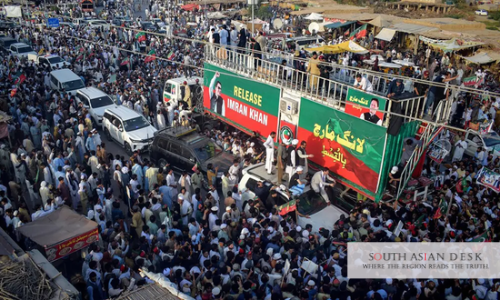
Pakistan’s political dialogue has taken center stage as Prime Minister Shehbaz Sharif extended an invitation to Imran Khan’s Pakistan Tehreek-e-Insaf (PTI) party to halt their long march toward Islamabad. The move comes amid rising tensions, with thousands of Khan’s supporters demanding his release and greater constitutional rights. The march, which began in Khyber Pakhtunkhwa—a province governed by PTI—has reignited debates about political stability in Pakistan and the role of public demonstrations in shaping governance.
Pakistan’s political dialogue: Political Implications of Sharif’s Invitation
PM Sharif’s call for dialogue reflects a strategic effort to address the unrest caused by Imran Khan’s long march. The Shehbaz Sharif invitation to PTI aims to de-escalate tensions and prevent disruptions to governance. Historically, such dialogues have had mixed results, with some leading to temporary calm while others failed to resolve underlying issues. Analysts suggest that the current political climate requires a nuanced approach to ensure political stability in Pakistan, balancing the demands of protesters with the need for law and order.
Khan’s supporters, mobilizing since October 4, 2026, argue that their actions are rooted in constitutional rights and the need for accountability. However, the government has emphasized resolving grievances through formal channels rather than mass protests. The response from PTI and its supporters will be pivotal in determining whether this Pakistan political dialogue can lead to a lasting resolution.
Long March and Its Historical Context
Long marches have long been a tool for political pressure in Pakistan, with the 2018 protests against Khan’s ouster being a defining moment. The current Khyber Pakhtunkhwa protests echo this pattern, though they occur amid heightened polarization. While such demonstrations can amplify public discourse, they also risk deepening divisions if not addressed through structured dialogue. The challenge for leaders like Sharif and Khan is to navigate these tensions without compromising democratic principles.
The Shehbaz Sharif invitation to PTI underscores the government’s commitment to resolving conflicts through negotiation. However, the success of this Pakistan political dialogue hinges on mutual trust and the willingness of both sides to compromise. As the march continues toward Islamabad, the focus remains on whether this effort can restore political stability in Pakistan or further entrench existing divisions.
The Role of Political Stability in Pakistan’s Current Landscape
Political stability in Pakistan has been a recurring theme in the nation’s political discourse, especially as the country grapples with the aftermath of leadership transitions and public demonstrations. The current situation, marked by Imran Khan’s long march and Shehbaz Sharif’s invitation, highlights the delicate balance between addressing public grievances and maintaining institutional integrity. Analysts emphasize that without a clear framework for political stability in Pakistan, the risk of prolonged unrest remains high. The government’s approach to this Pakistan political dialogue will be critical in determining whether it can serve as a bridge to reconciliation or exacerbate existing divisions.
The Significance of Khyber Pakhtunkhwa Protests
The Khyber Pakhtunkhwa protests, which have become a focal point of Imran Khan’s long march, underscore the regional dynamics at play in Pakistan’s political landscape. As the province governed by PTI, Khyber Pakhtunkhwa’s role in this movement is both symbolic and strategic. The protests have drawn attention to the broader issue of political representation and the challenges of maintaining unity in a nation with diverse regional interests. The government’s response to these protests, particularly through the Shehbaz Sharif invitation, will be a litmus test for its ability to manage dissent while upholding the rule of law.
The Pakistan Tehreek-e-Insaf’s Position and Challenges
As the party at the center of this march, Pakistan Tehreek-e-Insaf faces a complex set of challenges. The Imran Khan long march has placed immense pressure on the party to respond to the demands of its supporters while navigating the political implications of the Shehbaz Sharif invitation. The party’s leadership must weigh the potential benefits of engaging in dialogue against the risks of appearing to concede to pressure. This delicate balancing act is crucial in shaping the trajectory of political stability in Pakistan and the broader political discourse surrounding the current crisis.
Follow SouthAsianDesk on X, Instagram and Facebook for insights on business and current affairs from across South Asia.
Sources
- Pakistan PM Sharif invites Imran Khan’s party for talks, urges it to call off long march – thehindu.com
- Thousands of Imran Khan Supporters March Toward Islamabad, Party Says – khaama.com
Image: th-i.thgim.com