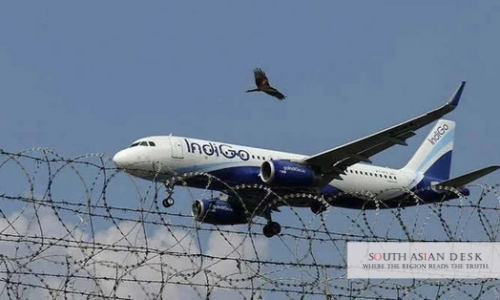
Pakistan airspace ban on Indian aircraft has been extended until November 24, 2026, as Islamabad continues its restrictions on Indian-registered planes and aircraft associated with Indian airlines and operators. The Pakistan Airports Authority (PAA) confirmed the extension through a new Notice to Airmen (NOTAM), keeping the restrictions in force for another month amid continuing tensions between the two neighbouring countries.
According to the notice, the restriction will remain effective until 4:59 a.m. Pakistan Standard Time on November 24. The measure covers Indian-registered aircraft, as well as planes owned, operated or leased by Indian airlines and operators, including military flights.
The latest extension continues a policy introduced in April 2025, when relations between Pakistan and India deteriorated sharply following the deadly Pahalgam attack in Indian-administered Kashmir. Since then, Pakistan has repeatedly extended the restriction, making airspace access an ongoing issue in bilateral relations and regional aviation.
Pakistan Airspace Ban on Indian Aircraft Remains in Force
The latest NOTAM confirms that Indian aircraft will continue to be barred from using Pakistani airspace until the revised deadline. The restriction applies across Pakistan’s two flight information regions, Karachi and Lahore, which are important components of the country’s air traffic management system.
The PAA’s announcement means affected operators must continue planning flights around Pakistani airspace. The restrictions cover aircraft based on their registration and their ownership, operation or leasing arrangements, rather than applying exclusively to a particular airline brand.
The inclusion of leased aircraft and military flights gives the measure a broad scope. Indian airlines operating international services must therefore continue to account for the restrictions when planning routes between India and destinations farther west.
The November 24 deadline does not necessarily indicate that the ban will end on that date. Its continuation or removal will depend on any subsequent official notice issued by the relevant Pakistani authorities.
Why Pakistan Extended the Indian Aircraft Ban
Pakistan initially closed its airspace to Indian aircraft on April 23, 2025, following a sharp deterioration in relations after the Pahalgam attack, which killed 26 people.
India accused Pakistan of involvement in the incident, while Islamabad rejected the allegation and called for an independent investigation. The dispute triggered a series of retaliatory measures and contributed to a wider diplomatic confrontation between the two nuclear-armed neighbours.
Tensions escalated further in May 2025, when the countries became involved in a military confrontation. Although a ceasefire was subsequently reached, several areas of bilateral relations remained strained, including aviation access and other economic and diplomatic arrangements.
The continuing airspace restrictions reflect the persistence of these tensions. Repeated extensions have kept the measure in place well beyond its initial implementation, with the latest announcement pushing the deadline to November 24, 2026.
The decision also illustrates how restrictions on transportation and connectivity can become part of broader state responses during periods of heightened geopolitical friction.
Indian Airlines Face Longer Routes and Higher Operating Costs
The Pakistan airspace ban has significant implications for Indian airlines operating international flights, particularly services connecting India with destinations in Europe, the Middle East and parts of Central Asia.
Without access to Pakistani airspace, affected aircraft may need to follow alternative routes that increase flight distances and travel times. The precise impact varies according to the departure airport, destination, aircraft type and route selected by the airline.
Longer journeys can increase fuel consumption and operating expenses. Airlines may also face additional costs associated with crew scheduling, aircraft utilisation and changes to flight timetables.
Air India, which operates an extensive international network, has previously reported substantial financial effects from the restrictions. Reporting published in 2025 cited an estimate submitted to Indian officials that the airspace closure could affect the carrier’s annual profit before tax by approximately $455 million. The estimate reflected the circumstances at that time and should not be interpreted as a newly confirmed financial assessment for 2026.
For passengers, the consequences may include longer journeys, altered connections and changes to departure or arrival schedules on affected services. However, the extent of any disruption depends on individual routes and airline operating decisions.
Impact on Regional Aviation and Air Traffic Planning
The continued closure of Pakistani airspace to Indian aircraft presents an additional consideration for regional aviation. Airspace access influences how airlines plan international routes, manage fuel requirements and coordinate flights across national boundaries.
Pakistan occupies a strategically important geographical position between South Asia and several destinations to the west. Restrictions affecting access to its airspace can therefore require airlines to adjust flight paths and coordinate operations across alternative corridors.
The effects are not identical for every carrier or destination. Some flights may experience relatively limited changes, while certain long-haul services may require more substantial rerouting. Airlines must assess these factors while maintaining compliance with aviation regulations and safety requirements.
For aviation authorities, the NOTAM system provides a formal mechanism for communicating operational restrictions to pilots, airlines and other relevant stakeholders. By specifying the applicable airspace and the duration of a restriction, such notices help operators incorporate regulatory changes into flight planning.
The latest extension means that these operational arrangements will remain necessary for affected Indian aircraft throughout the stated period unless the authorities issue a revised notice.
Pakistan-India Relations Remain a Key Factor
The extension of the airspace ban highlights the continuing relationship between aviation policy and diplomatic conditions in South Asia. Although airspace restrictions are operational measures, their duration can also reflect the broader state of relations between neighbouring countries.
Pakistan and India maintain significant economic, geographical and security connections, but recurring political disputes have repeatedly complicated efforts to improve bilateral cooperation.
Restoring normal aviation arrangements would require a change in the applicable restrictions and an official decision by the relevant authorities. Any broader improvement in connectivity would also take place within the context of the countries’ wider diplomatic relationship.
For now, the latest PAA notice establishes November 24, 2026, as the current deadline for the restriction. Airlines and aviation operators will need to continue observing the rules while monitoring further announcements.
Airspace Restrictions Continue Until November 24, 2026
Pakistan’s decision to extend the ban on Indian aircraft underscores the continuing effects of the diplomatic and security tensions that emerged in 2025. The latest notification maintains restrictions on Indian-registered aircraft and planes owned, operated or leased by Indian airlines and operators, including military flights.
The measure also continues to affect flight planning for Indian carriers, particularly those operating international services that would otherwise use Pakistani airspace. Longer alternative routes can increase fuel consumption, operating expenses and journey times, although the impact varies by route.
With the restriction now scheduled to remain in effect until 4:59 a.m. on November 24, 2026, the next developments will depend on any further notification issued by the Pakistan Airports Authority.
Until an official change is announced, affected airlines must continue to plan their operations in accordance with the existing restrictions. The extension serves as another indication that aviation connectivity between Pakistan and India remains closely tied to the broader diplomatic relationship between the two countries.
Follow SouthAsianDesk on X, Instagram and Facebook for insights on business and current affairs from across South Asia.