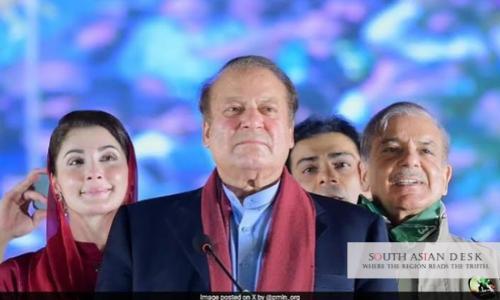
KP emergency rule has become a major point of political debate after former prime minister Nawaz Sharif backed the federal government’s decision to impose emergency measures and governor’s rule in Khyber Pakhtunkhwa, arguing that the action should have been taken earlier. Prime Minister Shehbaz Sharif, meanwhile, has defended the move as a necessary response to worsening security conditions and failed negotiations, saying the government acted to prevent bloodshed and protect national stability.
The statements come amid heightened political tensions between the federal government and the Pakistan Tehreek-e-Insaf (PTI), which previously governed the province. The emergency measures, approved by President Asif Ali Zardari on October 11, 2026, have raised questions about provincial governance, constitutional authority and the effectiveness of Pakistan’s counterterrorism strategy.
Nawaz Sharif, president of the Pakistan Muslim League-Nawaz (PML-N), expressed support for the decision, maintaining that the situation in the province had deteriorated to a point where extraordinary intervention was necessary. His remarks also intensified the political dispute over the performance of the former provincial administration and its approach to security.
KP Emergency Rule and Nawaz Sharif’s Position
Speaking to journalists in London, Nawaz Sharif described the imposition of emergency measures in Khyber Pakhtunkhwa as a necessary step that should have been taken sooner. He criticised the PTI’s record in the province, alleging that its administration had failed to address mounting governance and security challenges effectively.
Nawaz also questioned the use of provincial government resources for political confrontations with the federal government, particularly protests and long marches towards Islamabad. He argued that provincial resources should be directed towards public welfare, security and development rather than political escalation.
His comments reflect the PML-N leadership’s broader criticism of the PTI’s political strategy. However, the question of whether emergency rule was the most appropriate response remains politically contested, with implications for provincial autonomy and democratic governance.
The central government’s position is that the security situation required urgent intervention. Critics of extraordinary administrative measures, however, have stressed that the removal or suspension of an elected provincial administration requires careful scrutiny and clear safeguards against the misuse of executive authority.
Shehbaz Sharif Says Emergency Measures Were Necessary to Avert Bloodshed
Prime Minister Shehbaz Sharif has defended the federal government’s decision, arguing that the breakdown of negotiations left the administration with limited options. Speaking to party leaders in Gujranwala on October 17, he said talks had continued for approximately 48 hours and had produced a draft agreement intended to resolve the developing crisis.
According to the prime minister, the negotiations ultimately failed despite progress towards an understanding. He alleged that political elements behind the proposed long march had created a risk of violence, leaving the government compelled to act to avert bloodshed.
Shehbaz also linked the decision to broader concerns about terrorism, law and order, and economic stability. He argued that the federal and provincial governments needed to work together to counter militancy and protect citizens from attacks.
The prime minister said Pakistan had already suffered extensive losses in its fight against terrorism, with security personnel and civilians killed in repeated incidents. He maintained that political disagreements should not prevent authorities from taking coordinated action against security threats.
These statements represent the government’s justification for the emergency measures. The claims regarding the negotiations and the alleged threat of bloodshed remain part of the political dispute surrounding the decision.
Khyber Pakhtunkhwa Security Situation Drives Federal Intervention
The KP security situation has been a central concern in the federal government’s case for intervention. Officials have cited rising militant attacks, threats to law enforcement personnel and concerns about the ability of provincial institutions to respond effectively.
The government has also argued that terrorism in Khyber Pakhtunkhwa cannot be treated as an isolated provincial issue because it has implications for national security, border management and Pakistan’s wider counterterrorism efforts.
Federal officials have criticised the former provincial administration for what they describe as insufficient cooperation in addressing militancy. The PTI’s position and its objections to federal intervention must be considered separately from these allegations, which are politically contested.
The security challenges facing the province are significant, particularly in districts affected by militant violence. A sustainable response requires effective policing, intelligence coordination, adequate resources and cooperation between federal and provincial institutions.
Interior Minister Mohsin Naqvi has previously described efforts to reach an agreement with provincial authorities, including discussions on strengthening the KP police and improving counterterrorism capacity. He said negotiations failed to produce the required breakthrough before the emergency was imposed.
The effectiveness of the intervention will ultimately depend on whether it improves security conditions and restores public confidence in state institutions.
Governor’s Rule in KP Raises Constitutional Questions
The imposition of governor’s rule in KP has also prompted debate about the constitutional and political consequences of federal intervention in a province governed by an elected administration.
President Asif Ali Zardari approved the measures on the advice of the prime minister, with the federal government citing Articles 232 and 234 of the Constitution of Pakistan. The proclamation followed deliberations within the federal government and the breakdown of negotiations with the provincial leadership.
The constitutional framework provides for exceptional measures in specified circumstances, but their use carries significant implications for provincial autonomy and the functioning of elected institutions. The existence of these provisions does not remove the need for scrutiny of the circumstances in which they are invoked.
An emergency arrangement must also be assessed against its stated objectives. If the primary justification is the restoration of security and effective governance, progress should be measured through improvements in public safety, the functioning of law enforcement agencies and the protection of citizens’ rights.
The establishment of an advisory council to assist in provincial administration is part of the new arrangement. Its performance, transparency and ability to address public concerns will be important indicators of whether the intervention achieves its intended purpose.
PTI and Federal Government Remain at Odds
The emergency measures have deepened the political divide between the PML-N-led federal government and the PTI. The disagreement extends beyond the immediate question of provincial administration to competing views about governance, political protest and responsibility for counterterrorism.
The federal government maintains that security concerns required decisive action after negotiations failed. Nawaz Sharif has supported that position, arguing that the intervention should have happened earlier.
The broader dispute also highlights the difficulty of coordinating national security policy in a politically polarised environment. Counterterrorism requires sustained institutional cooperation, yet disputes between political parties can undermine the consistency of government responses.
At the same time, political opposition and public scrutiny remain important components of democratic accountability. Decisions affecting an elected provincial government therefore require transparent justification and adherence to constitutional procedures.
For residents of Khyber Pakhtunkhwa, the immediate priority is improved security, reliable public services and effective administration. Political arguments will carry limited practical value if the province’s security challenges remain unresolved.
Security, Governance and Political Stability Remain Key Challenges
The debate over KP emergency rule reflects a wider challenge facing Pakistan: how to respond to serious security threats while protecting constitutional governance and maintaining political stability.
Nawaz Sharif’s argument that the decision came too late aligns with the PML-N’s criticism of the PTI’s handling of provincial affairs. Shehbaz Sharif has separately maintained that the federal government acted after negotiations failed and amid concerns about violence and terrorism.
Both positions place the crisis within a broader political contest, but the outcome will depend on developments on the ground rather than statements from political leaders alone.
The federal administration will need to demonstrate that the emergency measures can deliver measurable improvements in law and order. Strengthening the police, improving intelligence coordination, addressing militant networks and ensuring accountable administration will be essential to that effort.
Equally important will be the treatment of constitutional safeguards and the rights of citizens during the emergency arrangement. Any intervention that fails to improve security or deepens political instability could face further criticism.
For now, the decision marks a significant development in federal-provincial relations. Whether it becomes an effective response to the security crisis or a source of prolonged political and constitutional controversy will depend on the government’s ability to produce tangible results while maintaining respect for democratic institutions.
Follow SouthAsianDesk on X, Instagram and Facebook for insights on business and current affairs from across South Asia.