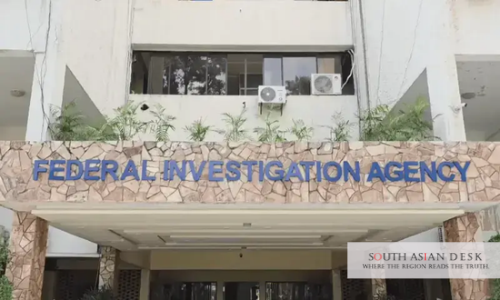
An illegal kidney transplant racket operating from private residences in the federal capital has been dismantled by the Federal Investigation Agency (FIA), which arrested five suspects, froze properties worth Rs87.5 million and sealed the premises used for the surgeries. The operation, announced in a press release on Thursday, is among the more significant recent actions against organ trafficking in Pakistan.
Raid Leads to Arrests and Seizures
The FIA carried out the raid together with the Human Organ Transplantation Authority (HOTA) at a premises in PWD Society, Islamabad. According to the agency, investigators found that a recipient had been given a kidney from a donor in violation of the law.
Three suspects were arrested at the scene, while two others were apprehended later. A court has granted the FIA seven-day physical remand of the suspects. Officials also recovered Rs1 million in cash and impounded three vehicles, a Changan Oshan X7 and two Honda Civics. Their transfer and registration have been frozen through the excise office.
The case has been registered under Sections 9, 10 and 11(a)(ii) of the Transplantation of Human Organs and Tissues Act, 2010, read with Sections 34, 419 and 109 of the Pakistan Penal Code.
How the Illegal Kidney Transplant Racket Operated
According to the investigation, the recipient paid Rs3 million in cash for the procedure. Agents arranged the donor and promised him Rs400,000. Of that sum, Rs340,000 was to go to the donor, while the remaining Rs60,000 was to be shared as commission among three agents.
The FIA said the suspects performed transplants in residential houses without holding any medical degree or certificate. Tissue typing, cross-match, PRA and HLA tests were conducted illegally through a hospital with the help of agents. Because such tests are normally carried out only for close relatives approved by HOTA, the suspects allegedly submitted donor samples under the names of the recipient’s relatives, supported by fake referral letters, to make each case appear to be a legitimate related-donor transplant.
Dialysis for recipients was arranged through a technician at a hospital in Islamabad. If a patient’s condition worsened after surgery, the patient was shifted to another hospital.
The network was reportedly made up of agents, a doctor, a nurse, an anaesthesia provider, a medicine supplier, a laboratory test facilitator and a dialysis provider. The gang is said to have operated from private locations in PWD Society, Bahria Phase-4 and Peshawar.
Properties Frozen Over Alleged Illicit Proceeds
Investigators said some of the suspects had bought property in Islamabad using proceeds from illegal transplants. One suspect allegedly purchased a 10-marla house in Media Town for Rs62.5 million, while another bought a 5-marla house in Jinnah Garden Phase-I for Rs25 million. The transfer of both properties has been frozen through notices issued under Section 5 of the FIA Act, 1974.
Letters have also been sent to all banks to obtain the financial records of the suspects, and the agency is considering separate money laundering proceedings against two of them.
Regulators Inspect the Sealed Facility
Teams from HOTA, the Islamabad Healthcare Regulatory Authority (IHRA) and the Drug Regulatory Authority of Pakistan (Drap) inspected the illegal set-up and will submit separate reports. The facility has been sealed. The operation was conducted on the directions of FIA Islamabad Zone Director Syed Shehzad Nadeem Bukhari, under the supervision of Faizan Mir, Deputy Director of the FIA Anti-Corruption Circle in Islamabad.
The agency said raids were continuing at several locations to arrest the remaining suspects, and that the investigation was ongoing.
Legal Framework Against the Illegal Organ Trade
The Transplantation of Human Organs and Tissues Act, 2010 was introduced to curb the illegal organ trade after Pakistan gained a reputation as a destination for transplant tourism. At the time of its signing, Dawn reported that the law prescribed imprisonment of up to 10 years and a fine of up to Rs1 million for those involved in the removal and sale of human organs without proper authority. It also requires that transplants be performed only by recognised professionals after written certification from an evaluation committee.
Despite the law, reports of a resurgence in organ trafficking in Pakistan have surfaced over the years, with critics pointing to weak enforcement. Cases such as this one, in which a single network allegedly combined agents, medical staff, testing facilitators and forged documents, show how sophisticated such operations can be. The suspects are accused of exploiting a vulnerable donor and endangering the lives of patients by operating outside regulated hospital settings.
As the investigation continues, the outcome of the court proceedings and the findings of the HOTA, IHRA and Drap reports are likely to determine the next steps against those involved. All the suspects remain accused and are presumed innocent until proven guilty in court.
Follow SouthAsianDesk on X, Instagram and Facebook for insights on business and current affairs from across South Asia.
Read More: