The yacht incident off Yemen involving 14 Indian nationals took a reassuring turn on Friday, when the Indian embassy in Yemen said all those on board were reported safe. The development followed a day of uncertainty and conflicting claims over who was responsible for the attack, and it comes amid rising tensions around one of the world’s most sensitive shipping routes.
Embassy Confirms Safety of All 14 Nationals
In a post on X, the Indian embassy in Yemen said reports suggested that all 14 Indian nationals were safe and located around Hodeidah, the Red Sea port city in western Yemen. The mission added that it would continue to work to ensure their well-being, but offered no further details.
Earlier, the embassy had said that precise information on the 14 Indians was not available and that it was trying to establish the circumstances and facts of the incident, which took place on October 22. It had also reached out to different parties for clarity and pledged all possible help to ensure the safety of those on board.
Houthi Claim and Conflicting Accounts
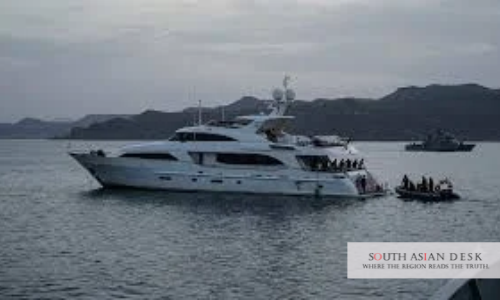
The first public account of the yacht incident off Yemen came from the Houthis, the Iran-aligned group that controls much of western Yemen. According to Reuters, the Houthis said on Thursday that they were rescuing a boat carrying 14 Indians that had been attacked off Jabal Zuqar island, near the Bab el-Mandeb strait. They blamed Saudi Arabia for the attack. Houthi military spokesman Yahya Saree was quoted by Arab media as saying that Saudi forces had targeted the vessel and that Houthi forces were carrying out the rescue.
Saudi authorities did not respond to a Reuters request for comment on Thursday. Because the only detailed account so far comes from one party to the wider conflict, and because the Indian embassy has not independently described what happened, the circumstances of the attack remain unverified. Reports also vary in describing the vessel as a yacht or a boat.
Why Bab el-Mandeb Matters
Bab el-Mandeb is a shipping chokepoint at the mouth of the Red Sea, linking it to the Gulf of Aden and the Arabian Sea. Reuters reported that clashes between the Houthis and a Saudi-led coalition backing Yemen’s internationally recognised government have intensified since the group pushed towards the strait. The fighting has added to the instability that has affected maritime traffic in the region since the wider Middle East conflict began in February.
Indian vessels have been caught up in earlier incidents. In August, the Indian-flagged vessel MSV Faize Noore Oliya sank in the Red Sea off Yemen after being struck by a projectile. All 14 crew members, including 13 Indians, were rescued by the Yemeni Coast Guard, according to India’s shipping minister Sarbananda Sonowal.
Concern for Indian Seafarers
The safe outcome for the 14 nationals is significant given the toll the conflict has taken on the Indian maritime workforce. India is the world’s third-largest supplier of seafarers, with more than 300,000 sailors working across global shipping fleets, according to government data cited by Reuters. The same report noted that more than a dozen Indian seafarers have been killed and three are missing in the Gulf and the wider West Asian maritime region since the conflict began in February.
New Delhi has also voiced concern over the wider security situation. India’s foreign ministry said on Thursday that it condemned attacks on civilian and energy infrastructure in Saudi Arabia, describing them as “unacceptable”. Separately, the Indian embassy in Riyadh said an Indian national was among two people killed, and two other Indians were injured, in an attack on King Fahd International Airport in Dammam on Wednesday.
What Happens Next
For now, attention is likely to turn to the welfare and eventual return of the 14 nationals, as well as to any clarification of how the vessel came to be attacked and who was responsible. The Indian embassy in Yemen has not said how the group will be assisted, though it has indicated that it will remain in contact. Much will depend on whether the security situation around Hodeidah and the Red Sea allows safe passage, and on whether Saudi Arabia or other parties respond to the Houthi allegations.
Follow SouthAsianDesk on X, Instagram, and Facebook for insights on business and current affairs from across South Asia.
Read More: