The India-EU trade deal could come into effect within four to five months of being signed, Indian Commerce and Industry Minister Piyush Goyal said on Thursday, setting out the clearest timeline yet for the long-awaited pact. Speaking during a visit to Germany, the minister said the agreement is expected to be signed before the end of 2026, which would place its entry into force in the first quarter of 2027.
Timeline for the India-EU Trade Deal
Mr Goyal made the remarks at the Berlin Global Dialogue, according to Business Standard. He said the agreement, announced on January 27, would be signed before the end of the calendar year and operationalised probably in the first quarter of 2027. Reuters reported that the timeline could accelerate market access and investment flows between India and the 27-member European Union.
The minister is on a six-day visit to Germany and the Netherlands, scheduled to conclude on Tuesday. The trip is aimed at deepening economic partnerships, expanding bilateral trade and advancing industrial and technological cooperation ahead of the signing.
From Announcement to Signing
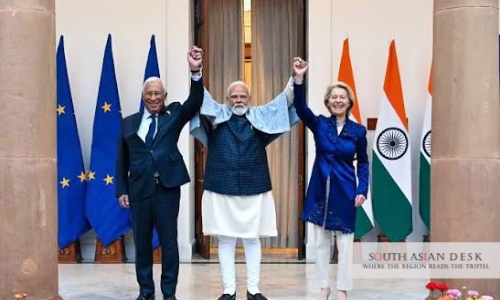
The proposed free trade agreement was announced on January 27 after nearly two decades of on-off negotiations. At the time, Prime Minister Narendra Modi said the two sides had finalised the deal, which would open India’s large and protected market to freer trade with the EU, its biggest trading partner. Trade between India and the bloc stood at $136.5 billion in the fiscal year through March 2025, according to figures reported by Reuters at the time.
An Indian government official said in January that formal signing would follow a period of legal vetting expected to last five to six months. Earlier this year, Mr Goyal also indicated that legal scrubbing of the text was nearing completion. European Commission President Ursula von der Leyen has described the pact as creating a market of two billion people that accounts for around a quarter of global gross domestic product.
Goyal Criticises EU Regulations
While optimistic about the timeline, Mr Goyal used the Berlin platform to criticise a number of European measures. He cautioned that the EU’s regulations and standards act as non-tariff barriers and could ultimately harm the European economy as well. He said Europe was “shooting themselves in their own feet” by piling on regulation and restrictions. He added that in what he called a reciprocal world, new rules imposed by one side invite countermeasures from others.
His sharpest remarks concerned the EU’s carbon border adjustment mechanism (CBAM) and its steel import duty. He argued that combining the mechanism with a 50 per cent import duty on steel was an invitation to disaster.
What the India-EU Trade Deal Means for Steel
Steel is among the most closely watched sectors. The EU’s safeguard regime, which took effect on July 1, sets tariff-rate quotas for shipments. Imports within the quota attract zero duty, while volumes above it face a 50 per cent tariff. The bloc’s total annual duty-free steel quota stands at 18.3 million tonnes.
India has secured a quota of more than 1.9 million tonnes under the EU’s country-specific and residual quotas. Indian officials estimate that annual steel exports to the EU may reach 2.8 million tonnes. Data from the Department of Commerce show that India exported 3.8 million tonnes of steel worth $3.4 billion to the bloc in 2025-26. The gap between the quota and recent shipment levels explains why Indian steel exports remain a point of concern even as the wider agreement moves forward.
Carbon Mechanism Remains Central
The carbon border adjustment mechanism has been the longest-standing sticking point in the negotiations. As part of the agreement, the two sides have agreed to work together to build capacity in India for CBAM verification, including recognition of Indian verification agencies. New Delhi wants exporters to have enough domestic capacity to supply the emissions documentation the mechanism requires, rather than depending on a limited pool of overseas agencies. India is also developing its Carbon Credit Trading Scheme and discussing carbon pricing with the EU.
Outlook
If signing proceeds before the end of the year, the first quarter of 2027 would mark the start of a new phase in India-EU commercial relations. Questions remain over how quotas, carbon rules and regulatory standards will be applied in practice, particularly for steel. Businesses on both sides will be watching closely to see whether the agreement delivers the expanded market access that both governments have promised.
Follow SouthAsianDesk on X, Instagram and Facebook for insights on business and current affairs from across South Asia.