The dengue surge in Bangladesh has intensified scrutiny of the authorities, with questions being raised over why effective preventive measures were not taken before infections began to climb. Despite repeated outbreaks in previous years and access to historical data, the country has recorded a sharp rise in dengue cases and deaths in 2026.
The seasonal increase during the monsoon is well known. The debate, however, centres on whether stronger action earlier in the year could have limited the spread of the disease.
Figures Behind the Dengue Surge in Bangladesh
According to data from the Directorate General of Health Services (DGHS), reported by The Daily Star, the country had recorded 384 dengue deaths and 123,948 cases this year up to October 25. In the 24 hours to 8am on October 25, at least seven patients died and 2,249 were hospitalised, the highest single-day admission figure of 2026.
October has already overtaken September in terms of cases. The country recorded 44,328 cases in the first 25 days of October, compared with 43,774 in the whole of September. The daily average rose to around 1,773 from 1,459. Deaths, by contrast, stood at 139 in October so far, against 148 in September.
Dengue cases and deaths in 2026 have increased significantly compared with 2025, according to the report on which this article is based. The health ministry and the local government ministry have nonetheless cited figures from 2023 to argue that the situation remains better than in some previous years.
Questions Over Coordination and Mosquito Control
Concerns have emerged over whether timely mosquito control operations and stronger preventive measures could have reduced infections. Questions have also been raised over whether the health ministry and the local government ministry coordinated effectively to prepare for and contain the outbreak. The local government ministry oversees the city corporations and municipalities that carry out much of the work against the Aedes mosquito, the vector of the disease.
State Minister for Health Dr MA Mohit defended the official response, saying there was no shortage of government initiatives to tackle dengue.
Government Campaign Under Scrutiny
The government launched a three-month nationwide dengue prevention and cleanliness campaign on September 12. Yet cases and hospital admissions have continued to rise in October, according to The Daily Star.
Public health expert Mushtuq Husain described the prevention drive as largely symbolic and promotional rather than scientific. He said effective prevention requires year-round surveys to identify places where water accumulates and mosquitoes breed, and that workers need proper training to clean such sites instead of simply sweeping roads and public spaces. He also called for dengue testing to be available at the community level, particularly in densely populated areas, and for high-risk patients to be monitored at upazila-level hospitals.
Experts had also warned in advance. In September, Jahangirnagar University zoology professor Kabirul Bashar said the outbreak could peak in October because continued rainfall provides ideal conditions for mosquito breeding. He added that eliminating breeding sites alone might no longer be sufficient and that authorities should identify areas reporting large numbers of patients and intensify mosquito control there.
Strain on the Health System
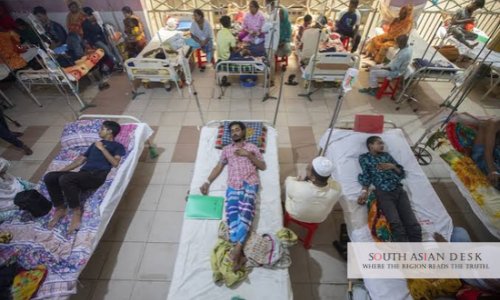
The dengue surge in Bangladesh is unfolding alongside a major measles outbreak, and the two are placing hospitals under heavy pressure. The Daily Star reported that 14,193 patients, including 8,029 with measles and 6,164 with dengue, remained hospitalised on October 25.
What Comes Next
The questions raised in the report centre on accountability and planning as much as on the numbers themselves. With October cases already above September’s total and heavy rainfall having been cited by experts as a continuing risk, the pressure on the authorities to demonstrate effective government preparedness is likely to grow.
Whether the existing three-month campaign, due to run until around mid-December, can reverse the trend will depend on how thoroughly the measures experts have urged are put into practice at the local level.
Follow SouthAsianDesk on X, Instagram and Facebook for insights on business and current affairs from across South Asia.