The ranitidine safety review pending before India’s drug regulators has come under judicial scrutiny, with the Delhi High Court on Wednesday issuing notice to the Centre on a petition seeking its completion within a fixed time frame. Ranitidine is a medication commonly used to treat acidity and reduce stomach acid, and the petitioner argues that questions about its safety have remained unresolved in India for more than seven years.
Court Seeks Responses From Four Authorities
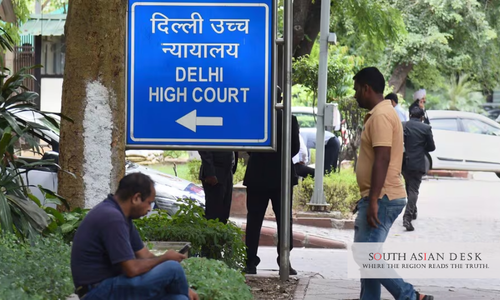
A bench of acting Chief Justice Nitin Sambre and Justice Sanjay Sharma asked the Centre, the Central Drugs Standard Control Organisation (CDSCO), the Drugs Technical Advisory Board (DTAB) and the Indian Council of Medical Research (ICMR) to respond to the petition, according to Hindustan Times. The plea was filed by Dr Chandresh Jain, an advocate, and the Delhi High Court has listed the matter for its next hearing in February.
Why the Ranitidine Safety Review Is Contested
In his petition, Dr Jain contended that the safety of ranitidine has been an unresolved concern since September 2019, when foreign drug regulators were alerted to the presence of NDMA, a probable human carcinogen, in products containing the drug. He submitted that the United States, the European Union and Australia each took regulatory action in 2020, although under different legal frameworks.
By contrast, the petition alleged, India’s drug regulator has examined the issue for several years without disclosing any final, reasoned or publicly available decision. The plea also pointed out that regulators in Canada, the United Kingdom and Singapore reached some decision on ranitidine following the 2019 alerts, so that India is described as an outlier among comparable jurisdictions.
The Timeline of the Pending Review
The petition set out a chronology of the review within India. According to the plea, the Drugs Technical Advisory Board referred the matter on April 24, 2025 to a further committee and to a study by the Indian Council of Medical Research. The Union government subsequently fixed a three-month deadline for the report, on July 24, 2025, and that period expired around October 24, 2025.
Yet as recently as October 7, 2026, the Central Drugs Standard Control Organisation maintained that the report was still awaited and that the matter remained under review, the petition stated. On that account, nearly a year has passed since the deadline lapsed without a conclusion.
Concerns About Access and Affordability
Dr Jain also argued that the delay carries a particular cost for ordinary consumers. The medicine is cheap, widely available and often bought without a prescription, the petition said, which means those who bear the burden of an unresolved question are largely the people least able to find or pay for alternative care. The plea therefore asks the court to direct the authorities to complete the review within a stipulated period.
Background on the Safety Concerns
The concern traces back to 2019, when NDMA was identified in samples of ranitidine and the US Food and Drug Administration alerted the public to the potential risks of exposure to the impurity. In Europe, the European Medicines Agency’s human medicines committee recommended suspending ranitidine medicines after NDMA was found in several of them above acceptable levels. The agency noted, however, that available clinical and epidemiological data did not show that ranitidine increases the risk of cancer, and that it remained unclear whether NDMA could also form inside the body.
India has previously acted on the issue in one respect. In September 2022, the country dropped ranitidine, popularly sold as Zantac, from the National List of Essential Medicines 2022 over cancer concerns, removing its 150 mg tablet, oral liquid and injection forms. The listing decision, however, is distinct from a final regulatory determination on the drug’s marketing and sale, which is what the petition seeks.
What Comes Next
The responses due from the Centre, CDSCO, DTAB and ICMR will indicate where the long-pending review stands and what explanation the authorities offer for the delay. The petition does not claim that the drug has been conclusively shown to be harmful. Its argument is that a reasoned public decision is overdue. How the Delhi High Court treats that argument when it hears the matter in February will determine whether India’s regulators are given a firm deadline to conclude the process.
Follow SouthAsianDesk on X, Instagram and Facebook for insights on business and current affairs from across South Asia.
Read More: