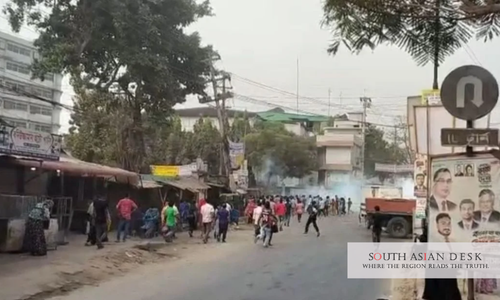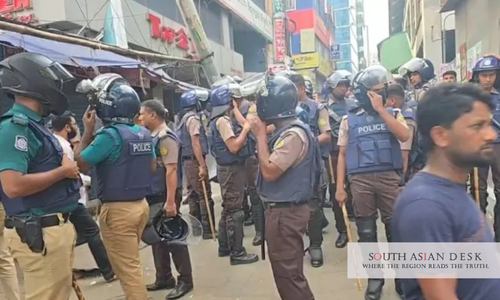
Police on high alert in Mirpur kept a heavy presence in the Dhaka neighbourhood on Thursday, even though garment workers did not return to the streets, following days of protests and clashes over pay. Law enforcement agencies remained vigilant around Mirpur-11 as the industrial dispute over wages continued to hang over one of the capital’s busiest garment hubs.
Calm on the Streets, Vigilance on the Ground
Jalal Uddin, officer-in-charge of Pallabi Police Station, said the workers had not taken to the roads on Thursday but that his force remained ready to respond to any situation. He said additional police had been deployed, patrols were being carried out, and the situation was normal. The measured assessment reflects a cautious approach by the authorities, who have sought to prevent a repeat of the disorder seen earlier in the week.
The calm on Thursday followed a similar pattern on Wednesday, when traffic moved normally across Mirpur and police and Rapid Action Battalion personnel were stationed beneath the Mirpur-10 roundabout and the Mirpur-11 metro rail station, according to The Business Standard. A senior police official told the outlet that more than 10,000 personnel had been deployed across different parts of Mirpur, and that many garment workers had returned to work as factory operations resumed.
How the Garment Workers’ Protests Unfolded
The unrest centres on a demand for a minimum monthly wage of Tk30,000. Workers first blocked roads in Mirpur on Saturday, bringing traffic to a standstill in and around Mirpur-10, Mirpur-11 and Mirpur-12 for several hours. On Sunday, November 1, workers from several factories took to the road at the Mirpur-10 intersection from around 8am, and clashes with police began at about 11:15am.
The violence escalated during the day. Clashes and chases between the two sides continued intermittently from morning until afternoon, and at one point a police vehicle was set on fire beneath the Mirpur-11 metro rail station. Police later detained several people from different parts of Mirpur in connection with the incident. Workers staged further protests on Monday and Tuesday, and on Tuesday the clashes prompted the temporary closure of the Mirpur-11 metro station.
Arrests, Legal Cases and Wider Unrest
The authorities have responded with arrests and legal action. Dhaka Tribune reported on Monday that police had arrested 22 people over two days of protests, clashes and arson in the area, and that four cases had been filed naming around 10,500 people. The wage dispute has also unsettled other industrial belts. The Financial Express reported clashes, vandalism and arson in Savar, Ashulia and Gazipur, alongside those in Mirpur, with dozens of arrests across Mirpur and Gazipur.
The Wage Dispute Behind the Tension
According to a report by the Indian news agency ANI, the current minimum monthly wage for garment workers stands at Tk12,500, while workers are demanding a rise to Tk30,000. The same report noted that the existing three-year wage review period ends in December. The gap between the two figures explains much of the persistence of the protests, and with the review period approaching its end, the issue is unlikely to fade quickly from the public agenda.
The unrest has also affected production. Some factories in Gazipur and Kaliakair were reported to have remained closed for a day, with several owners suspending operations amid fears of attacks and continuing security concerns. The partial return to work in Mirpur this week suggests a degree of stabilisation, though it remains fragile.
Police on High Alert in Mirpur: What Lies Ahead
For residents and commuters, the visible sign of the tension is the sustained security presence. Riot-control vehicles and water cannons were kept ready at the Mirpur-10 roundabout earlier in the week, and police have continued to disperse small groups attempting to gather near factories, including in an alley near Purabi Cinema Hall in Mirpur-11 on Wednesday.
The coming days will test whether the calm holds. With workers still pressing their demand and the wage review period nearing its conclusion, police on high alert in Mirpur are likely to remain in place until the dispute shows clearer signs of resolution, whether through negotiation, a formal decision on wages, or a lasting return to normal working patterns.
Follow SouthAsianDesk on X, Instagram and Facebook for insights on business and current affairs from across South Asia.