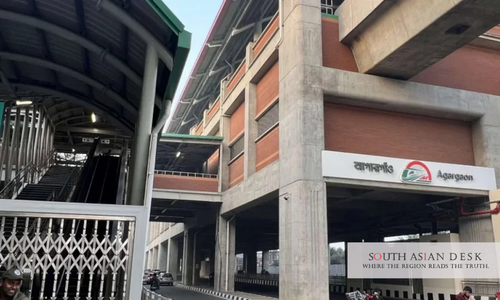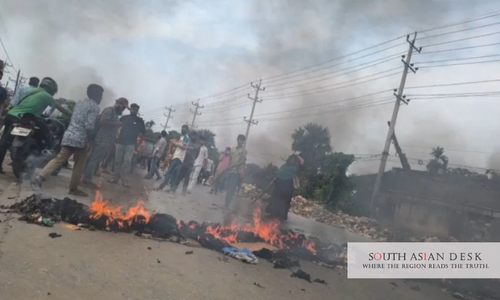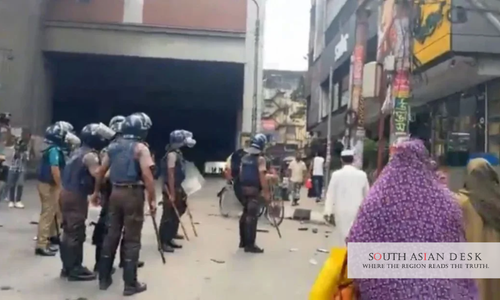
Mirpur clashes between police and garment workers continued for a third consecutive day on Tuesday, disrupting traffic in the Dhaka neighbourhood and forcing the temporary closure of the Mirpur-11 metro station. The latest confrontation follows two days of unrest over a demand for a higher minimum wage, and it has already produced a large number of criminal cases and a string of arrests.
What Triggered the Mirpur Clashes on Tuesday
According to eyewitnesses cited by Dhaka Tribune, the violence began at around 10:15am, when police intervened to stop workers from blocking the road in the Mirpur-11 area. Earlier that morning, garment workers had left their factories and gathered outside their workplaces, with groups assembling along nearby side streets.
Workers then emerged intermittently from the side streets and hurled bricks and stones at police, who responded with tear gas shells and sound grenades. The confrontation set off repeated chases and counter-chases, leaving the area tense and traffic at a standstill. Prothom Alo reported that the workers had gathered beneath the Mirpur-11 metro station and threw bricks from three directions. Yusuf Ahmed, a local resident, told Bangla Tribune that male and female workers from several factories between Mirpur-10 and Mirpur-11 had congregated outside their workplaces.
Hafizur Rahman, officer-in-charge of Mirpur police station, said the situation at Mirpur-10 was normal. He added that police remained on high alert and that any attempt to cause disorder would be met with strict action.
The Wage Demand Behind the Unrest
The protesting garment workers are demanding a minimum monthly wage of Tk30,000. The current minimum wage for the sector stands at Tk12,500, a figure fixed in December 2023 after an increase from Tk8,000. Labour unions have argued in recent months that the existing rate no longer ensures a dignified standard of living amid high inflation and rising prices of essentials.
The government has already begun the process of forming a new wage board to determine minimum wages, according to bdnews24, and Prothom Alo has reported that the prime minister held a meeting over the violent protests. Whether these steps will persuade workers to return to their factories remains unclear, since the demand on the streets is considerably higher than the current rate.
How the Mirpur Clashes Unfolded Over Three Days
The unrest escalated sharply on Sunday, when workers blocked the Mirpur-10 roundabout at around 9:30am. Police attempted to disperse them by force at about 11:15am, which triggered clashes. The Business Standard reported that at least 19 people were detained, while workers set fire to a police vehicle beneath the Mirpur-11 metro station. Metro rail stations at Mirpur-10, Mirpur-11 and Pallabi remained closed for around two hours, from roughly 11:38am to 1:58pm. Prothom Alo noted that workers had also blocked roads in Mirpur on Saturday over the same demand. On Sunday alone, the Business Standard counted at least 529 garment factories shut across Dhaka, Gazipur and Savar as protests spread beyond the capital.
On Monday, fresh tension emerged at about 10:45am when groups of workers tried to reach the main roads through an alley in the Senpara Parbata area of Mirpur-10. Security forces dispersed them with tear gas, and a second attempt to block the road near the Proshika intersection by Mirpur Stadium was also foiled, according to the Daily Observer. Heavy contingents of law enforcement personnel stayed at Mirpur-10 and surrounding intersections, with riot control vehicles, water cannons and armoured vehicles kept on standby at the main roundabouts.
Cases and Arrests After the Violence
The legal fallout has been substantial. The Daily Observer reported on Monday that police had filed four cases against approximately 10,500 unnamed individuals over the protests, vehicle arson and attacks on law enforcement, with 22 people arrested by that afternoon. By Tuesday, Dhaka Tribune reported that 11 cases had been filed over the clashes of the preceding two days, with more than 10,000 people named as accused.
Outlook for Mirpur and the Wider Garment Sector
Although police described the Mirpur-10 area as calm on Tuesday, the repeated attempts by workers to return to the streets suggest the standoff has not been resolved. The Mirpur clashes also form part of a wider pattern of unrest in the garment industry, with workers blocking the Dhaka-Tangail highway in Gazipur on the same day, where Prothom Alo reported that 12 factories had declared a holiday.
For commuters and businesses in northern Dhaka, the immediate concern is the recurring disruption to roads and metro services. For the government and factory owners, the pressing question is whether the wage board process can move fast enough to bring the protests to an end.
Follow SouthAsianDesk on X, Instagram and Facebook for insights on business and current affairs from across South Asia.