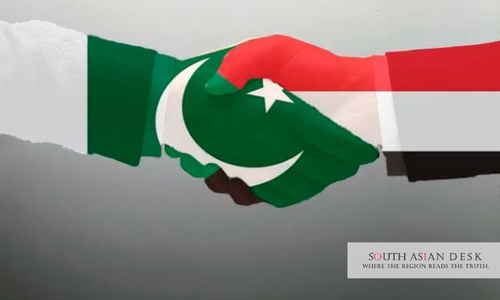
Pakistan-Sudan cybercrime cooperation is set to expand following an agreement between Islamabad and Khartoum to sign a memorandum of understanding (MoU) aimed at strengthening efforts to combat cybercrime. The decision was announced on Saturday, November 7, following high-level talks between the interior ministers of both countries in Islamabad.
The proposed agreement is part of a broader effort to strengthen bilateral security cooperation, with discussions also covering police training, institutional coordination, civil registration and other areas of mutual interest.
The understanding was reached during delegation-level talks between Pakistan’s Interior Minister Mohsin Naqvi and his Sudanese counterpart, Lieutenant General Babiker Samra Mustafa Ali, at the Ministry of Interior. Minister of State for Interior Talal Chaudhry also attended the meeting, alongside senior officials from both countries.
According to a statement issued by Pakistan’s Ministry of Interior, the Sudanese delegation expressed an interest in benefiting from Pakistan’s experience and expertise in combating cybercrime. Both sides agreed to pursue a formal agreement to facilitate cooperation in this area.
Pakistan-Sudan Cybercrime Cooperation to Expand Through Proposed MoU
The proposed MoU is expected to provide a framework for closer engagement between the two countries in addressing cybercrime. While the announcement did not specify the agreement’s precise provisions or implementation arrangements, the decision reflects a shared interest in strengthening institutional capacity and cooperation against digital threats.
Cybercrime has become an increasingly important concern for law enforcement agencies as criminal activity extends beyond national borders. Digital fraud, unauthorised access to information systems and other forms of technology-enabled crime can involve individuals, networks and infrastructure located in multiple jurisdictions. Addressing such offences can therefore require cooperation between national authorities, particularly where investigations involve cross-border elements.
Pakistan’s experience in this field was a key consideration during the discussions. The Sudanese interior minister reportedly expressed his country’s desire to benefit from the expertise developed by Pakistani institutions in combating cybercrime.
However, the two governments have yet to announce specific operational measures under the proposed agreement. Details concerning information-sharing arrangements, investigative assistance or the agencies responsible for implementation have not been made public.
Pakistan and Sudan Agree to Broaden Security and Police Cooperation
Beyond cybercrime, the discussions covered a wider range of security and internal affairs matters. According to the Ministry of Interior, both countries agreed to expand cooperation in security, police training and institutional coordination.
Mohsin Naqvi offered Pakistan’s assistance in providing professional training to Sudanese police officers. The offer is intended to strengthen cooperation between the law enforcement institutions of both countries and provide opportunities for Sudanese personnel to benefit from Pakistan’s policing experience.
Pakistan also expressed its willingness to assist Sudan in peace-building and reconstruction efforts. Naqvi reiterated that Islamabad was prepared to extend all possible cooperation to support these objectives.
The discussions form part of a wider diplomatic engagement between the two countries. The visiting Sudanese interior minister had also met Chief of Defence Forces and Chief of Army Staff Field Marshal Asim Munir a day earlier to discuss avenues for strengthening bilateral cooperation.
He also met Prime Minister Shehbaz Sharif on Thursday. During that meeting, the Sudanese minister appreciated Pakistan’s support on international forums concerning efforts to restore peace and security in Sudan.
These engagements indicate that the proposed cybercrime agreement is being pursued alongside broader efforts to deepen Pakistan-Sudan diplomatic ties, particularly in security and institutional development.
NADRA’s Role in Strengthening Pakistan-Sudan Relations
Civil registration and identity management also featured prominently in the discussions, with particular attention given to the role of Pakistan’s National Database and Registration Authority (NADRA) in Sudan.
Briefing his Sudanese counterpart, Naqvi said that NADRA’s cooperation had facilitated the issuance of 36 million citizenship cards, nine million national identity cards, 18 million birth certificates and 500,000 death certificates in Sudan.
He added that NADRA was prepared to continue supporting Sudan’s civil registration process. The figures highlight the scale of the existing institutional relationship between the two countries and demonstrate that cooperation extends beyond conventional diplomatic and security engagement.
NADRA’s involvement is particularly significant given the importance of reliable civil registration systems in public administration. Identity documentation and registration records are essential for the delivery of public services, administrative planning and the maintenance of official records.
The possibility of continued technical cooperation therefore provides another avenue through which Pakistan and Sudan can strengthen their institutional relationship.
Visa Issues and Medical Cooperation Also Discussed
The meeting also addressed practical issues affecting Sudanese nationals residing in Pakistan. According to the Ministry of Interior’s statement, the Sudanese minister raised concerns about visa-related difficulties faced by Sudanese women married to Pakistani citizens.
In response, Naqvi directed the relevant authorities to take immediate steps towards resolving these issues.
The Pakistani interior minister also assured the visiting delegation that Sudanese citizens could access medical facilities in Pakistan and would receive all possible assistance in the health sector.
These discussions reflect the broader scope of the engagement, which included not only government-to-government cooperation but also matters concerning citizens of both countries.
The Sudanese interior minister expressed appreciation for Pakistan’s cooperation and reiterated his country’s interest in strengthening relations across various sectors.
The proposed cybercrime MoU represents a further step in Pakistan and Sudan’s efforts to formalise cooperation between their institutions. Alongside commitments concerning police training, civil registration and security, the agreement could provide a basis for more structured engagement between the two countries in addressing emerging challenges.
Although the specific terms and timeline for signing the MoU have not yet been announced, the discussions signal an intention to expand bilateral cooperation beyond traditional diplomatic engagement and into areas requiring greater institutional and technical coordination.
Follow SouthAsianDesk on X, Instagram and Facebook for insights on business and current affairs from across South Asia.