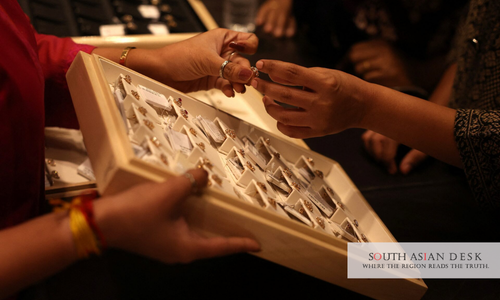
India gold demand picked up on Friday, November 6, as a sharp decline in prices coincided with Dhanteras, one of the country’s most important gold-buying occasions. The price correction encouraged consumers who had postponed purchases during months of elevated prices to return to jewellery showrooms, providing a boost to the precious metals market ahead of Diwali.
India, the world’s second-largest gold consumer, saw increased retail activity as domestic prices approached a seven-month low. According to Surendra Mehta, secretary of the India Bullion and Jewellers Association, consumers who had been waiting for more affordable prices took advantage of the decline to purchase jewellery. The association expects Dhanteras sales to increase by approximately 10% compared with last year.
The rise in seasonal buying could have implications beyond India’s domestic jewellery market. Stronger demand from one of the world’s largest gold-consuming countries may provide support to international gold prices, which have been trading near their lowest levels in a year. However, increased gold imports could also widen India’s trade deficit and place additional pressure on the rupee.
India Gold Demand Increases as Dhanteras Coincides with Price Correction
Dhanteras marks the beginning of the five-day Diwali festival in much of India and is traditionally considered an auspicious occasion for purchasing gold, silver and other valuable items. Gold buying during the festival is associated with prosperity and good fortune, making it one of the busiest periods for jewellery retailers across the country.
This year’s celebrations have coincided with a substantial correction in domestic gold prices, creating an opportunity for consumers who had delayed purchases in anticipation of lower rates.
Local gold prices were trading at approximately 141,800 rupees per 10 grams on Friday. Earlier in the week, prices had fallen to 137,863 rupees per 10 grams, their lowest level since March 24. This represented a significant decline from the record high of 180,779 rupees recorded earlier in 2026.
The decline appears to have encouraged buyers to return to jewellery stores, particularly those who had been reluctant to purchase gold when prices were considerably higher. The India Bullion and Jewellers Association’s expectation of a 10% increase in Dhanteras sales reflects the improved buying activity.
The timing of the correction is particularly important for India’s gold market, where festival-related purchases account for a significant portion of seasonal retail demand. The combination of cultural traditions and more affordable prices has provided an incentive for consumers to resume purchases.
Gold Prices in India Fall to Seven-Month Low
The recent decline in gold prices has been an important factor behind the improvement in retail demand. After reaching record levels earlier in the year, domestic prices have undergone a correction that has made gold relatively more accessible to consumers.
On Friday, local prices stood at around 141,800 rupees per 10 grams, compared with the earlier weekly low of 137,863 rupees. Although prices had recovered slightly from that low, they remained substantially below the year’s record of 180,779 rupees.
The price movement has also coincided with weakness in international gold markets. Global prices have been trading near their lowest levels in approximately a year, creating an opportunity for buyers in major consuming countries.
For Indian consumers, the correction has helped revive demand after months in which rising prices discouraged jewellery purchases. Buyers who had postponed spending appear to have treated the decline as an opportunity to purchase gold before prices potentially increase again.
However, the improvement in retail activity does not necessarily indicate a uniform recovery across all segments of the market. Demand conditions continue to differ between urban and rural consumers, particularly because of the financial pressures facing agricultural households.
Weak Monsoon Limits Rural Gold Demand in India
Despite the increase in festival-related purchases, rural gold demand has remained weaker than usual. According to Amit Modak, chief executive of Pune-based jeweller PN Gadgil and Sons, drought conditions have significantly affected farmers’ purchasing power.
The weakness is linked to India’s poor monsoon performance during the 2026 agricultural season. The El Niño weather pattern contributed to a substantial rainfall deficit, with the country receiving approximately 12.6% less rainfall than average between June and September, according to India’s Meteorological Department.
The rainfall shortfall affected agricultural production and reduced incomes among farmers, limiting their ability to spend on discretionary purchases such as gold jewellery.
The impact is particularly relevant to India’s gold market because rural households represent an important source of jewellery demand. Gold traditionally serves both as a store of wealth and as a form of household savings in many agricultural communities. However, weaker farm incomes can restrict purchases even when market prices become more favourable.
Consequently, the improvement in Dhanteras sales has not been evenly distributed across the country. While urban jewellery retailers have reported increased customer activity, rural consumers continue to face financial constraints associated with the weak monsoon.
Gold Coins and Bars Attract Indian Buyers Seeking Investment Returns
Alongside jewellery purchases, investment demand has remained an important feature of India’s gold market. Retail consumers have continued to show interest in gold coins and bars, reflecting the metal’s appeal as a store of value.
Harshad Ajmera of Kolkata-based wholesaler JJ Gold House said that, as in the previous year, many retail buyers were favouring coins and bars for investment purposes. Their interest has been supported by gold’s strong returns since the previous Dhanteras.
The preference for investment-grade gold suggests that consumers are not purchasing the metal exclusively for its traditional role in jewellery and festival celebrations. Gold also remains an important investment option for households seeking to preserve wealth and diversify their savings.
The distinction between jewellery and investment demand is significant for understanding the broader market. While lower prices can encourage consumers to purchase ornaments for personal use and celebrations, expectations about future price movements can also influence decisions to acquire coins and bars.
The current correction has therefore created opportunities for both types of buyers, although their purchasing decisions may be influenced by different considerations.
Rising India Gold Demand Could Affect Imports and the Rupee
The recovery in India gold demand could also have wider economic consequences, particularly for the country’s external trade position.
India relies heavily on imported gold to meet domestic consumption requirements. An increase in purchases during the festive season could therefore lead to higher import volumes, potentially widening the country’s trade deficit.
A larger import bill could also place pressure on the Indian rupee, particularly if gold purchases increase substantially while other external economic conditions remain challenging.
The impact will depend on the scale and duration of the increase in demand, as well as international gold prices and currency movements. A temporary rise in festival-related purchases may not necessarily translate into a sustained increase in imports, but strong consumption from one of the world’s largest gold markets can influence global demand.
The latest increase in buying activity highlights the importance of seasonal consumption patterns in India’s bullion market. With Dhanteras and Diwali coinciding with a significant price correction, jewellery retailers have benefited from the return of consumers who had previously postponed purchases.
Nevertheless, weaker rural demand and the potential implications of higher imports indicate that the recovery remains uneven. Whether the improvement continues beyond the festival period will depend on domestic purchasing power, agricultural incomes and the direction of international gold prices.
Follow SouthAsianDesk on X, Instagram and Facebook for insights on business and current affairs from across South Asia.
Read More: