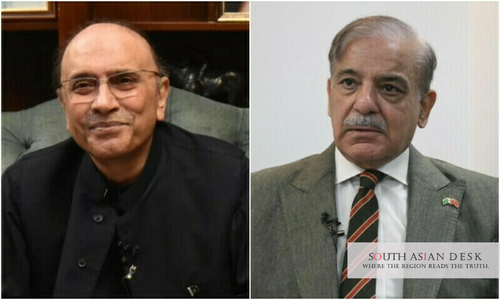
Minority rights in Pakistan were brought into focus on Sunday as President Asif Ali Zardari and Prime Minister Shehbaz Sharif extended greetings to the Hindu community on the occasion of Diwali, reaffirming the government’s commitment to religious freedom, equal citizenship and the protection of minority communities. Their messages highlighted the contributions of religious minorities to the country’s social and national development while calling for greater interfaith harmony and mutual respect.
In separate statements issued on November 8, both leaders described Diwali as an occasion that carries a message of hope, compassion and the triumph of good over evil. They also emphasised that Pakistan’s religious and cultural diversity is an important part of its national identity and that all citizens, regardless of their faith, are entitled to equal rights and protection.
Diwali, widely known as the festival of lights, is one of the most significant celebrations in Hinduism. Observed over five days, the festival commemorates the return of the Hindu deity Lord Rama after 14 years of exile. Celebrations traditionally involve lighting lamps, prayers, worship and gatherings with family and friends. The festival symbolises the victory of good over evil and light over darkness.
PM Shehbaz Calls for Interfaith Harmony and Protection of Minority Rights in Pakistan
In his Diwali message, Prime Minister Shehbaz Sharif described the festival as an occasion that conveys an important message of peaceful coexistence in society. He said that the enduring belief in a bright, prosperous and hopeful future was among the festival’s most cherished attributes.
The prime minister referred to the Hindu community as a valued and integral part of Pakistan’s national fabric, acknowledging the importance of the country’s diverse cultural and religious traditions. He stated that Pakistan took pride in its religious diversity and regarded it as a valuable social asset.
Reaffirming the government’s position on minority protection in Pakistan, Shehbaz emphasised that the Constitution guarantees the religious and civil rights of minority communities. He maintained that the government remained committed to safeguarding the rights, dignity and religious freedoms of all citizens, irrespective of their religion, faith, colour or ethnicity.
He also stressed that promoting religious harmony, mutual unity and respect was a shared responsibility. According to the prime minister, a society that embraces different cultures and traditions must also ensure equal educational and economic opportunities for all its citizens.
Calling on the public to strengthen bonds of fraternity and brotherhood, Shehbaz urged Pakistanis to work towards a future founded on peace, tolerance and mutual understanding.
President Zardari Reaffirms Equal Citizenship for Pakistan’s Hindu Community
President Asif Ali Zardari also extended his greetings to the Hindu community, highlighting the broader significance of Diwali and its message of compassion, renewal and hope.
Describing the festival as a celebration of the triumph of good over evil, light over darkness and hope over despair, the president encouraged citizens to bring positivity into the lives of others through kindness, understanding and care.
Zardari acknowledged the contributions of the Hindu community in Pakistan across several sectors, including education, healthcare, business, public service, social welfare, arts and culture. He described the community as an integral part of national life and emphasised that its contributions were essential to the country’s development.
In a particularly significant part of his message, the president reiterated that Pakistan belonged equally to all its citizens. Referring to the vision of Quaid-i-Azam Mohammad Ali Jinnah, he recalled the founding principle that faith, caste or creed should not stand in the way of equal citizenship and equal rights.
He stressed that every citizen should be able to practise their religion freely, live with dignity and enjoy equal protection under the law. Zardari further stated that no Pakistani should ever have to prove their belonging to the country on account of their religious identity.
Calling for a rejection of prejudice and discrimination, the president urged citizens to participate in one another’s celebrations and recognise religious diversity as a national strength rather than a weakness. He also emphasised that protecting the rights of religious minorities was a collective responsibility.
Sindh Government Reiterates Commitment to Religious Minorities
Sindh Chief Minister Murad Ali Shah also extended his Diwali greetings to the Hindu community, emphasising the festival’s message of love, brotherhood and light.
According to a report by the Associated Press of Pakistan (APP), the chief minister described Sindh as a land of Sufi saints where people belonging to different faiths coexist. He maintained that interfaith harmony and tolerance were integral to the province’s cultural identity.
Murad Ali Shah reaffirmed the Sindh government’s commitment to protecting the rights of all minority communities in the province. He also recognised the important role played by the Hindu community in Pakistan’s development, particularly in Sindh.
Urging citizens to reject hatred and promote goodwill, he called on the public to embrace the spirit of Diwali by spreading messages of love, unity and understanding.
Constitutional Protection of Religious Minorities in Pakistan
The statements issued by the country’s political leadership bring renewed attention to the constitutional framework governing minority rights in Pakistan. The Constitution of 1973 provides several safeguards intended to ensure religious freedom, equality before the law and protection against discrimination.
Article 20 guarantees every citizen the right to profess, practise and propagate their religion, subject to law, public order and morality. It also protects the right of religious denominations and sects to establish, maintain and manage their religious institutions.
Similarly, Article 25 establishes that all citizens are equal before the law and entitled to equal protection of the law. Article 36, under the Principles of Policy, specifically directs the state to safeguard the legitimate rights and interests of minorities, including their due representation in federal and provincial services.
These constitutional provisions establish an important legal foundation for the protection of religious minorities and their participation in national life. They also reflect the principles of equal citizenship and religious freedom emphasised in the messages issued by the president and prime minister.
However, the protection of minority rights requires more than constitutional recognition and statements of commitment. Ensuring that these guarantees are meaningful in practice requires sustained efforts to promote equality, prevent discrimination and provide citizens with effective protection of their fundamental rights.
Diwali Messages Renew Focus on Minority Protection in Pakistan
The Diwali messages issued by President Zardari, Prime Minister Shehbaz Sharif and Sindh Chief Minister Murad Ali Shah reflect a common emphasis on religious tolerance, national unity and the importance of protecting minority communities.
Their statements also reinforce the idea that religious diversity is an integral part of Pakistan’s national identity. The recognition of the Hindu community’s contributions to education, healthcare, business, public service and culture highlights its longstanding role in the country’s development.
Nevertheless, the broader significance of these messages lies in the principles they reaffirm. Equal citizenship, freedom of religion and protection from discrimination must remain central to the relationship between the state and all its citizens.
As the Hindu community celebrates Diwali, the emphasis on religious freedom and interfaith harmony serves as a reminder that the protection of minority rights in Pakistan is not merely an occasion-specific commitment. It is a continuing constitutional and national responsibility that requires practical implementation, institutional support and collective participation.
Follow SouthAsianDesk on X, Instagram and Facebook for insights on business and current affairs from across South Asia.
Read More: