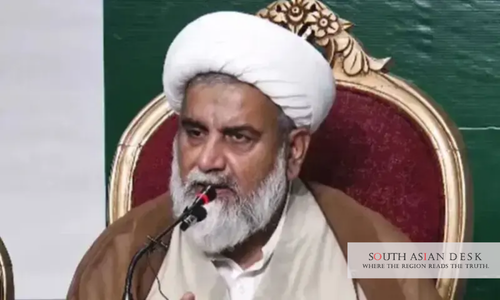
Pakistan’s role in Yemen conflict has come under renewed political scrutiny after Senate Opposition Leader Allama Raja Nasir Abbas urged the federal government to keep the country out of the ongoing hostilities and pursue diplomatic mediation instead. Speaking at a conference organised by the Majlis Wahdat-i-Muslimeen (MWM) on Sunday, Abbas warned that abandoning Parliament’s unanimous 2015 resolution on Yemen could undermine Pakistan’s national interests, sovereignty and regional standing.
Addressing the Shuhada-i-Muqawamat and Tajdeed-i-Ahd Conference, the MWM chief questioned the authority under which Pakistan could become involved in the conflict, arguing that the country should not participate in a war against another Muslim state. He maintained that Pakistan should prioritise negotiations, a ceasefire and regional stability rather than becoming a party to the hostilities.
The remarks come amid heightened tensions across the Middle East, particularly involving Yemen, Iran, Israel and the United States. They have also revived questions about Pakistan’s foreign policy priorities, its relationships with regional powers and the extent to which parliamentary decisions should guide the country’s response to international conflicts.
Pakistan’s Role in Yemen Conflict and the 2015 Parliamentary Resolution
A central part of Abbas’s criticism concerned the unanimous parliamentary resolution adopted in April 2015, when Pakistan’s political leadership debated whether the country should participate in the Saudi-led military campaign in Yemen.
Following five days of deliberations in a joint sitting of Parliament, lawmakers adopted a resolution calling for Pakistan to maintain neutrality in the Yemen conflict so that it could play a proactive diplomatic role in resolving the crisis. The resolution also urged the warring parties to settle their differences through dialogue and called for international efforts to secure a ceasefire.
Importantly, the resolution did not represent an unconditional rejection of Pakistan’s relationship with Saudi Arabia. It expressed unequivocal support for the Kingdom and stated that Pakistan would stand alongside it in the event of a violation of its territorial integrity or a threat to the Haramain Sharifain.
The resolution therefore sought to balance Pakistan’s strategic relationship with Saudi Arabia against the risks of direct military involvement in Yemen. It also recognised the potential consequences of the conflict for regional stability and warned that developments could have serious repercussions for Pakistan.
Abbas argued that the government’s current approach should remain consistent with this parliamentary position. He warned that disregarding the resolution would contradict the collective will of Parliament and potentially expose Pakistan to consequences that could harm its national interests.
Raja Nasir Abbas Calls for Diplomatic Mediation in Yemen
Beyond criticising potential Pakistani involvement, Raja Nasir Abbas called on the government to adopt a more active diplomatic role in addressing the conflict. He claimed that Yemen had offered Pakistan an opportunity to act as a mediator and said he had written to the prime minister to highlight the sensitivity of the situation.
The opposition leader also said he had questioned the foreign minister about how Pakistan could simultaneously pursue mediation and become a party to the conflict. In his view, direct involvement in hostilities would undermine the country’s credibility as a neutral intermediary.
He urged the government to concentrate on securing a ceasefire and encouraging negotiations between the parties. Such an approach, he argued, would allow Pakistan to contribute to regional peace without exposing itself to the political and security consequences of military intervention.
The call for mediation also reflects the broader diplomatic challenges facing Pakistan. Its longstanding strategic relationships across the Middle East require Islamabad to navigate competing regional interests carefully. Any decision to become involved in another country’s conflict could have implications for its diplomatic relationships, domestic security and economic interests.
For Pakistan, maintaining a credible diplomatic position may therefore be as important as preserving its existing regional partnerships.
MWM Chief Condemns Attacks on Yemen and Expresses Solidarity with Palestine
During his address, Abbas also condemned attacks against Yemen, arguing that the Yemeni population was being punished for expressing solidarity with Palestinians and opposing Israeli actions. He linked the conflict to the wider regional struggle surrounding Palestine and the future of political and security arrangements in the Middle East.
The MWM chief maintained that developments in Yemen could not be viewed in isolation from the broader regional situation. He argued that efforts by the United States and Israel to reshape the political landscape, weaken resistance movements and divide regional states posed a serious threat to stability.
The conference also reaffirmed solidarity with Palestine and Yemen. Other speakers, including MWM Vice Chairman Allama Syed Ahmed Iqbal Rizvi, Chief Organiser Syed Nasir Abbas and Central Secretary for Political Affairs Syed Asad Abbas Naqvi, paid tribute to those killed in resistance movements and called for national sovereignty and constitutional supremacy.
Abbas further condemned US and Israeli actions against Iran. Referring to the reported assassination of Iran’s supreme leader, he argued that the attacks were intended to intimidate the Iranian population and force the country into submission. He maintained that Iran had demonstrated resilience despite the pressure.
These remarks reflected the MWM leadership’s broader position on regional conflicts, although the claims and characterisations expressed at the conference represent the speakers’ political assessments.
Pakistan’s Foreign Policy Faces Renewed Questions Amid Middle East Tensions
The latest statements have brought renewed attention to the challenges confronting Pakistan’s foreign policy as regional conflicts intensify. Islamabad maintains important relationships with several countries involved in or affected by Middle Eastern tensions. Balancing these relationships while avoiding direct military entanglement remains a significant diplomatic challenge.
Pakistan’s geographical position, economic considerations and domestic political dynamics also make developments in the Middle East particularly consequential. A wider regional conflict could affect trade, energy supplies, overseas Pakistani communities and the country’s broader security environment.
Abbas also criticised what he described as the government’s excessive praise of US President Donald Trump and its efforts to secure American goodwill, including proposals for a Nobel Peace Prize nomination. He argued that such an approach was inconsistent with Pakistan’s national dignity and independent foreign policy interests.
His comments underline a broader political debate over the extent to which Pakistan should align itself with major international powers or pursue a more independent diplomatic position. However, maintaining an independent foreign policy also requires careful consideration of the country’s existing economic, security and strategic commitments.
Raja Nasir Abbas Raises Domestic Political Concerns
In addition to regional affairs, Abbas addressed Pakistan’s internal political situation, emphasising that the country belonged to its citizens rather than any individual, political elite or influential group. He called on the state to protect the fundamental rights of people across all provinces and administrative territories, including Balochistan, Sindh, Punjab, Khyber Pakhtunkhwa, Gilgit-Baltistan and Azad Kashmir.
Expressing concern over restrictions on political freedoms, he argued that the use of state force could not provide a lasting solution to public grievances. He also called for former prime minister Imran Khan to be given an opportunity to contribute to national reconciliation, describing him as a political figure with considerable public support.
These domestic remarks formed part of the wider conference’s emphasis on constitutional supremacy, political rights and national sovereignty.
Can Pakistan Maintain Neutrality While Pursuing Regional Diplomacy?
The renewed debate over Pakistan’s role in Yemen conflict highlights the continuing relevance of Parliament’s 2015 resolution. Although adopted more than a decade ago, its emphasis on neutrality, dialogue and diplomatic engagement remains central to discussions about Pakistan’s response to regional hostilities.
However, neutrality does not necessarily mean diplomatic disengagement. The 2015 resolution specifically envisioned Pakistan taking an active role in efforts to restore peace, including through international institutions such as the United Nations and the Organisation of Islamic Cooperation.
Abbas’s latest appeal similarly places mediation at the centre of Pakistan’s potential contribution. Whether the government adopts this approach will depend on its assessment of regional developments, its diplomatic engagements and the implications of any proposed involvement.
Ultimately, Pakistan faces the challenge of protecting its national interests while maintaining constructive relationships with regional partners. The debate is not simply about whether the country should participate in the Yemen conflict, but also about how it can contribute to regional stability without compromising its sovereignty, security or diplomatic credibility.
Follow SouthAsianDesk on X, Instagram and Facebook for insights on business and current affairs from across South Asia.