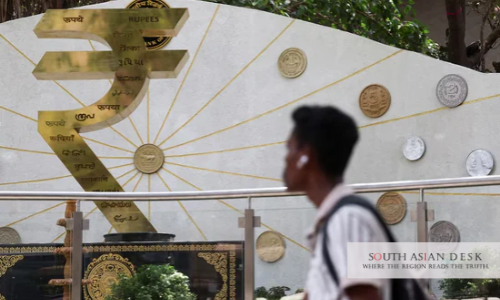
The Indian rupee recovery gathered further momentum on Wednesday, taking the currency to its strongest level since April as foreign portfolio inflows into local stocks outweighed the pressure of a broadly stronger US dollar. The rupee ended the session at 93.69 per dollar, up 0.2 percent on the day, after touching an intraday high of 93.6350 in afternoon trading, according to Reuters.
What Is Driving the Indian Rupee Recovery
Currency traders pointed to two main supports during the session. The first was broad-based dollar selling interest, which was visible throughout the day. The second was activity in the non-deliverable forward (NDF) market, which suggested that sentiment around the currency was turning positive.
The more important driver, however, has been the return of foreign money to Indian equities. Foreign investors have bought nearly $6 billion of local stocks in November, their largest monthly purchase since September 2024. Foreign portfolio inflows of this size increase demand for the rupee, since overseas investors must convert dollars into the local currency to buy shares. Traders said this has currently become a bigger consideration than the prospect of tighter US monetary policy.
A Firm Dollar and Federal Reserve Rate Hike Expectations
The rupee’s gains came despite a strong global dollar, which was lifted by hot US inflation data and hawkish comments from Federal Reserve officials. According to the CME FedWatch tool, traders are now fully pricing in a 25-basis-point Federal Reserve rate hike in December, and they have also assigned a slim probability to a larger 50-basis-point increase.
Analysts at ING said in a note that the case is building for the Fed to push rates into restrictive territory to slow demand and bring inflation back to target. Higher US interest rates would normally weigh on emerging-market currencies such as the rupee, because they make dollar assets more attractive. That the rupee held firm on Wednesday shows how strongly capital flows are currently shaping its direction.
From Record Low to Recovery
The latest move marks a sharp turnaround from the pressure the currency faced earlier this year. The rupee fell to a record low of 96.96 per dollar in May, when oil prices pushed higher by the Iran war and heavy foreign outflows weighed on the currency. The Reserve Bank of India intervened by selling dollars and announced a $5 billion dollar-rupee buy-sell swap auction to support liquidity. The rupee came close to that record again last month, before recovering in recent sessions.
It is now down about 4 percent for the year, which means it has recovered nearly half of the losses it had suffered at its weakest point in 2026. Even so, the central bank’s defence of the currency has carried a cost. Reuters reported earlier this month that India’s foreign exchange reserves had fallen to $719.75 billion, while forward dollar liabilities had risen to a record $239.2 billion.
Inflation Data Is the Next Test
Attention now turns to India’s October inflation data, which is due for release on Thursday. According to the median forecast in a Reuters poll of 36 economists conducted between November 2 and 6, annual consumer inflation probably rose to 5.93 percent in October from 5.54 percent in September.
A reading in line with that forecast would add to concerns about price pressures, though its effect on the currency will depend on how investors weigh it against continued foreign buying. For now, the Indian rupee recovery rests largely on the strength of foreign portfolio inflows. If those flows slow, or if a hawkish Fed pushes the dollar higher, the currency may find it harder to hold its current level.
Follow SouthAsianDesk on X, Instagram and Facebook for insights on business and current affairs from across South Asia.