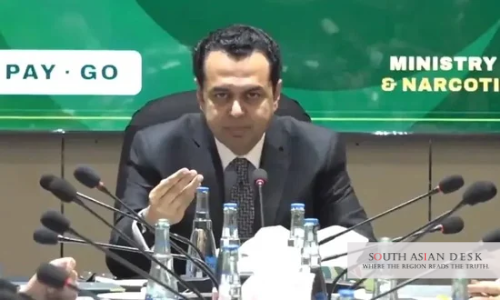
The Cashless Islamabad initiative will make the federal capital Pakistan’s first fully cashless city by December 31, according to Minister of State for Interior Talal Chaudhry, who announced the deadline on Friday. The government plans to bring all merchants in the capital into the digital payment system by that date, and it has already barred cash payments at official departments from the end of this month.
What the Cashless Islamabad Initiative Requires
Chairing a meeting in Islamabad, Talal Chaudhry said the views and suggestions of all stakeholders would be important to implementing the plan successfully. He announced that no cash payments will be accepted at any department of the Islamabad Capital Territory (ICT) or the Capital Development Authority (CDA) after November 30, a month ahead of the wider deadline for merchants.
The minister said around 26,000 merchants in the capital have already been connected to the digital payment system. He added that facilities for digital payments in Islamabad will be provided at every level, from street vendors to major business centres. The meeting was attended by CDA Chairman Sohail Ashraf, representatives of the banking sector and other senior officials.
Progress Under the Cashless Pakistan Initiative
The capital’s target forms part of the Prime Minister’s Cashless Pakistan initiative, which the government says has already produced measurable gains. According to figures presented at a separate high-level meeting on Thursday, the number of active merchants accepting digital payments has grown from 0.5 million to 2.03 million, a fourfold increase. The government also said the overall volume of digital payments in the country has doubled in one year.
That meeting was chaired by Minister of State for Railways and Finance Bilal Azhar Kayani at the Finance Division and followed the Prime Minister’s own meeting on Cashless Pakistan on November 6. It reviewed decisions taken by the Cashless Committee under the Prime Minister’s chairmanship, with senior public and private sector stakeholders in attendance.
Raast QR and the Merchant Discount Rate Question
Much of the infrastructure behind the push rests on Raast, the State Bank of Pakistan’s instant payment system. Officials said Raast QR codes have been placed on more than 45 million gas and electricity bills, allowing citizens to pay from home, and that all NADRA centres have been equipped with Raast QR so that people can pay for services digitally. From November 16, all payments for Asaan Assignment Accounts across the country will also be made through Raast, and the relevant Drawing and Disbursing Officers have already been trained.
The government has now directed the State Bank of Pakistan to prepare a working paper for approval of the Raast QR Merchant Discount Rate (MDR) scheme. The MDR is the fee that merchants pay for accepting digital payments, and the scheme is intended to sustain the expansion of Raast QR acceptance. Kayani also asked the central bank to consider including macroeconomic indicators, such as the ratio of payments processed through the real-time gross settlement system to gross domestic product, among the measures used to track progress.
Digital Payments in Islamabad: What Comes Next
The coming weeks will test whether the capital can meet its deadline. The November 30 cut-off for ICT and CDA departments gives officials a first opportunity to assess how smoothly the transition works for residents who pay fees and charges in cash. The wider December 31 target will depend on how quickly the remaining merchants are connected, a group that includes small traders and street vendors who have traditionally relied on cash. The report did not detail how the government intends to support or enforce the shift for those vendors.
Banks are expected to play a central role. Kayani plans to meet the presidents and chief executives of banks in Karachi to discuss the Cashless Pakistan initiative and the promotion of digital payments, so that all lenders contribute to the national effort. The decision on the Raast QR MDR scheme may also shape how willing smaller merchants are to adopt digital payments, since the cost of accepting them affects their margins.
For now, the Cashless Islamabad initiative offers a clear test of the government’s wider push to reduce reliance on cash. If the capital reaches its target, it could provide a model for other cities. If it falls short, the gap between announced deadlines and on-the-ground adoption will become an important question for the national programme.
Follow SouthAsianDesk on X, Instagram and Facebook for insights on business and current affairs from across South Asia.
Read more: https://southasiandesk.com/pakistan-climate-finance-cop31-shehbaz-sharif/