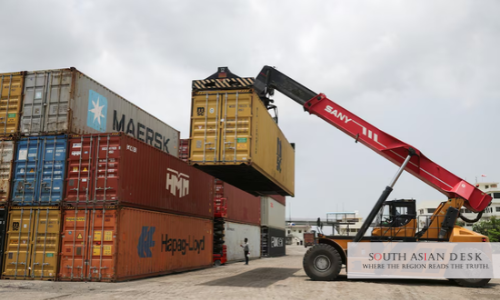
India October merchandise trade deficit reached $39.88 billion in October 2026, marking its highest level in a year as rising imports outweighed record growth in merchandise exports. Government trade data released on Friday, November 13, showed that the deficit exceeded economists’ expectations, highlighting the pressure of higher import expenditure on India’s external trade position.
According to Reuters, India’s merchandise trade deficit increased from $30.21 billion in September to $39.88 billion in October. The figure was also considerably higher than the $32.25 billion forecast in a Reuters poll of economists. The widening gap was primarily driven by a sharp increase in imports, particularly gold and energy-related purchases.
Despite the India October merchandise trade deficit reaching a one-year high, the country’s export performance remained strong. Merchandise exports reached a record monthly level, indicating continued demand for Indian goods in international markets. However, the increase in imports was substantially greater, contributing to the widening trade gap.
India October Merchandise Trade Deficit Widens as Imports Surge
India’s October merchandise trade deficit reflected a significant increase in both exports and imports, with imports growing at a faster rate. Merchandise exports climbed to $49.47 billion in October, compared with $44.40 billion in September. This represented an increase of approximately 11.4% on a monthly basis and established a new record for monthly goods exports.
Imports, meanwhile, rose to $89.35 billion from $74.61 billion in September, representing an increase of approximately 19.7%. The faster growth in imports widened the difference between the value of goods entering and leaving the country.
The resulting India October merchandise trade deficit of $39.88 billion was significantly higher than September’s $30.21 billion figure. It also exceeded economists’ expectations, demonstrating the pressure that rising import expenditure can place on the country’s overall trade balance.
The figures highlight the challenges facing India’s external trade position. Although stronger exports indicate continued demand for Indian products, the substantial increase in imports has offset some of the benefits of export growth.
Rising Gold Imports and Energy Costs Increase India’s Import Bill
Higher gold purchases and increased energy costs were among the key factors contributing to India’s rising import expenditure in October.
Gold imports nearly tripled to $5.51 billion during the month as demand increased ahead of Diwali, one of India’s most important festive periods. Gold purchases traditionally rise during the festival season, when households increase spending on jewellery and precious metals.
The increase in gold imports contributed to the wider merchandise trade deficit by adding to the country’s overall import bill.
Energy costs also remained a significant concern. India is the world’s third-largest oil consumer and imports approximately 85% of its crude oil requirements. This dependence leaves the economy exposed to fluctuations in international petroleum prices and disruptions to global energy supplies.
Disruptions in energy markets linked to the conflict in the Middle East have contributed to higher import costs. Changes in crude oil prices can have a considerable impact on India’s import expenditure because of the country’s substantial reliance on overseas energy supplies.
Brent crude futures subsequently declined to around $92 per barrel, offering some relief amid expectations that geopolitical tensions could ease. Nevertheless, uncertainty in global energy markets remains a potential source of pressure on India’s trade balance.
India’s Merchandise Exports Reach a Record Monthly High
While rising imports contributed to the India October merchandise trade deficit, export performance provided a positive element in the latest trade figures.
Merchandise exports reached $49.47 billion, surpassing September’s $44.40 billion and establishing a new monthly record. Trade Secretary Rajesh Agrawal highlighted the achievement while releasing the latest figures, attributing the growth to efforts to diversify export markets and expand international trade agreements.
India has been working to strengthen its presence in overseas markets by improving access for domestic exporters and broadening its trading partnerships. The government has implemented trade agreements with the United Kingdom and New Zealand in 2026, while an agreement with the European Union is expected to be implemented early next year.
These arrangements form part of India’s wider strategy to expand international trade and create additional opportunities for domestic businesses.
The United States also remains an important destination for Indian exports. According to Reuters, exports of Indian goods to the US increased by 14.5% year-on-year during April to October, despite ongoing negotiations between the two countries over the first phase of a bilateral trade agreement.
The growth in exports suggests that Indian businesses continue to find opportunities across international markets. Nevertheless, the latest India October merchandise trade deficit figures demonstrate that strong export performance alone may not be sufficient to offset increases in import expenditure.
Services Trade Surplus Provides Support to India’s External Position
Although the merchandise trade deficit widened considerably, India’s services sector continued to provide an important source of support to the country’s broader trade balance.
Services exports were estimated at $40.51 billion in October, compared with services imports of $20.72 billion. This resulted in a services trade surplus of $19.79 billion, partially offsetting the deficit recorded in merchandise trade.
India’s services industry includes information technology, business services, financial services and other professional activities that generate revenue from international clients. The sector has become an important contributor to the country’s export earnings and external economic position.
The distinction between merchandise and services trade is important when assessing India’s overall international trade performance. While the country continues to import more physical goods than it exports, its services sector generates a substantial surplus that helps balance some of the pressure from merchandise imports.
Across April to October, India’s combined merchandise and services exports increased by 29.91% to $89.99 billion, while combined imports rose by 16.57% to $110.07 billion, according to figures cited by Reuters.
The performance of services exports therefore remains an important consideration when evaluating India’s wider trade position rather than focusing exclusively on its merchandise trade deficit.
India October Merchandise Trade Deficit Raises Questions About Future Trade Performance
The October trade figures highlight the competing pressures shaping India’s international trade outlook. Record merchandise exports demonstrate continued demand for Indian products, while the sharp increase in imports reflects the country’s exposure to global commodity prices and seasonal purchasing patterns.
Energy dependence remains a particularly important consideration. With a substantial proportion of its crude oil requirements sourced internationally, India remains vulnerable to geopolitical disruptions and fluctuations in global petroleum prices. Higher energy costs can increase the import bill while also raising transportation and production expenses for domestic businesses.
At the same time, the government’s efforts to diversify export markets and strengthen international trade agreements could support future export growth. Greater access to overseas markets may create opportunities for Indian manufacturers and service providers, although the impact of these agreements will depend on their implementation and the ability of businesses to compete internationally.
The India October merchandise trade deficit also demonstrates why export growth and import management remain important components of the country’s broader economic strategy. A sustained increase in imports relative to exports could continue to put pressure on the external trade balance, particularly if global energy costs remain elevated.
India’s record merchandise exports provide a positive indication of its international trade performance, but the latest figures show that rising import expenditure continues to present a significant challenge. Global energy markets, the performance of domestic exporters and the implementation of new trade agreements will remain important factors shaping India’s trade outlook in the coming months.
Follow SouthAsianDesk on X, Instagram and Facebook for insights on business and current affairs from across South Asia.