Delta Energy investment in Pakistan of about $30 billion will be explored under an agreement signed between the Saudi Arabian company Delta Energy Saudi and Pakistan’s Inter State Gas Systems, the two companies said in a statement on Tuesday. The agreement covers the assessment of energy infrastructure, including gas pipelines and LNG facilities, but it does not commit either side to build or finance any project.
What the Delta Energy Investment in Pakistan Would Cover
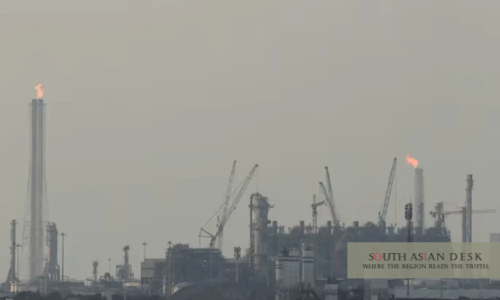
According to the statement, the programme would first assess a gas pipeline entering Pakistan through its western border and extending toward Gwadar, a port on the Arabian Sea in the south-west of the country. It would also consider a possible extension to the eastern border, along with liquefied natural gas (LNG) facilities, gas processing and storage, and export terminals.
The programme also envisages a pipeline from Chaman, on Pakistan’s border with Afghanistan, across the country toward the Indian border near Fazilka. Delta Energy described that route as a core strategic commitment, and said it would require formal engagement and agreements with both Pakistani and Indian authorities. The statement did not say whether any such talks with India have begun.
The Afghan Link and the Route to the Indian Border
The companies identified Afghanistan’s Kashk gas concession and other Afghan resources as potential sources of supply. Delta Energy said the programme is separate from the Turkmenistan-Afghanistan-Pakistan-India (TAPI) pipeline project and does not depend on Turkmenistan. Plans for other pipelines intended to bring gas into Pakistan have been delayed for years, according to Reuters.
The Afghan connection builds on earlier activity. In September, the Saudi energy group signed a series of agreements with the Ministry of Mines and Petroleum of Afghanistan’s Taliban-led administration, covering exploration in the Kushk and Tirpul area of Herat and a feasibility study for a proposed 700-kilometre pipeline from near Herat to Spin Boldak, on the Pakistan border. Delta Energy estimated that pipeline alone could require about $10 billion over a decade, subject to technical and economic feasibility, financing, regulatory approvals and a final investment decision, Ariana News reported.
The September deals drew a cautious response from Washington. The US State Department urged American companies to exercise extreme caution when considering transactions with Taliban-ruled Afghanistan, according to reporting by RFE/RL, after a former US official attended the signing ceremony. The latest agreement with Pakistan does not mention that advisory, but the route runs through Afghan territory.
Why Pakistan Is Looking at Gas Infrastructure
Pakistan’s gas supply has come under growing strain. The managing director of Sui Southern Gas Company said last week that national gas production has fallen by about 50 percent over the past decade, and that imported LNG has been hard to secure since April because of the Iran war. Household supply in SSGC’s network is now restricted to three meal times a day.
Against that background, new import routes and storage capacity would be of obvious interest to the government. A gas pipeline and LNG facilities near Gwadar could, in principle, widen the options for bringing fuel into the country. Whether that would lower costs or improve security of supply would depend on where the gas comes from, how it is priced and who bears the construction cost, none of which the statement addresses.
A Framework, Not a Final Commitment
The agreement provides a framework for evaluating the projects. It does not constitute a final investment decision or a commitment to finance or build them, the statement said. In practice, that means feasibility studies, route and cost assessments, regulatory approvals and financing arrangements still lie ahead.
The size of the proposal also sets it apart from earlier initiatives. At about $30 billion, it is many times the cost of a single pipeline, and it brings together import, processing, storage and export components. Large cross-border gas projects in the region have often taken years to move from agreement to construction, if they have moved at all.
What Comes Next
The next steps are technical studies and negotiations with the governments whose territory the routes would cross. The Indian leg depends on agreements that, according to Delta Energy’s own description, have yet to be reached. The Afghan supply side depends on reserves and security conditions that are still to be established, and on the position of other governments, including the United States, toward projects in Afghanistan.
For now, the Delta Energy investment in Pakistan remains a plan to be tested rather than a funded project. Whether it advances will depend on whether the feasibility work supports the numbers, whether financing can be arranged, and whether the political agreements the route requires can be secured.
Follow SouthAsianDesk on X, Instagram and Facebook for insights on business and current affairs from across South Asia.
Read more: https://southasiandesk.com/ssgc-gas-supply/